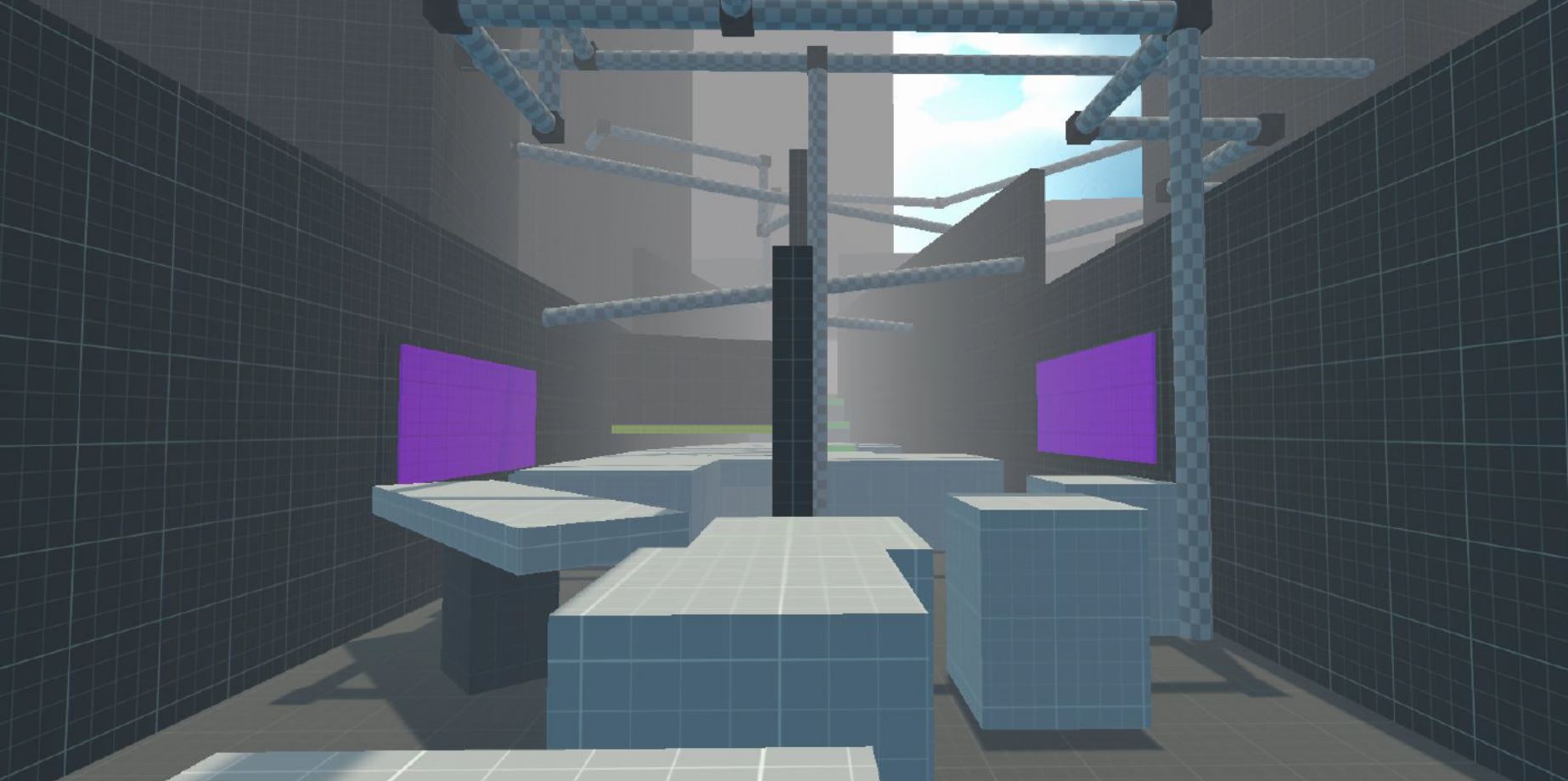
Summary
Designed to keep players engaged, fast, and in rhythm.
- Real-Time adaptive design based on player behavior and skill
- Flow State is prioritized through dynamic pacing and layout changes
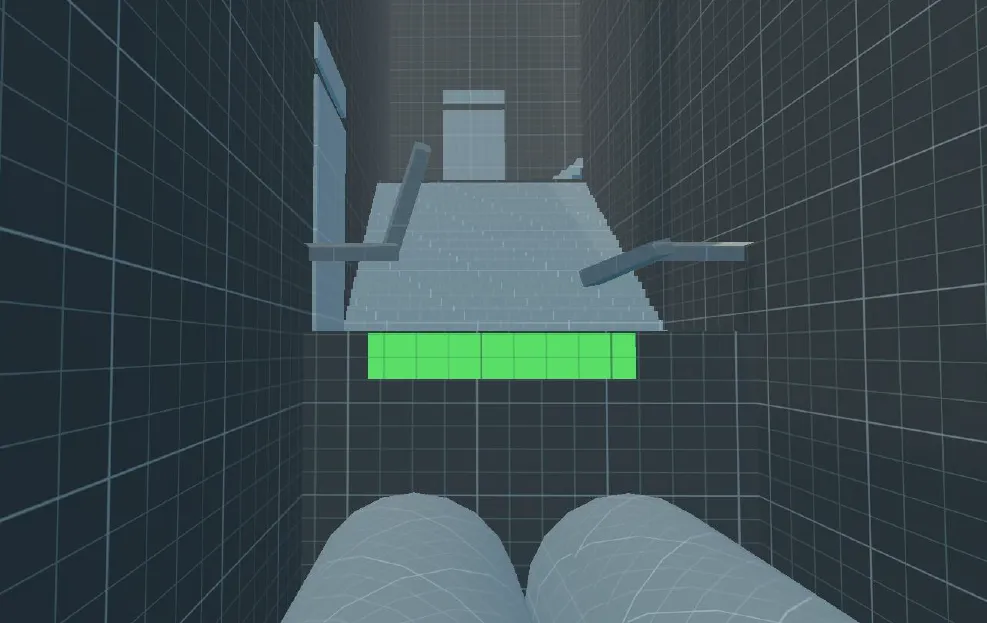
- Color-coded affordances for instant clarity:
- Purple - Wall Run Surface
- Yellow - Slide Obstacle
- Green - Climbable Ledges
- ...
- Clean sight lines and landmarks guide movement
- No enemies - only environmental challenges
- Multiple path options to look at player behavior and support player choice and expression
- Minimalist world with strong contrast for readability
- Subtle visual storytelling adds atmosphere without distraction
General Information
My Tasks: Game/Level Design, Programming, Project Management
USP: Adaptive Level Design based on Player behavior
Team Size: 1 (Solo)
Target Group: Fast-Paced Parkour Gamers
Genre: Parkour, Speedrunning
Setting: Post Steampunk
Engine: Unity 6000
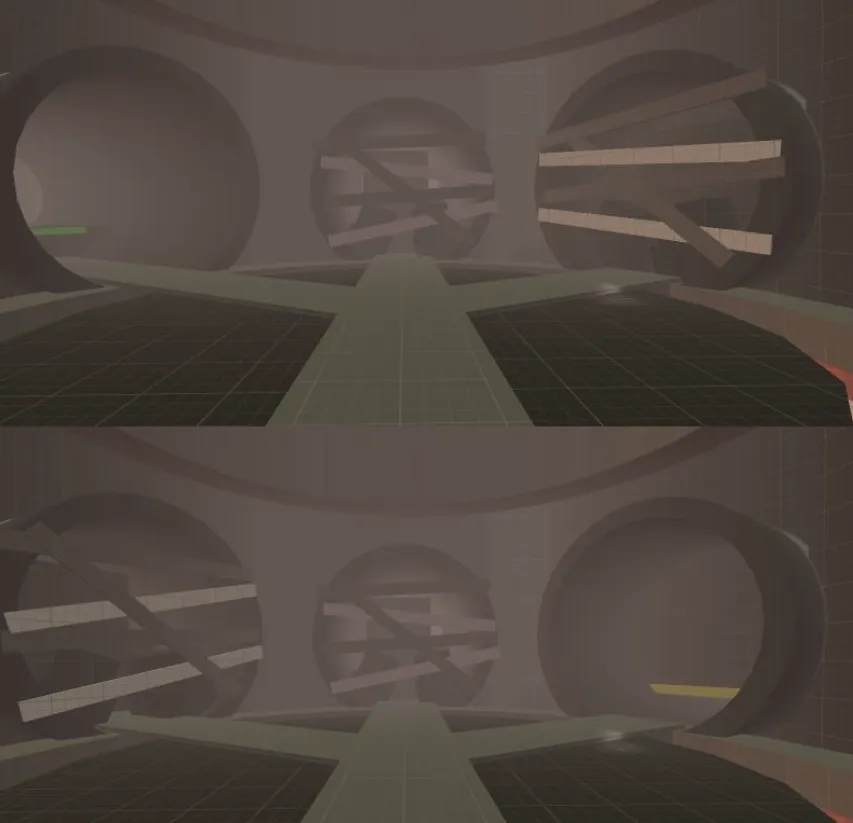
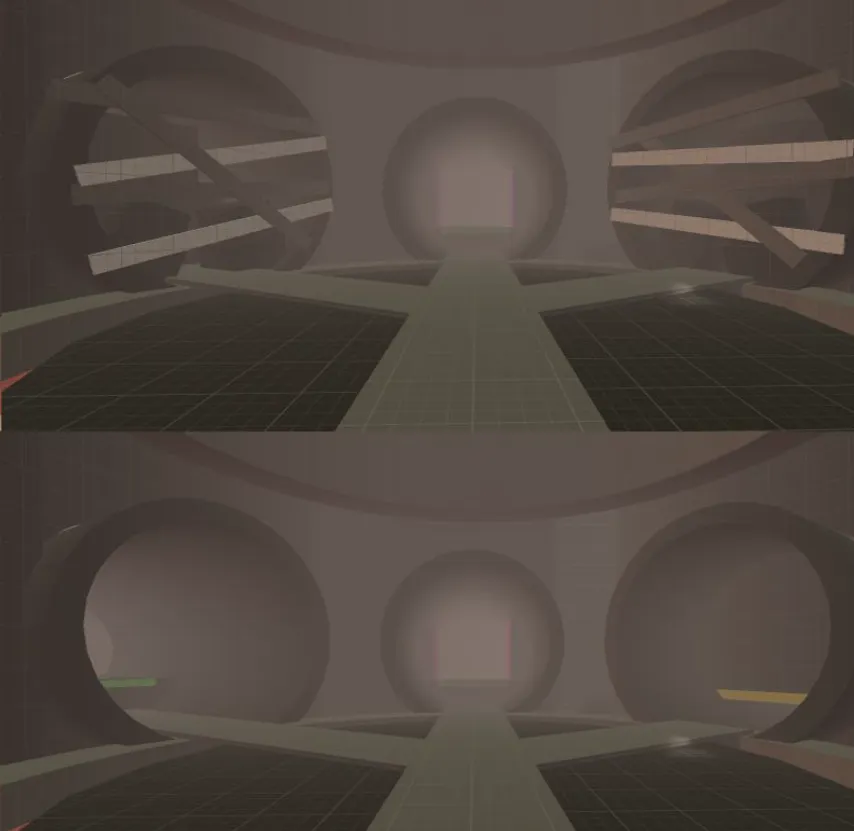
Examples of Adaptive Changes
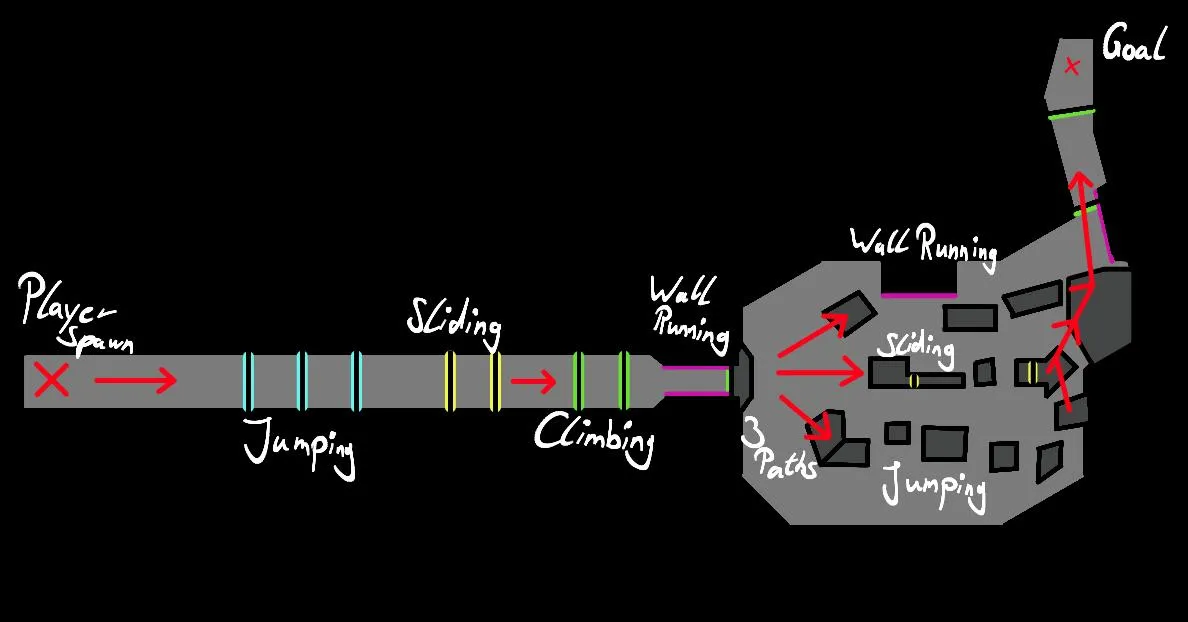
Player-Centric Design Philosophy
This project emphasizes intuitive navigation, player agency, and seamless interaction. Environments are constructed for maximum readability, allowing players to make split-second decisions even at high speed.Strategic use of occlusion and reveal moments uncovers alternate paths, encouraging exploration, discovery, and replayability.
All routes and surfaces are designed with clear affordance, players instinctively know what can be run on, climbed, slid under, or vaulted over. This ensures that moment-to-moment gameplay remains smooth, reactive, and uninterrupted.
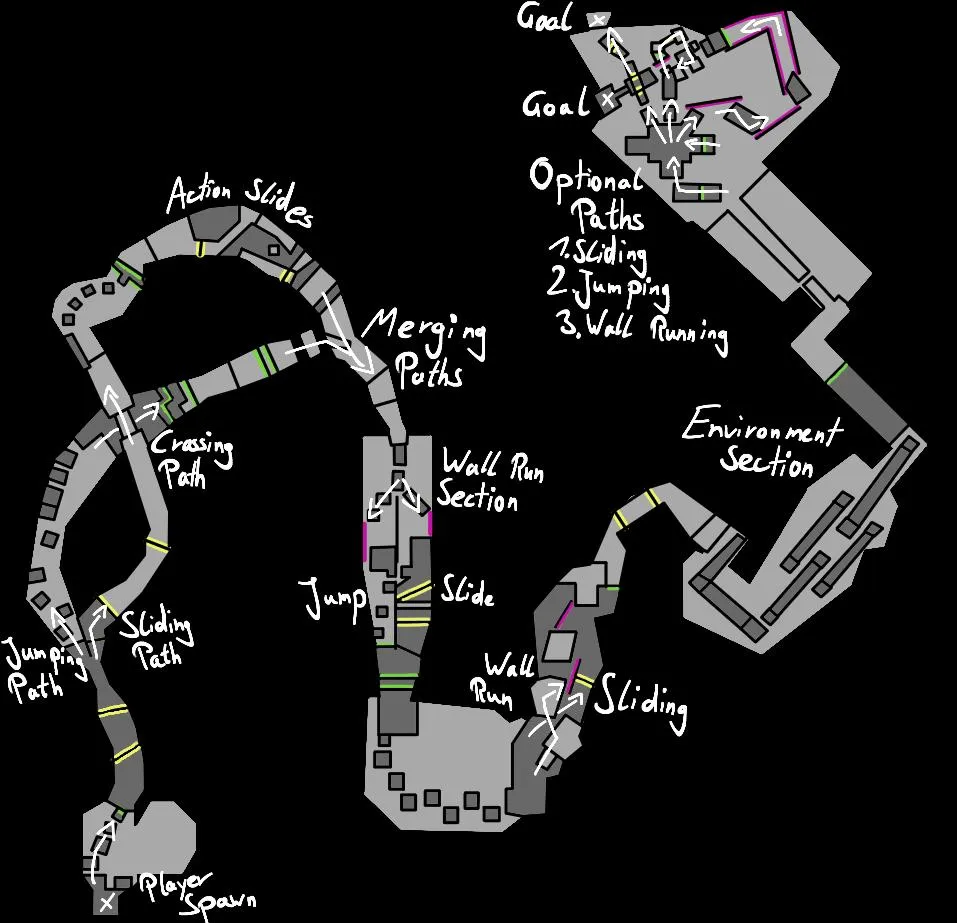
Real-Time Adaptation and Measurement (Level 2)
A standout feature of this game is its adaptive gameplay system. By analyzing real-time player behavior, such as reaction time, speed, decision-making patterns, and playstyle preferences, the game dynamically adjusts level composition.
For instance, if a player excels at wall running but frequently hesitates during vault sequences, the system will surface more wallrunning segments,amplifying player flow and confidence while subtly reinforcing weaker mechanics.
This approach personalizes gameplay to the individual, delivering an experience that feels tailored, rewarding, and balanced.
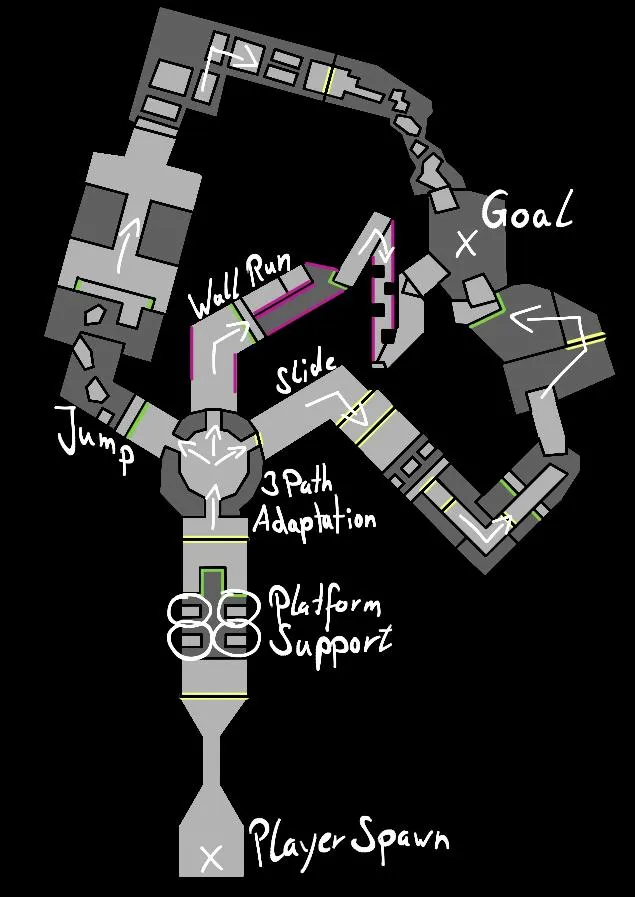
Adaptive Paths and Difficulty Scaling (Level 3)
Every path,obstacle, and encounter in the level design comes in multiple variations,fine-tuned for different player archetypes. The system distinguishes between easier and harder routes based on moment-to-moment performance.
Skilled players may find themselves on more complex traversal paths, while newer players are guided through accessible but still engaging alternatives.These real-time difficulty adjustments prevent both frustration and boredom, ensuring all players feel challenged and empowered regardless of skill level.
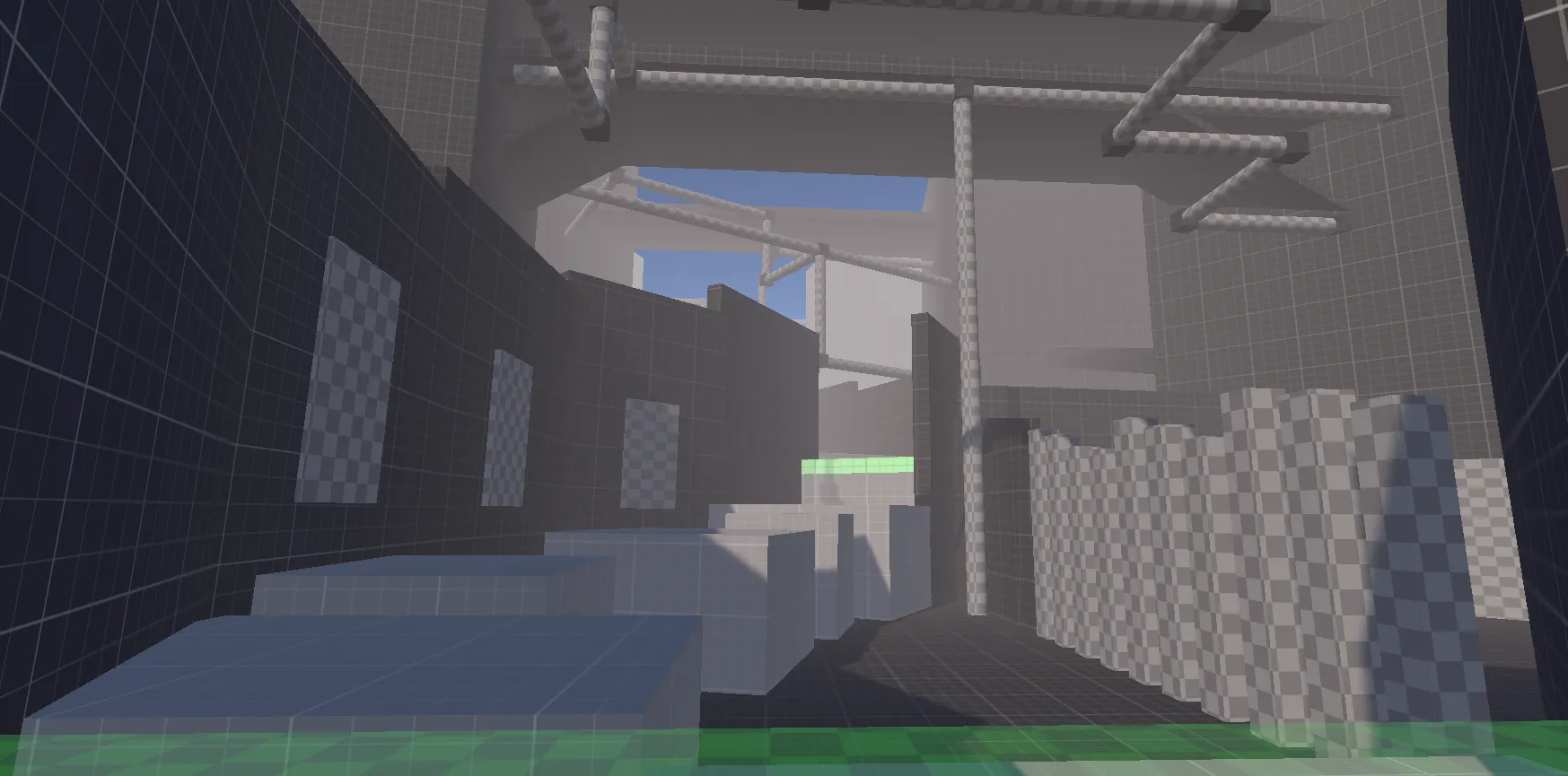
Minimalist Blockout Art Style: Form Follows Function
To maintain a tight development focus, a grid-and-checker blockout aesthetic is used throughout the game. This minimal style highlights function over form, allowing development time to prioritize gameplay systems, flow,and level mechanics over visual fidelity.
By reducing visual clutter, the player experiences clean readability, clear traversal logic, and immersion increase, perfect for a game built around speed and precision.
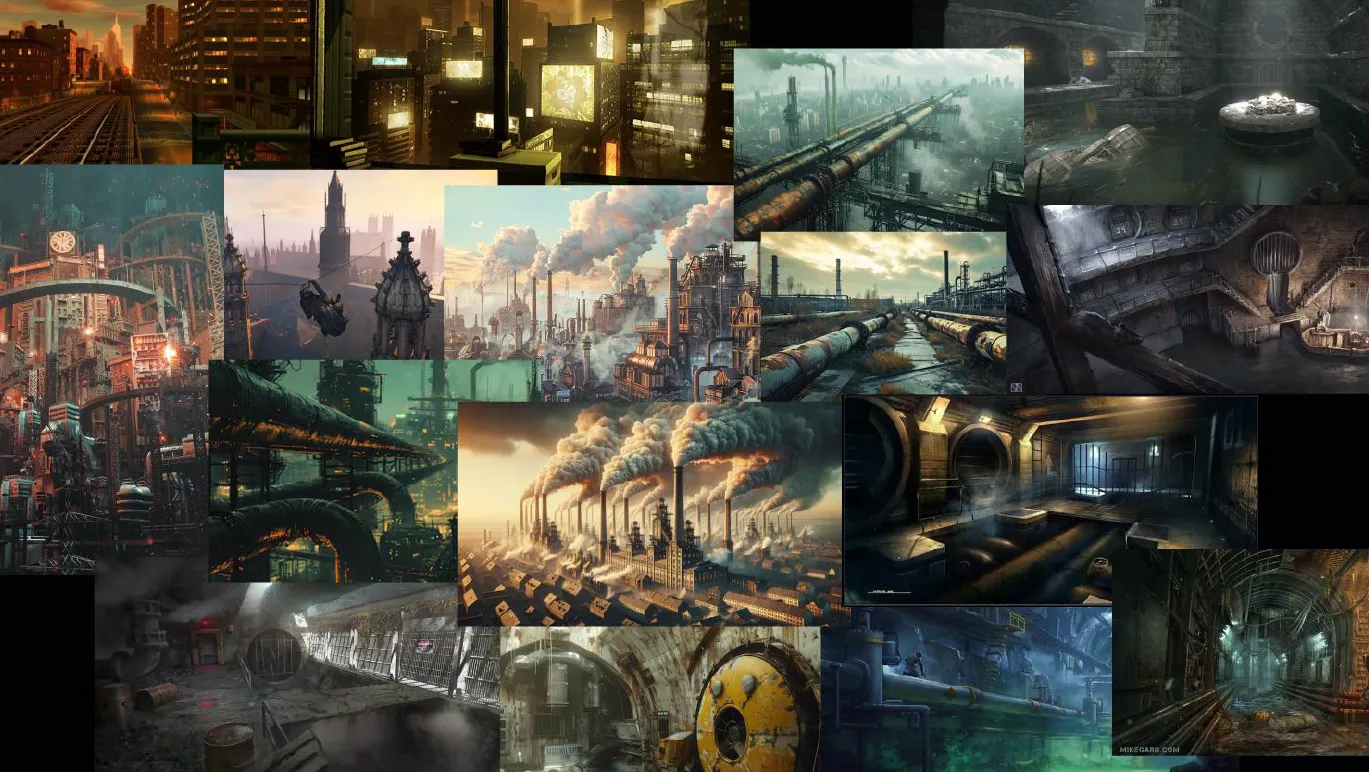
Dystopian City: Setting and Core Mechanics
Set in a toxic,dystopian city, the game casts players as a free runner uncovering the source of a spreading gas. Movement is the foundation of gameplay,with a fluid traversal system built around sprinting, jumping, vaulting,sliding, and wallrunning.
These mechanics combine to support an environment where players can chain movements together creatively, building momentum and achieving flow states in line with the narrative of urgency and survival.
Dynamic Design Philosophy: Flow, Challenge & Engagement
Unlike static level setups, this project leverages Dynamic Difficulty Adjustment (DDA), a system that analyzes play in real time and adjusts the experience accordingly.
This improves accessibility for new players while keeping seasoned ones engaged through custom challenges. Parkour, with its rhythm-based movement and mechanical layering, provides an ideal genre to showcase these adaptive gameplay models.
The goal is to induce flow states, a balance between mastery and discovery, while keeping players in a space of motivated learning and high engagement.
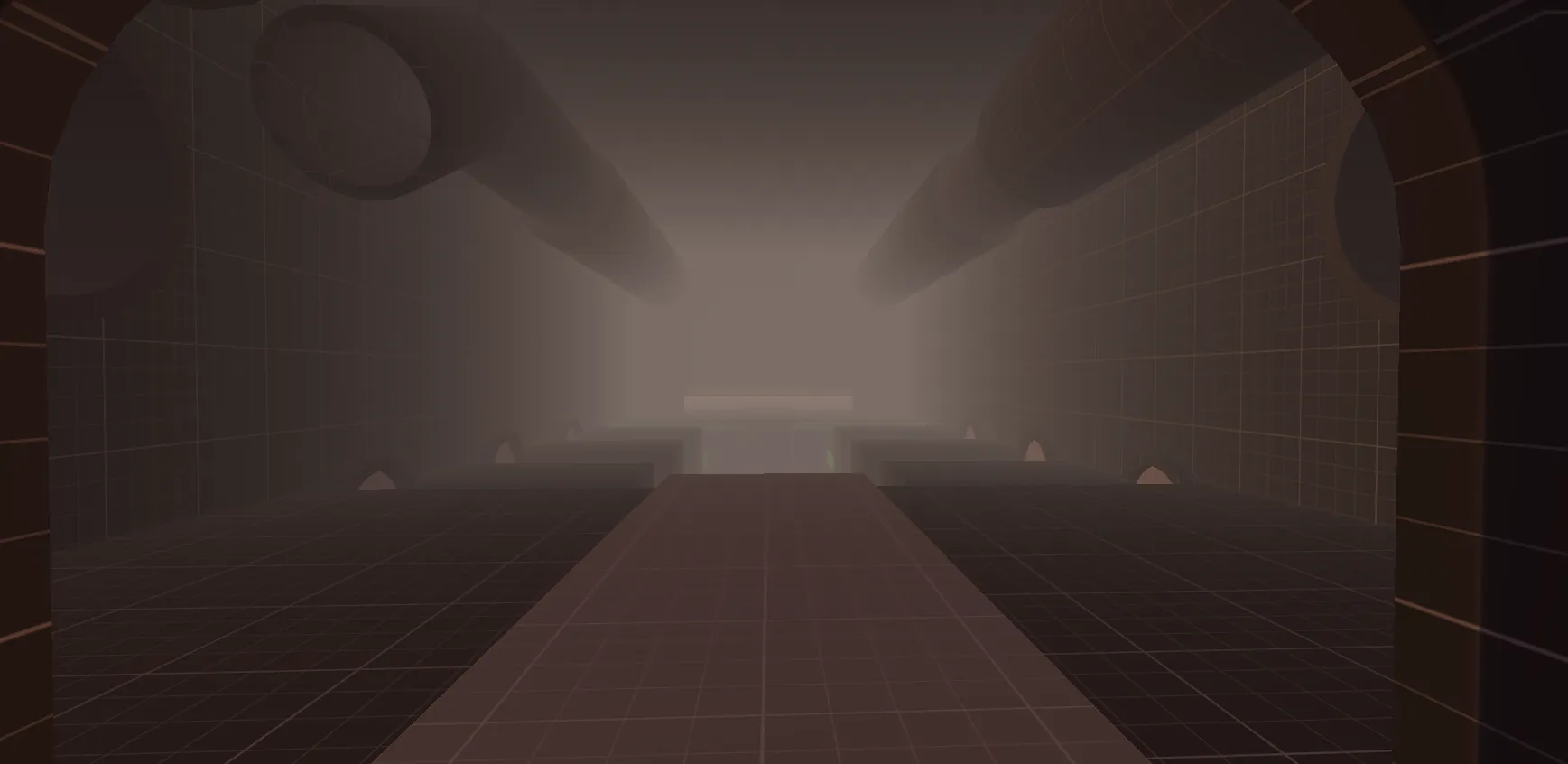
Environmental Storytelling in a Minimal World
With textures stripped back, mood and atmosphere are conveyed using lighting,fog, and skyboxes. Each level reflects the player's narrative and skill progression, starting with a neutral tone for onboarding, and evolving into more emotionally charged palettes.
Environmental elements subtly evoke feelings of urban decay, claustrophobia, or toxic threat. The player's emotional state is mirrored in the surroundings, enabling narrative through tone rather than text or dialogue.
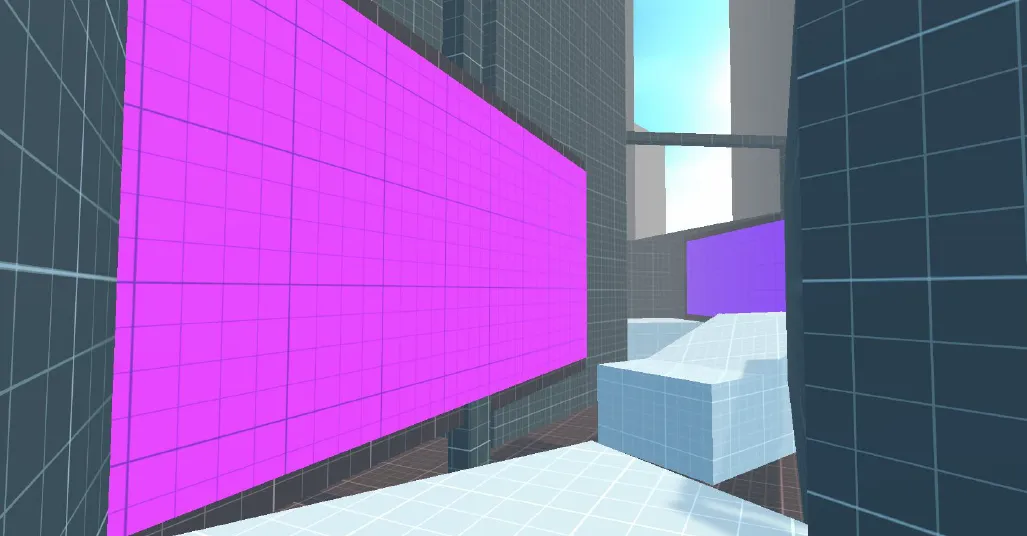
Color-Coded Movement Cues: Cognitive Design in Action
A strategic color coding system guides player behavior and simplifies traversal logic:
- Purple – Wallrunning (grabs attention, signifies uniqueness)
- Yellow – Sliding (signals urgency and speed)
- Green – Climbing (safe, inviting)
- Orange – Checkpoints and interactables (transitional markers)
- Red – Danger zones (hazard awareness)
These cues reduce cognitive load, increase player confidence, and eliminate the need for intrusive tutorials, perfect for sustaining fast-paced momentum.
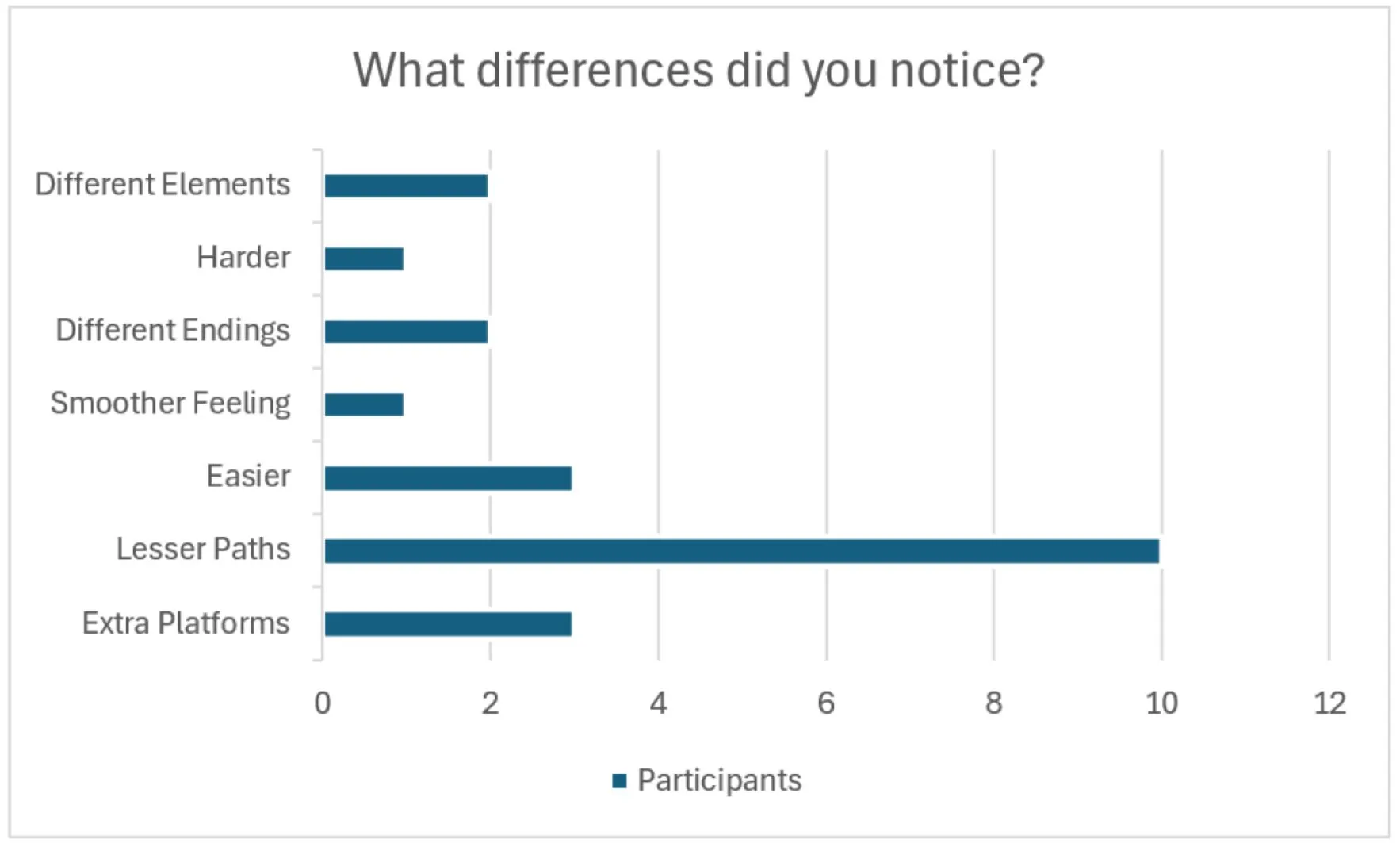
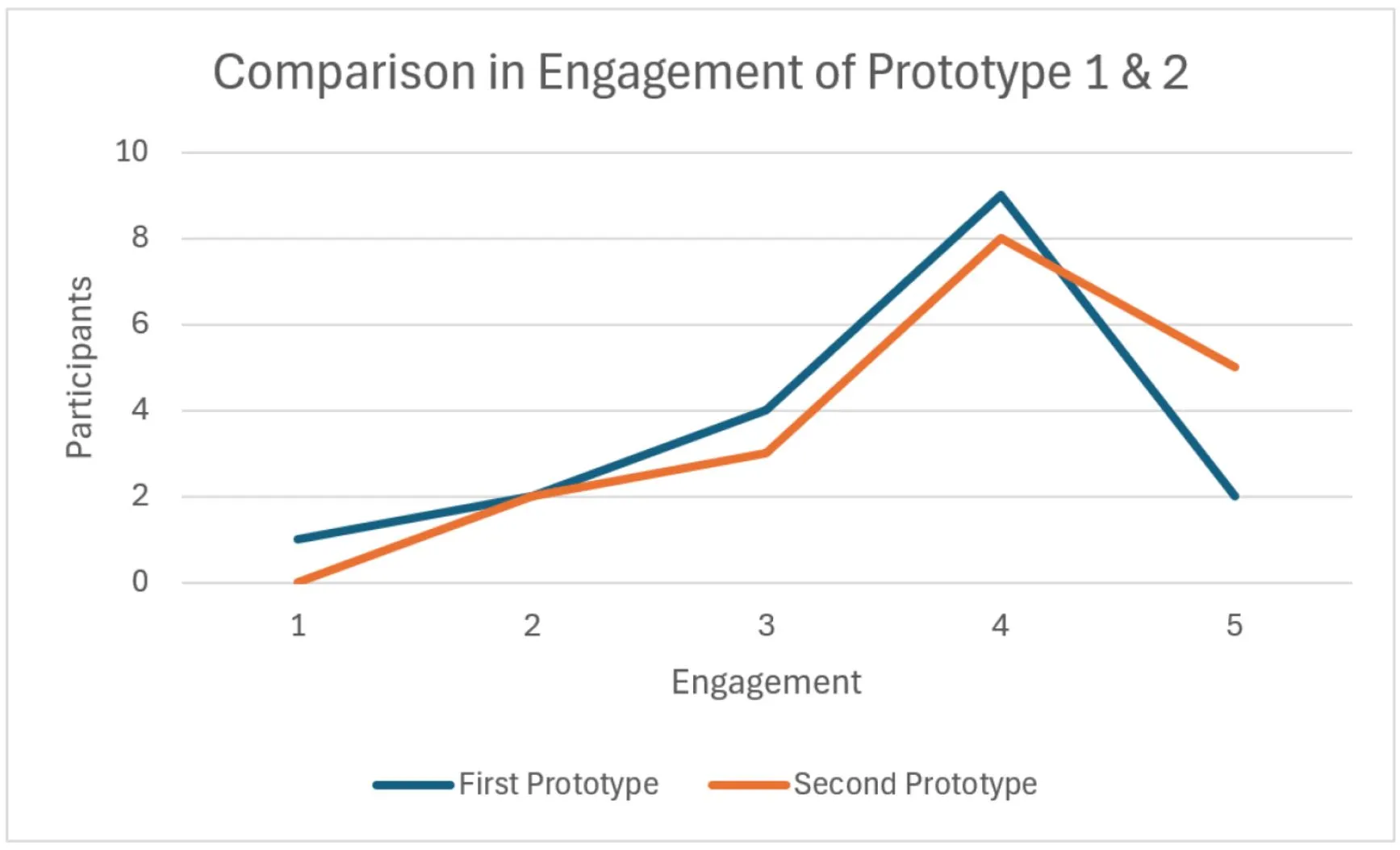
Result Graphs & Testing Insights
The project includes detailed analysis comparing Static Prototype (1) vs. Adaptive Prototype (2) to assess the impact of adaptive level design. Results show enhanced engagement, better skill progression, and higher player satisfaction when adaptive systems are active.
A part of my programming
Other Projects
Type: Echolocation Bat Exploration
Genre: Stealth Game
My Tasks: Level Design, Game Design, Project Management
Type: Fractures in Reality
Genre: Stealth/Exploration
My Tasks: Level Design, Game Design, Project Management, Programming
Type: Bachelor Solo Project
Genre: Adaptive Free-Runner
My Tasks: Level Design, Programming, Game Design, Project Management
Type: Design Studies, Prototypes, Modding, ...
Genre: Dungeons, RPGs, Jump'n'Run, ...
My Tasks: Solo Side Projects