Summary
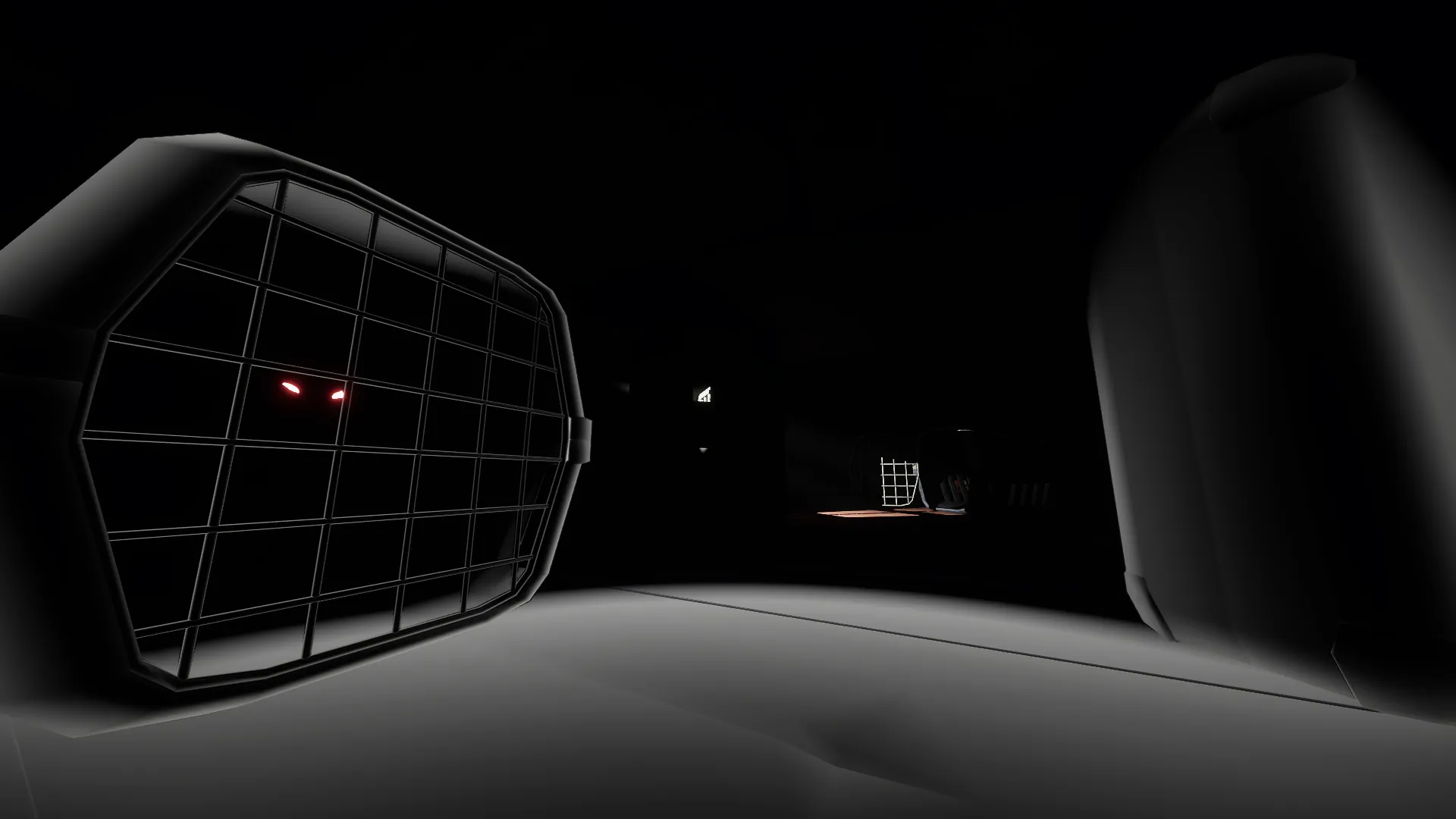
The game's level design emphasizes stealth, atmosphere, and player-driven exploration. Through smart navigation and creative use of echolocation, players can overcome their fears and find their way to safety.
As a Level Designer and Set Dresser, I used light, sound, and layout to create emotional arcs. Players are rewarded not just for surviving, but for understanding their surroundings, listening closely, and choosing the right path
General Information
My Tasks: Set Dressing, Level/Game Design, Project Management
USP: Orientation via echolocation
Team Size: 6
Target Group: Casual Stealth Gamers
Genre: Stealth
Setting: Not so alone in a dark attic
Engine: Unity 2020
Concept vs Final Level
Some General Design Principles
Across all three levels, I applied several key level design principles:
Environmental Storytelling: Communicating narrative through props, layout, and lighting.
Paced Mechanic Teaching: Introducing and testing player skills in layers, rather than all at once.
Land marking & Vistas: Using architectural shapes and light to draw focus and create memory anchors.
Tension & Relief Cycles: Designing alternating spaces of safety and pressure to maintain player engagement.
Choice & Consequence: Encouraging player agency through path variety while ensuring every decision has pros and cons.
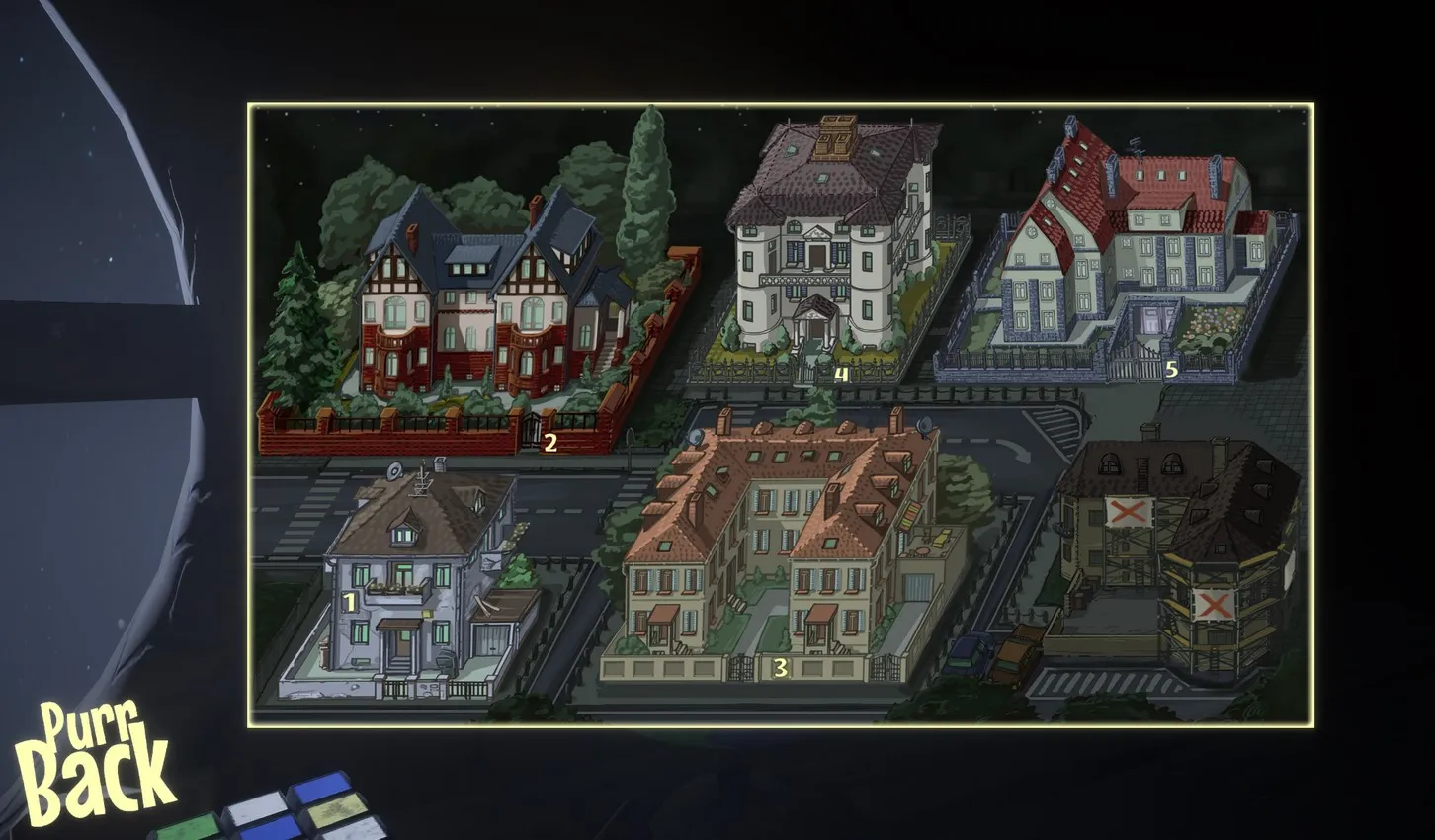
Level Design Breakdown
As one of the Level Designers on Purr in the Dark, I was responsible for designing three key levels that form the spine of the player’s journey: the Tutorial Level, the Enemy Introduction, and the Verticality-Focused Third Level.
Each of these levels is crafted to introduce and iterate on the game’s mechanics, build tension, and guide the player through readable yet atmospheric spaces using a blend of lighting, spatial design, sound, and pacing.
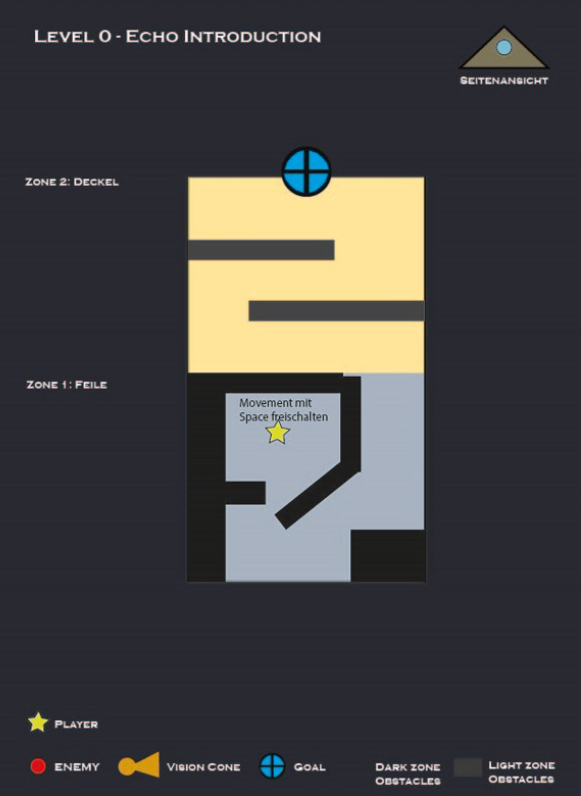
Tutorial Level – Mechanic Introduction
The tutorial serves as the player's first contact with the game world and introduces our unique mechanic: echolocation-based navigation. My goal was to build a level that felt both safe and mysterious, allowing players to experiment without punishment, while gradually learning howto interpret the acoustic feedback of the world around them.
Echo Gating: I used gated corridors and tight geometry to emphasize the importance of scanning before moving. Wide rooms offered temporary safety, while tighter choke points subtly encouraged the player to use their echo to "check corners" –teaching spatial anticipation.
Vista Framing: At the start, I framed a soft-lit goal area partially obscured by objects. This prompted the question: How do I get there? The answer lies in using echolocation to chart a viable path. This planted the idea early on that seeing the goal ≠ accessing it directly, a concept reinforced in later levels.
Micro-loop Layout: The level subtly guides the player in a loop, bringing them back to the start point with a new understanding. This structure teaches pattern recognition and comforts new players, reinforcing the link between environment, input, and response.
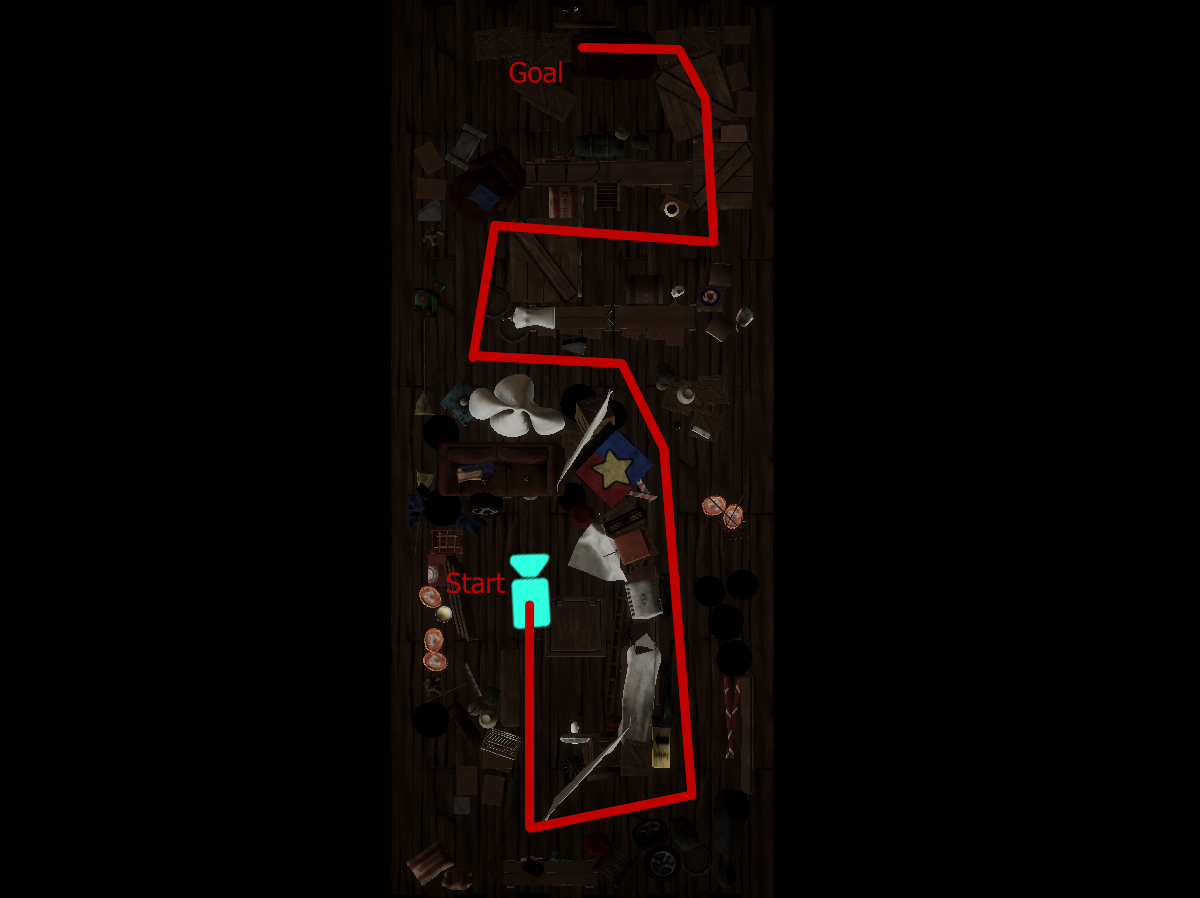
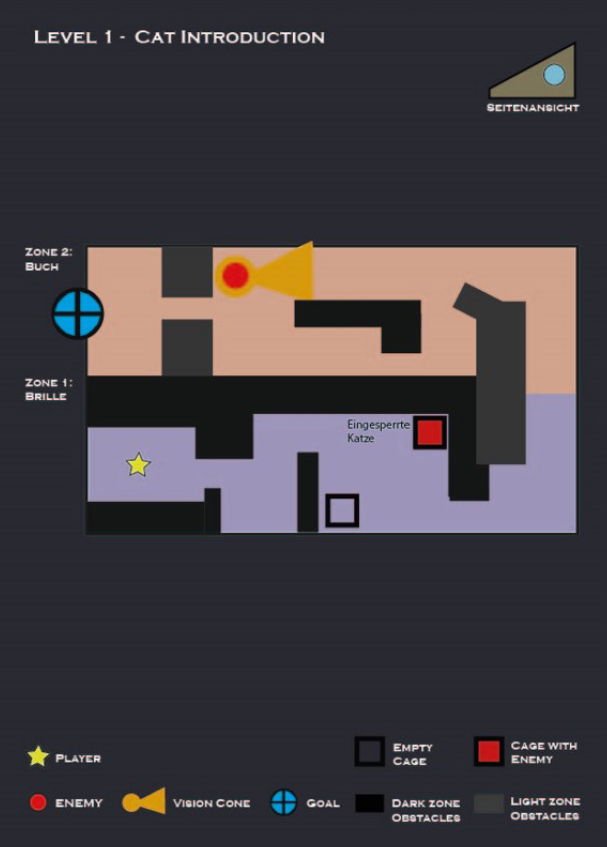
Second Level – Enemy Introduction
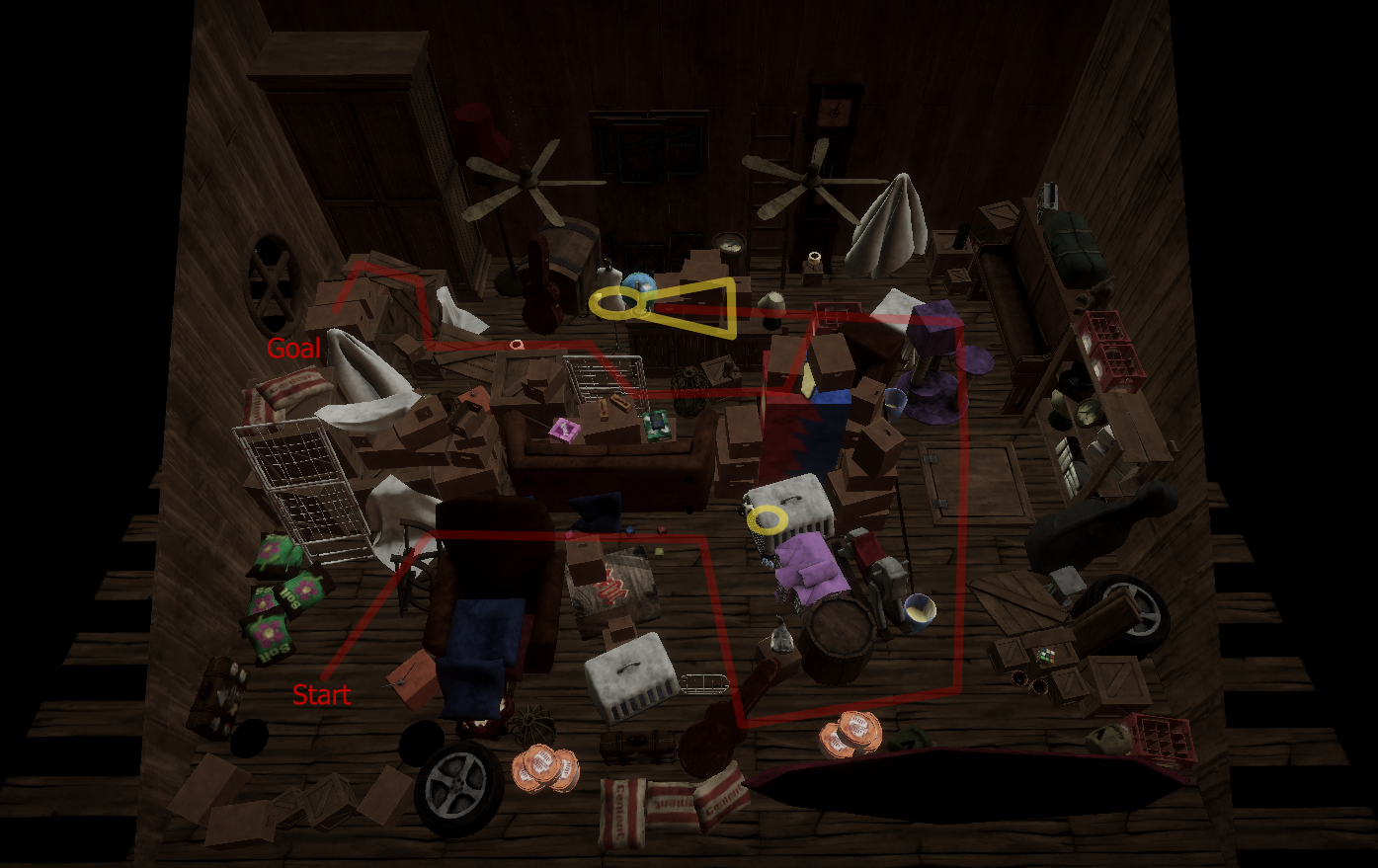
This level was designed to introduce stealth gameplay while building tension through foreshadowing and indirect cues. Here, the player encounters hostile cats for the first time.
Narrative Prop Placement: Early in the level, players encounter two cat boxes — one with a sleeping cat and another empty but illuminated. This carefully staged scene immediately raises suspicion: If one cat is here… where is the other one?
Psychological Setup: This encounter is non-threatening at first, but creates anticipation and alertness, teaching the player that danger may not always be visible. It was important to teach stealth not by tutorial pop-up, but by inductive learning.
Delayed Threat Reveal:Later, the second cat is revealed in a constrained corridor. The layout allows only tight movement, forcing the player to time their echolocation and movement precisely. This tests what they’ve learned about noise vs.distance, and line of sight.
Return Loop Design: After navigating past the enemy, the player must loop back toward a visible goal —the window where the mother is heard. This backward loop reinforces their understanding and builds confidence in safely re-navigating known paths,crucial for stealth games.
Third Level – Verticality
Strong Initial Vista: The level begins with a clear view of the goal light spilling from the attic door and a silhouette of the mother bat. But the direct path is blocked.
This moment creates narrative motivation and a powerful visual goalpost.
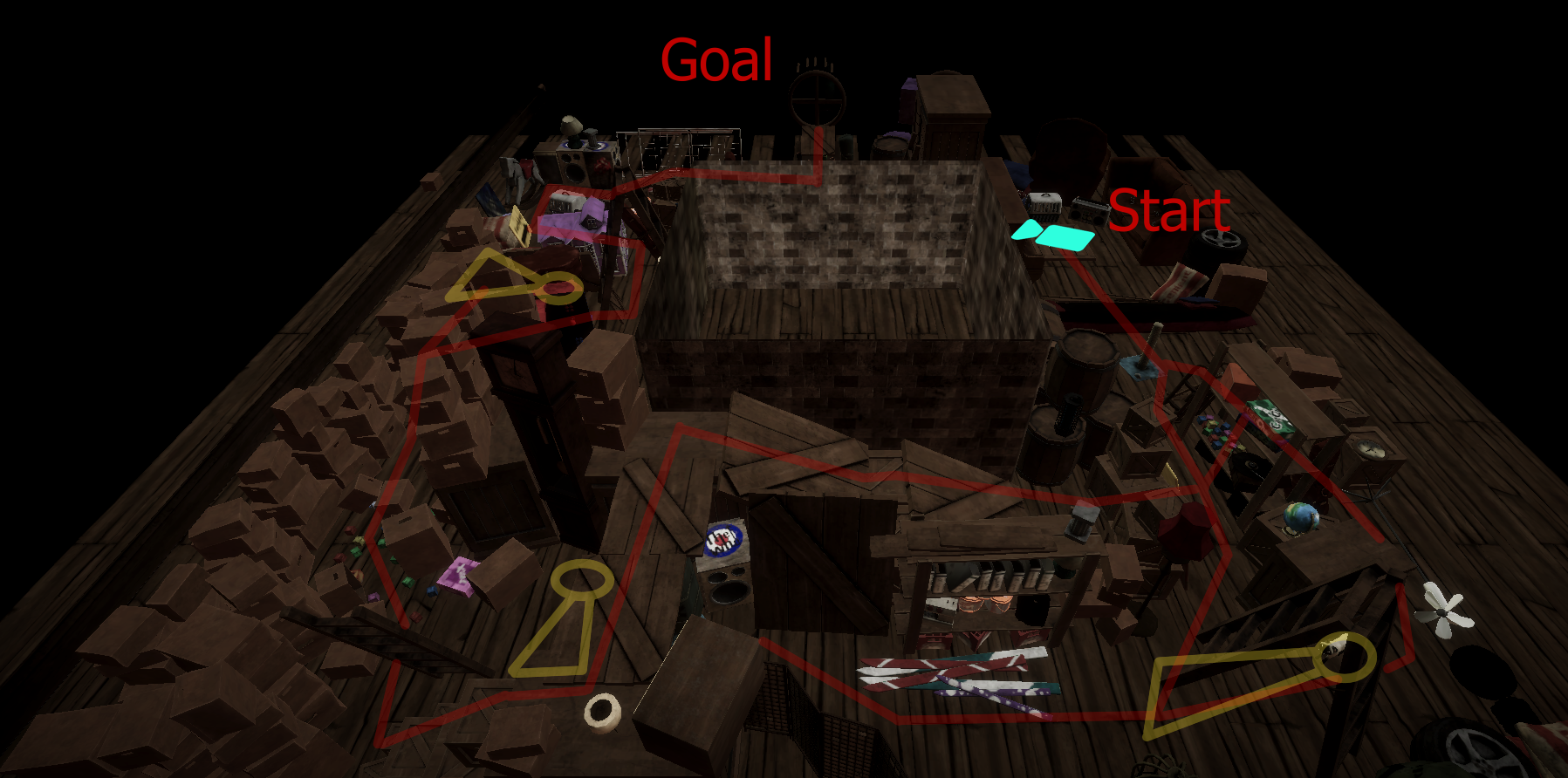
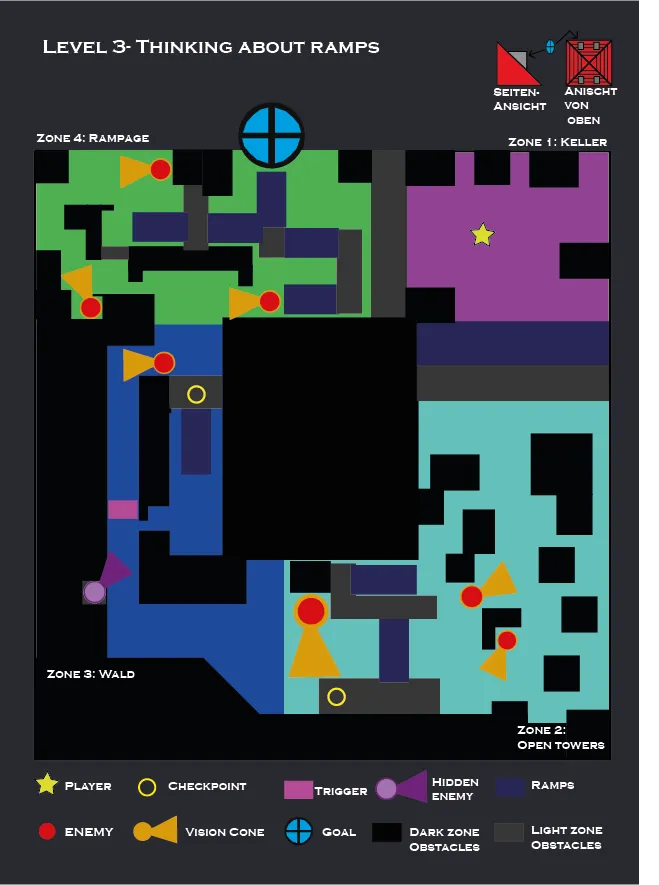
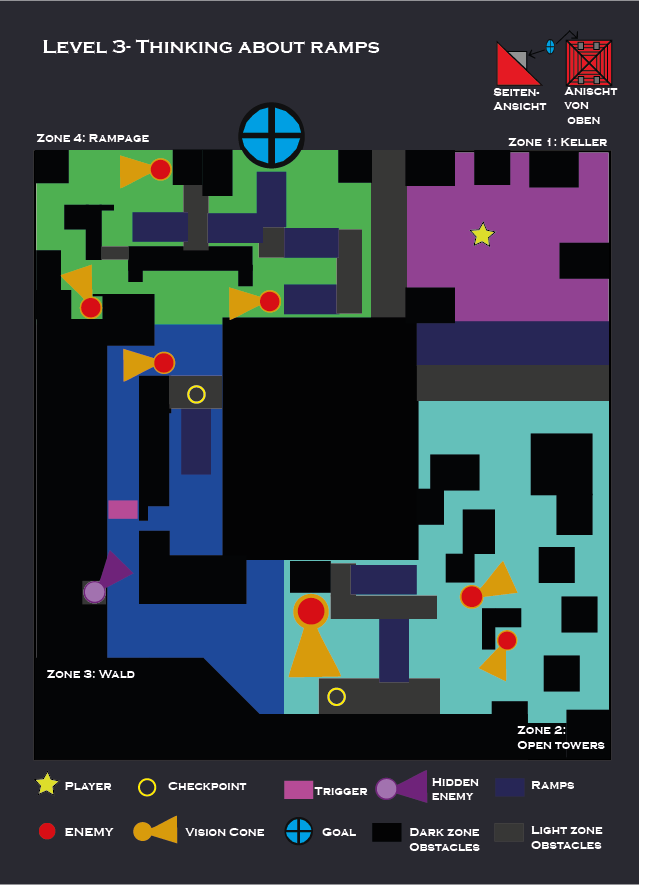
The third level was designed to shift scale and pacing, emphasizing open design, verticality, and non-linear paths.
This level is a turning point in the game here, players apply everything they’ve learned to solve spatial puzzles under pressure.
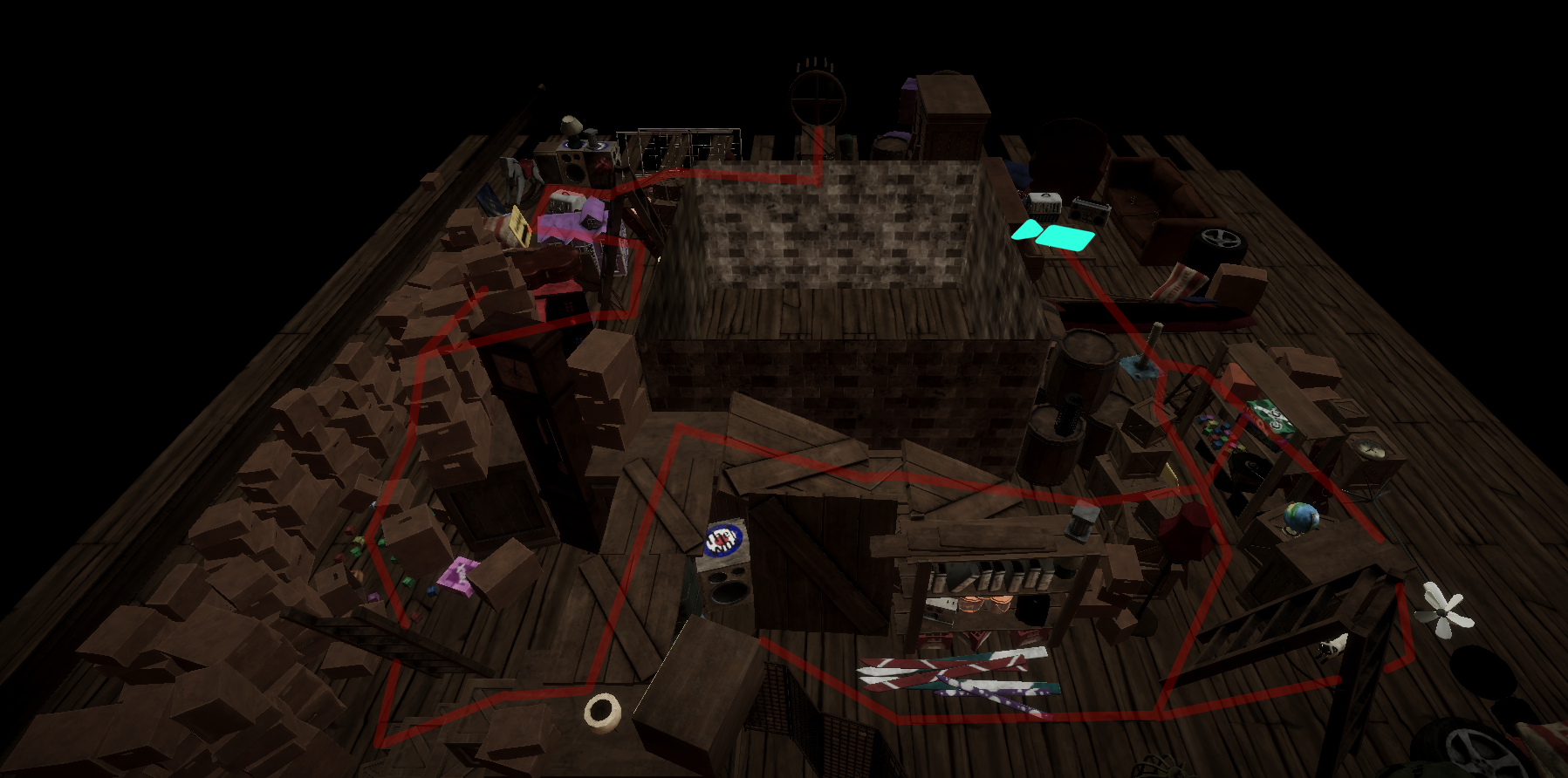
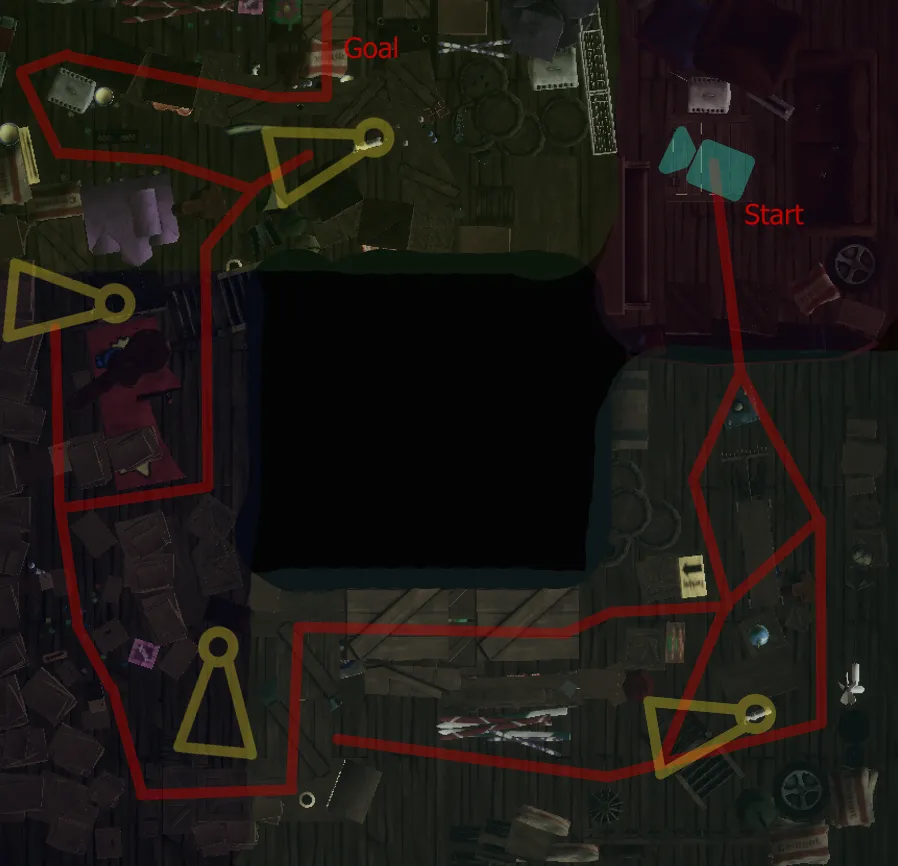
Open Area Navigation: The middle section opens up dramatically. Here, I provided multiple traversal options, low routes filled with obstacles and patrols, and high routes offering overview but requiring players to find alternate entry points.
This section teaches players that the clearest path isn't always the best.
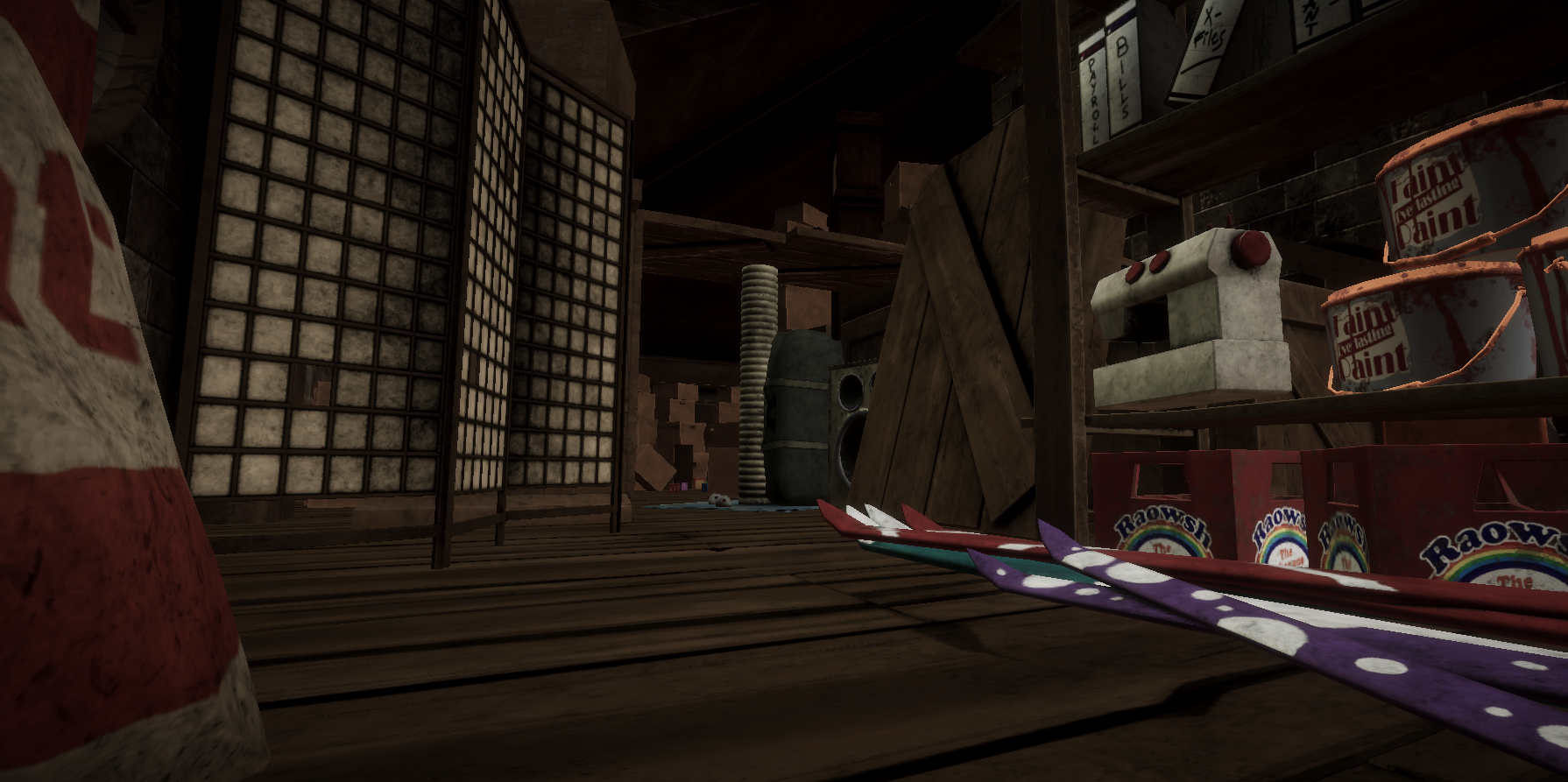
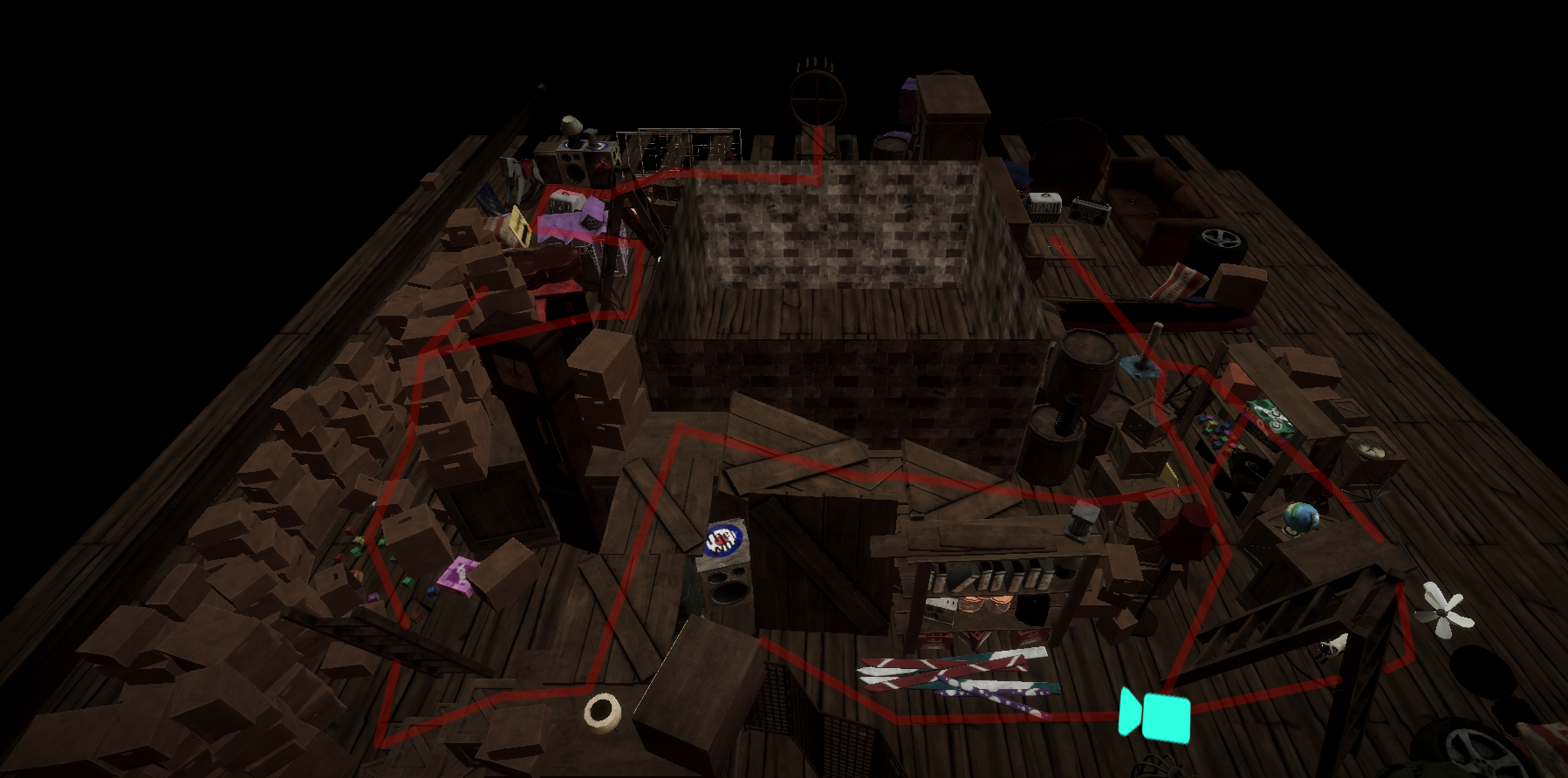
Vertical Design Philosophy: The right side ramp was intentionally designed to give players a feeling of control and elevation, by rising above the enemy and traversing abridge, they gain a literal and metaphorical sense of power.
It's also a strategic vantage point, allowing players to plan before acting.
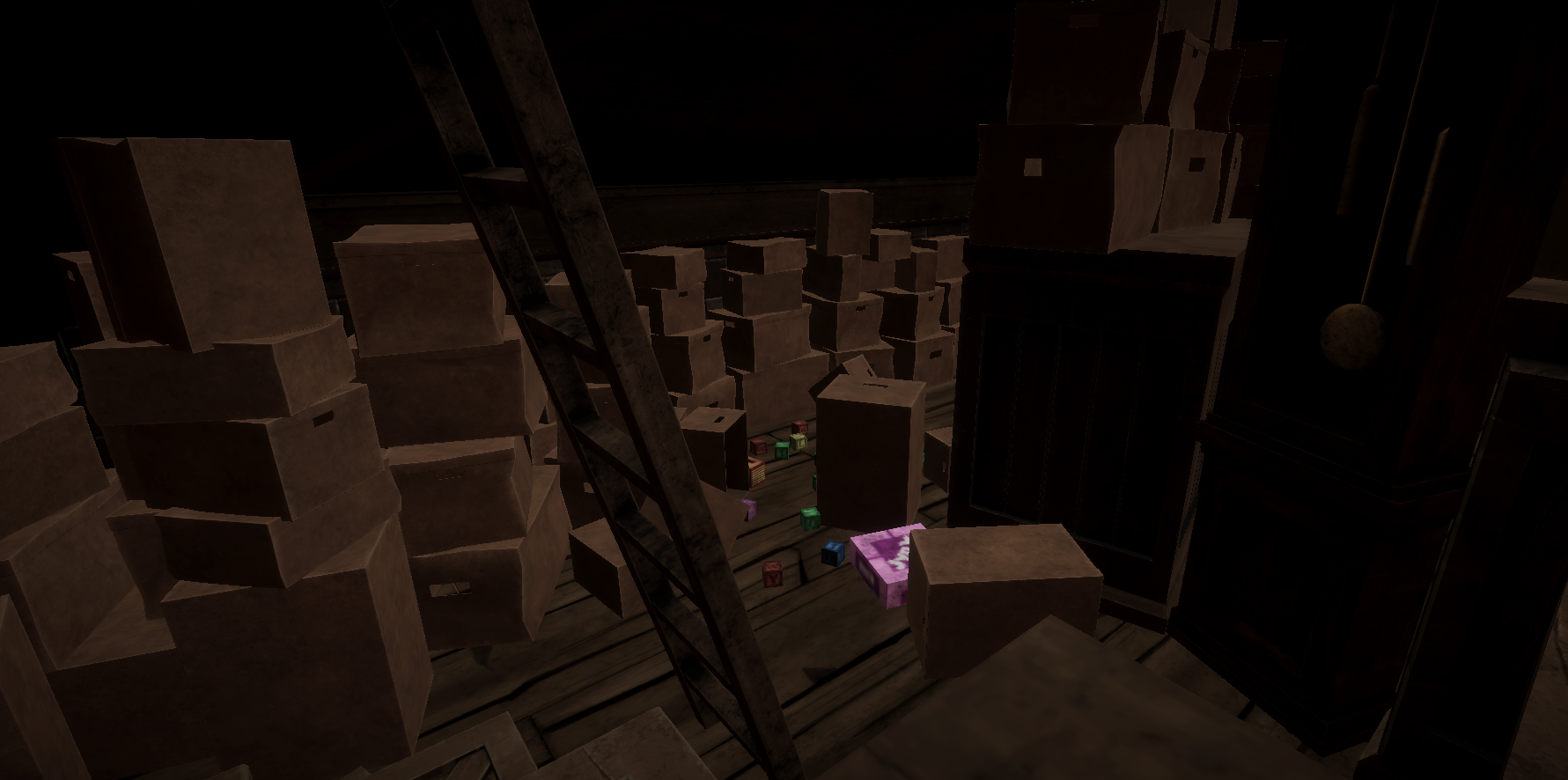
Package“Mountain” Landmark: At the peak, players overlook a stacked forest of packages, shaped to resemble a natural landscape.
The path down isn't immediately obvious,encouraging exploration and use of echolocation to understand depth and surface navigation.
This moment mirrors a "descent" structure,contrasting with the earlier climb.
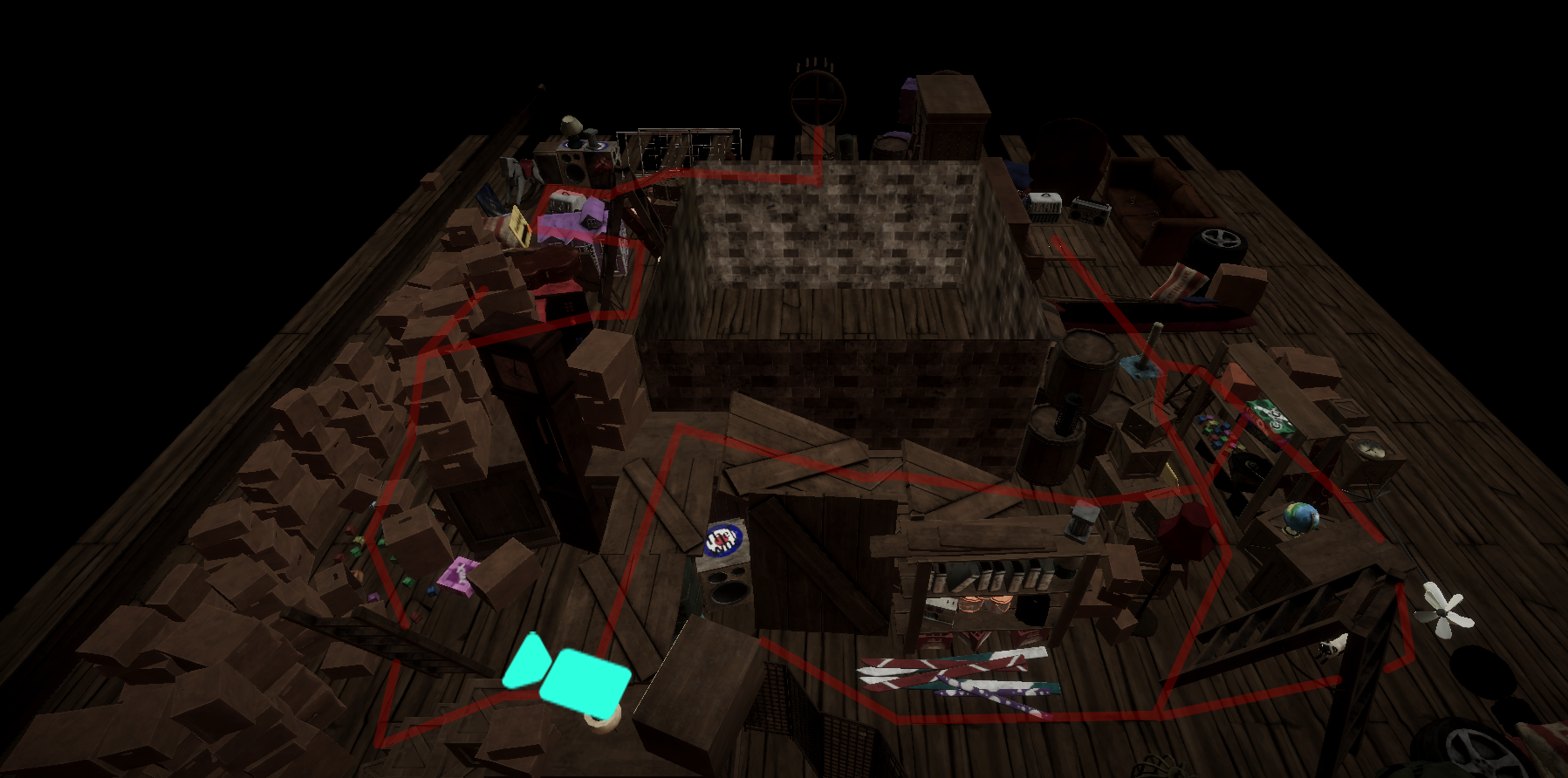
Final Challenge: At the bottom, the player approaches the attic door, but a final cat patrols near it.The player must use all learned mechanics timing, stealth, path finding to pass this last obstacle and complete their journey.
A part of my programming
Other Projects
Type: Echolocation Bat Exploration
Genre: Stealth Game
My Tasks: Level Design, Game Design, Project Management
Type: Fractures in Reality
Genre: Stealth/Exploration
My Tasks: Level Design, Game Design, Project Management, Programming
Type: Bachelor Solo Project
Genre: Adaptive Free-Runner
My Tasks: Level Design, Programming, Game Design, Project Management
Type: Design Studies, Prototypes, Modding, ...
Genre: Dungeons, RPGs, Jump'n'Run, ...
My Tasks: Solo Side Projects