Workflow Optimization and Documentation
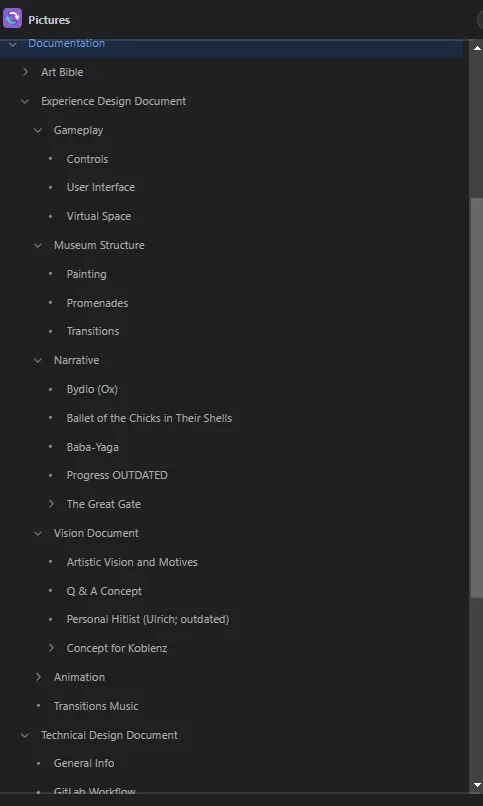
To optimize workflow and document management, I introduced four standard documents for team members to evaluate and adopt. We explored various workflow tools, including Jira, Confluence, GitLab, and Miro, ultimately selecting Miro due to its intuitive interface and accessibility. While I initially planned to implement a comprehensive project Wiki, we ultimately used Confluence primarily for meeting protocols and coaching session documentation.
Task Delegation and Artistic Workflow
Given the project’s strong emphasis on artistic elements, I recognized the need to reduce non-essential workload for the artists, allowing them to focus on their core creative tasks. While asset implementation could be handled by multiple team members, concept creation remained exclusive to the artists. By personally taking responsibility for asset integration into the engine, I effectively streamlined workflows and maximized the efficiency of the team’s creative efforts.
Conflict Management and Team Communication
Early in the project, I identified communication gaps and decision-making delays due to differing opinions among team members. These challenges escalated into a significant conflict, particularly between the artistic team and the Vision Keeper. As Project Manager, I had to navigate these conflicts carefully, balancing project goals, individual objectives, and team dynamics. One of the main obstacles was the lack of transparent communication. Many discussions took place in private, leading to unexpected conflicts and unresolved issues surfacing at the start of each week. In response, I implemented team-building activities and structured discussions to foster collaboration. One particularly effective approach was a Project Tower/Project Tree exercise, which visually demonstrated the interconnectedness of team roles, reinforcing the necessity of cohesive teamwork and open communication.
Team Morale and Resistance to Change
Despite these efforts, some team members remained resistant to conflict resolution, preferring expedited decision-making over thorough discussion. While this approach risked compromising project integrity, I remained committed to maintaining a balance between efficiency and quality. However, persistent resistance contributed to declining team morale, with half of the team disengaging while the other half remained motivated.
Personal Growth and Leadership Development
Taking on a leadership role in project management was a valuable learning experience, providing insight into planning, coordination, and adaptability over a three-month period. While some team members were less engaged, I remained focused on driving the project forward and fostering collaboration. My key takeaways for future projects include enforcing the use of project documents more rigorously to ensure structured workflow adoption, improving conflict resolution strategies to encourage full participation in team discussions, and refining task delegation to increase team engagement and accountability. Despite the challenges, the project maintained a positive atmosphere overall, and my approach received recognition and positive feedback within the department.
Stakeholder Communication
Effective communication with external stakeholders, including theater directors and staff, was crucial for project success. Regular meetings helped ensure alignment, while structured feedback loops, including in-person reviews and video updates, accommodated remote collaboration. Early creative briefings covered cost, content, and set design, allowing for prototyping and iteration before committing resources. Through this collaboration, the idea of founding a company emerged, providing legal and financial flexibility for future projects.
Founding a Company
As the project evolved, we recognized the advantages of establishing a formal business entity. A company structure increased professionalism when working with established institutions, provided legal and financial frameworks for managing contracts and revenue, and facilitated scalability and future collaborations. We decided that one team member would formally found the company while others could operate as freelancers under its umbrella, reducing administrative complexity.
Financing and Monetization Strategy
Given the importance of securing sustainable funding for the VR experience, we explored multiple financing models, evaluating the pros and cons of each approach. A one-time payment model provided predictable costs for the theater but required a high upfront investment, limiting future revenue. A revenue-sharing model created ongoing income potential but involved uncertainty and complex management. A milestone-based payment approach structured payments in manageable increments but offered no future revenue beyond the project’s completion. Ultimately, we selected a monthly subscription model, as it ensured continuous developer compensation while granting the theater ongoing access to updates and support. This model also allowed developers to retain rights to the project, preserving opportunities for future adaptations.