UX and Experience Design in Virtual Reality
Initially, my primary focus within the design domain was to gather feedback on various aspects of the project. This involved assessing internal dynamics, crafting long-term, mid-term, and short-term goals, and ensuring a smoother project launch. While these goals were not solely formulated by me, I played a key role in initiating them and presenting them to the team for collaborative iteration.
As the project evolved, a team member expressed interest in leading the design aspects. Recognizing their ambitions, I stepped back to allow them to take the reins while still contributing to the balance of experiential values. Given their concurrent commitments, we collectively decided that, as the creator of the features, I would ensure their balance and optimization to maintain efficiency.
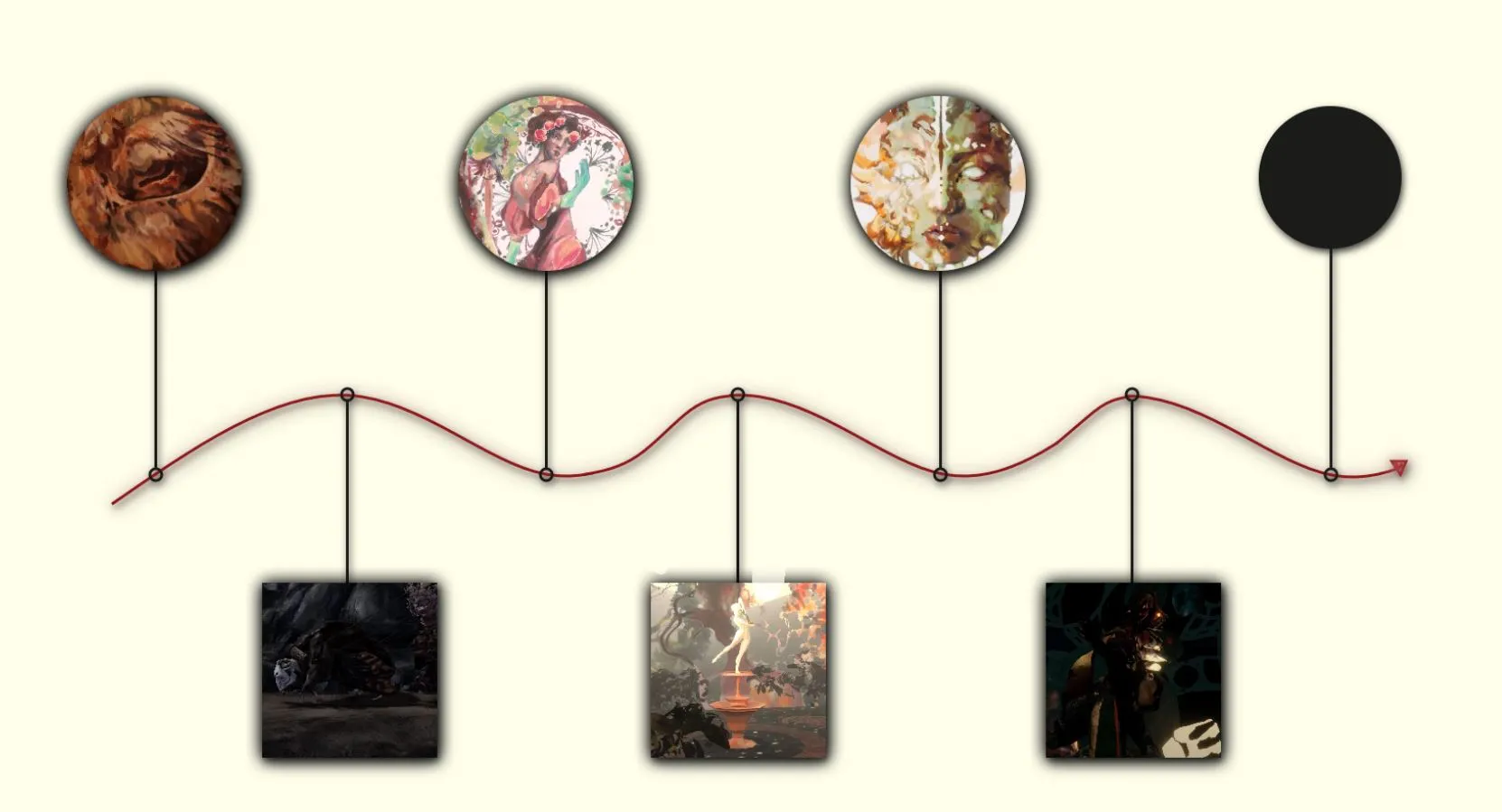
Streamlined Approach to Feature Setup and Functionality
Unlike traditional workflows where developers create features and then pass them to designers, our approach was more streamlined. My strong understanding of feature setup and functionality within the engine allowed me to bridge the gap between design and technical implementation. This reduced the need for additional onboarding and saved considerable time, allowing designers to focus on refining the experience rather than setting up foundational aspects.
Balancing Immersion and Emotional Engagement
A key challenge was balancing values that impacted virtual reality immersion, particularly in relation to user perception. The scale of the user within the environment had to evoke specific emotional responses, as the size of the user relative to their surroundings influenced engagement.
For example, the Baba Yaga character's size was initially overlooked, but after analysis, I determined that a larger stature was necessary for the intended narrative impact. This ensured that the player’s perception aligned with the story’s tone.
Similarly, the Bydlo entity presented a unique challenge—its portrayal had to be neither overpowering nor diminutive. Extensive iterations were required to achieve the right emotional impact.
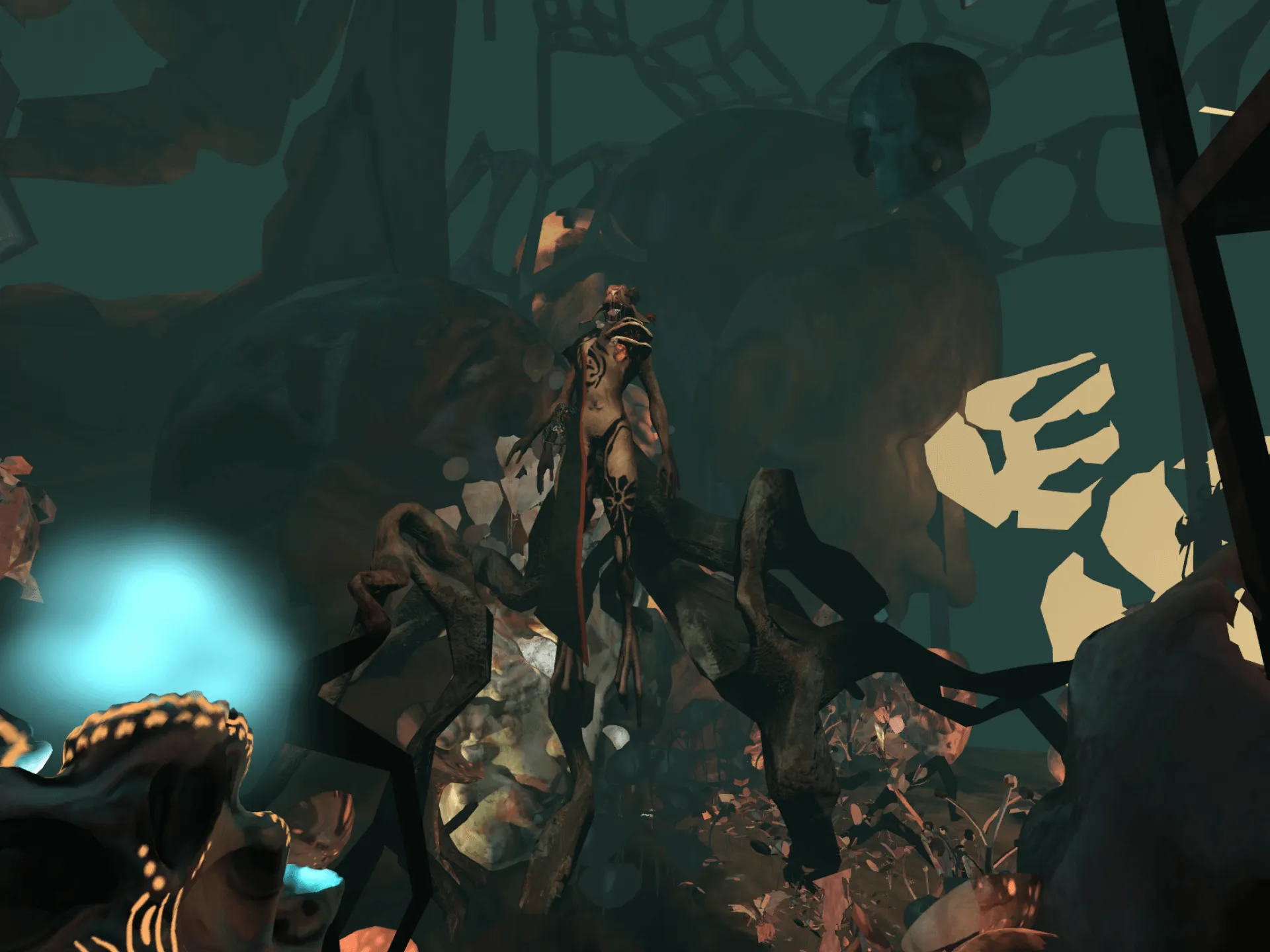
Motion Sickness and Accessibility
A significant aspect of virtual reality design is ensuring the experience is accessible, particularly for users who may be susceptible to motion sickness. I implemented an "Anti-Motion-Sickness" design tailored for this purpose, especially for users who were unfamiliar with VR. One of the primary strategies I employed was creating a consistent virtual environment, which prevented sudden changes in height that could lead to discomfort. Additionally, I ensured that the designated path remained stable, avoiding unnecessary deviations that could trigger motion sickness.
Further, I carefully designed scene transitions, an often-overlooked aspect in VR experiences. Initially, the concept was for users to physically step into each new scene. However, during user testing, it became apparent that users tended to passively observe rather than engage physically with the environment. This insight led to the revision of the transitions, making them seamless and less reliant on physical action.
Designing for Passive Observation
Since our project lacked a clearly defined target audience, extensive research into potential museum visitors' behavior was crucial. Playtesting revealed that most users preferred passive observation over active participation. This insight informed the design of transitions, which were crafted to unfold effortlessly before the user. By minimizing the need for physical interaction, we created a smoother, more immersive experience that matched user expectations.
Additionally, the constraints of VR’s limited physical space led to a design strategy that subtly simulated user movement. This allowed for smooth scene transitions without triggering motion sickness. Techniques such as gradual changes in field of view were employed to mask forced user movement, ensuring a seamless and immersive experience. An example of this can be seen in the transition into the "Bird Picture" scene, where the field of view adjusts to hide any abrupt movement.
Focus on Guiding Lights and Visual Design
To enhance user experience and aid navigation, we removed traditional controls in favor of intuitive hand tracking, allowing for more organic interaction. To assist users in navigating the environment, I developed the concept of "Guiding Lights." These were soft, glowing trails that subtly directed users through the environment, ensuring they always knew where to go without detracting from the immersive experience.
The creation of the Guiding Lights involved both VFX and shader development. Utilizing Unity’s Particle System, we designed lights that were distinctive for each piece of content encountered in the environment. The guiding lights were dynamically interactive with the environment, thanks to a custom shader I created, which made the lights blend organically with the surrounding elements. This VFX was essential for maintaining immersion while providing clear navigation cues for users.
Refining the VR Experience
Throughout the project, my role as both designer and developer allowed me to iterate on several design concepts and solutions. I worked closely with the technical team to ensure the experience remained smooth and accessible. A strong focus was placed on ensuring that the system remained intuitive, minimizing the learning curve for new users. The feedback loop between design, development, and user testing proved invaluable for refining the overall experience.
However, I feel there are still some unresolved design concerns. Despite my primary roles in programming and project management, I was passionate about contributing to the design side, particularly in the realm of Virtual Reality. Moving forward, I plan to shift my focus entirely to design, leveraging the lessons learned from this project to create even more polished and user-centered VR experiences in the future.