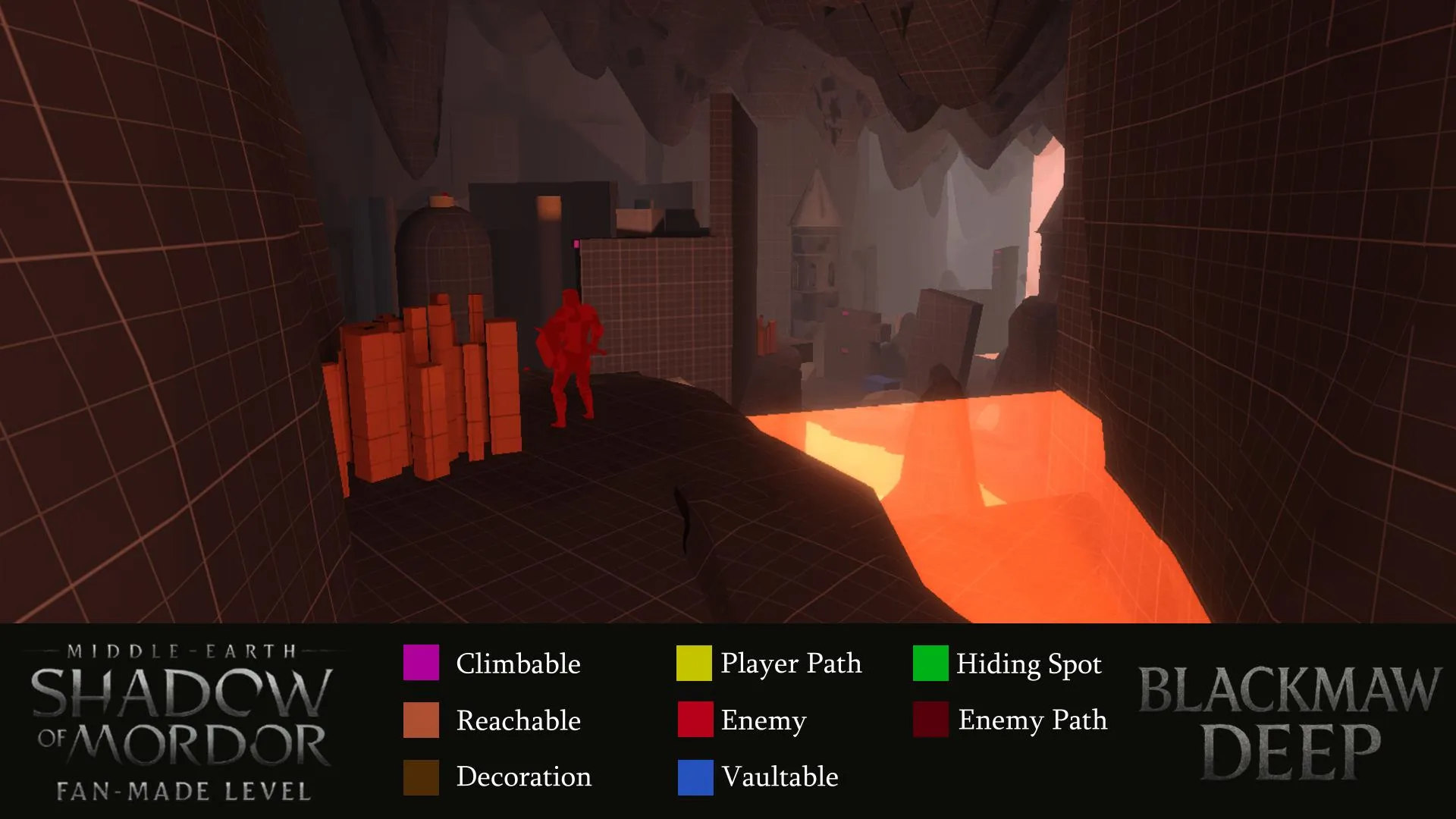
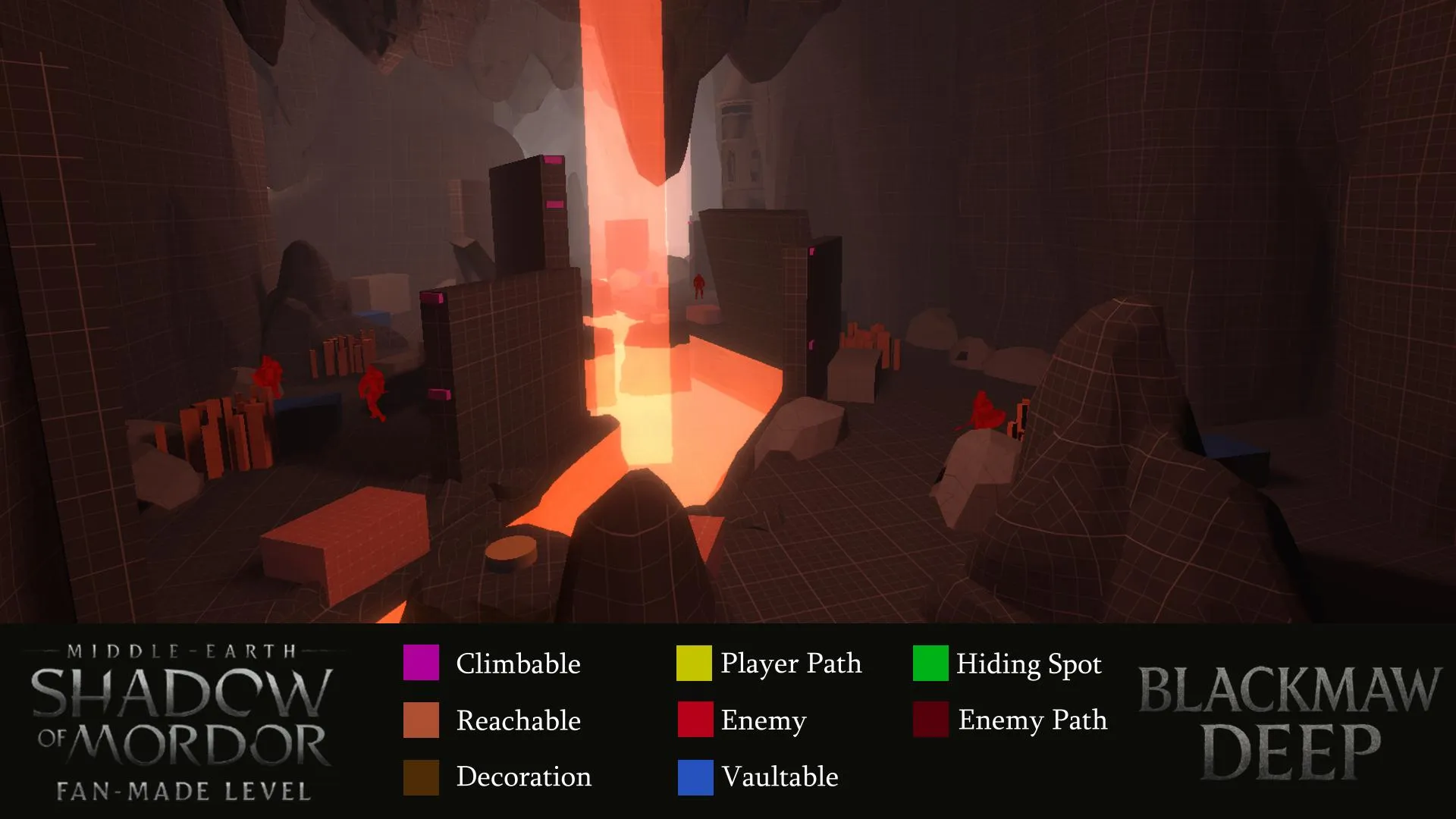
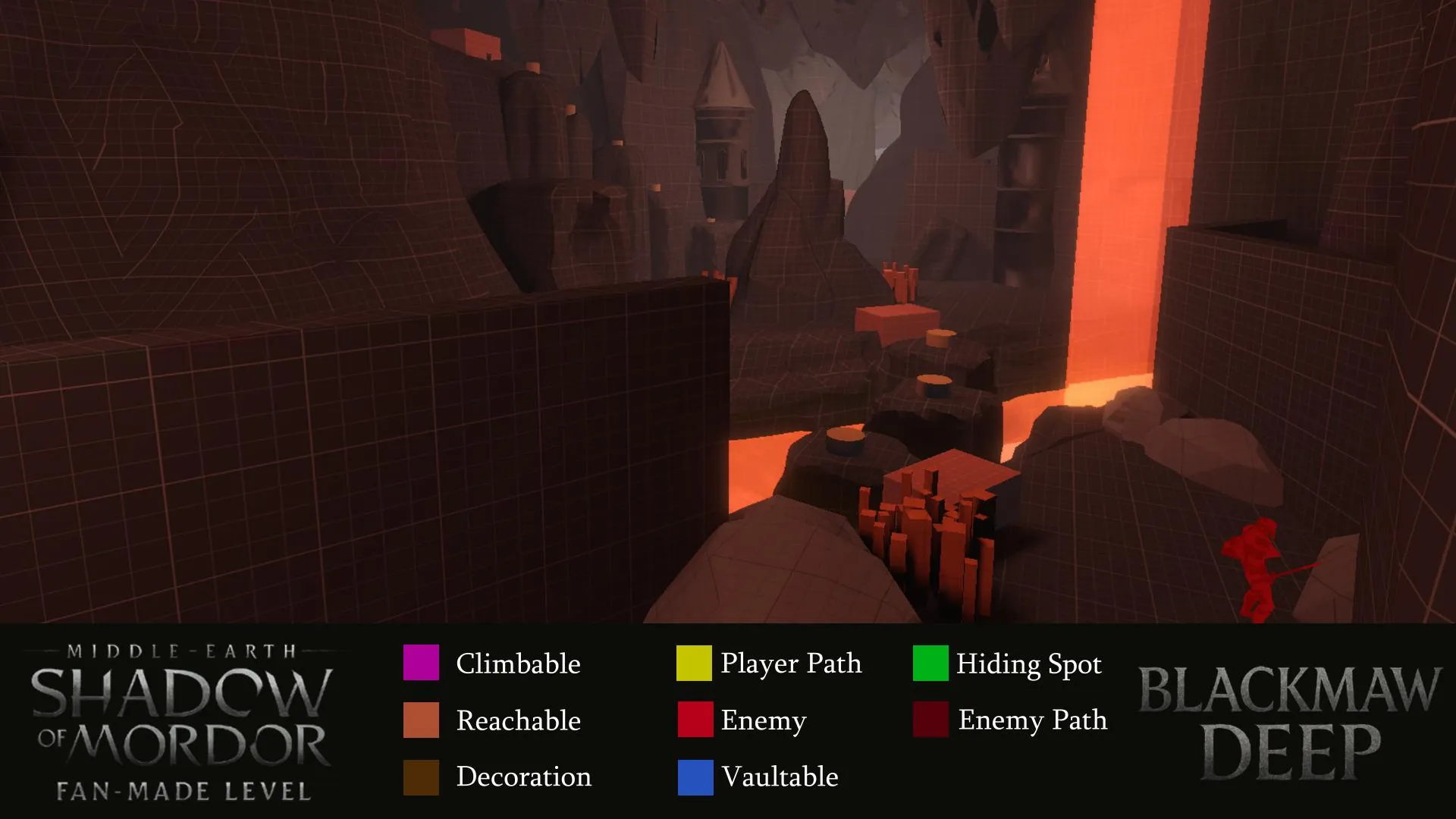
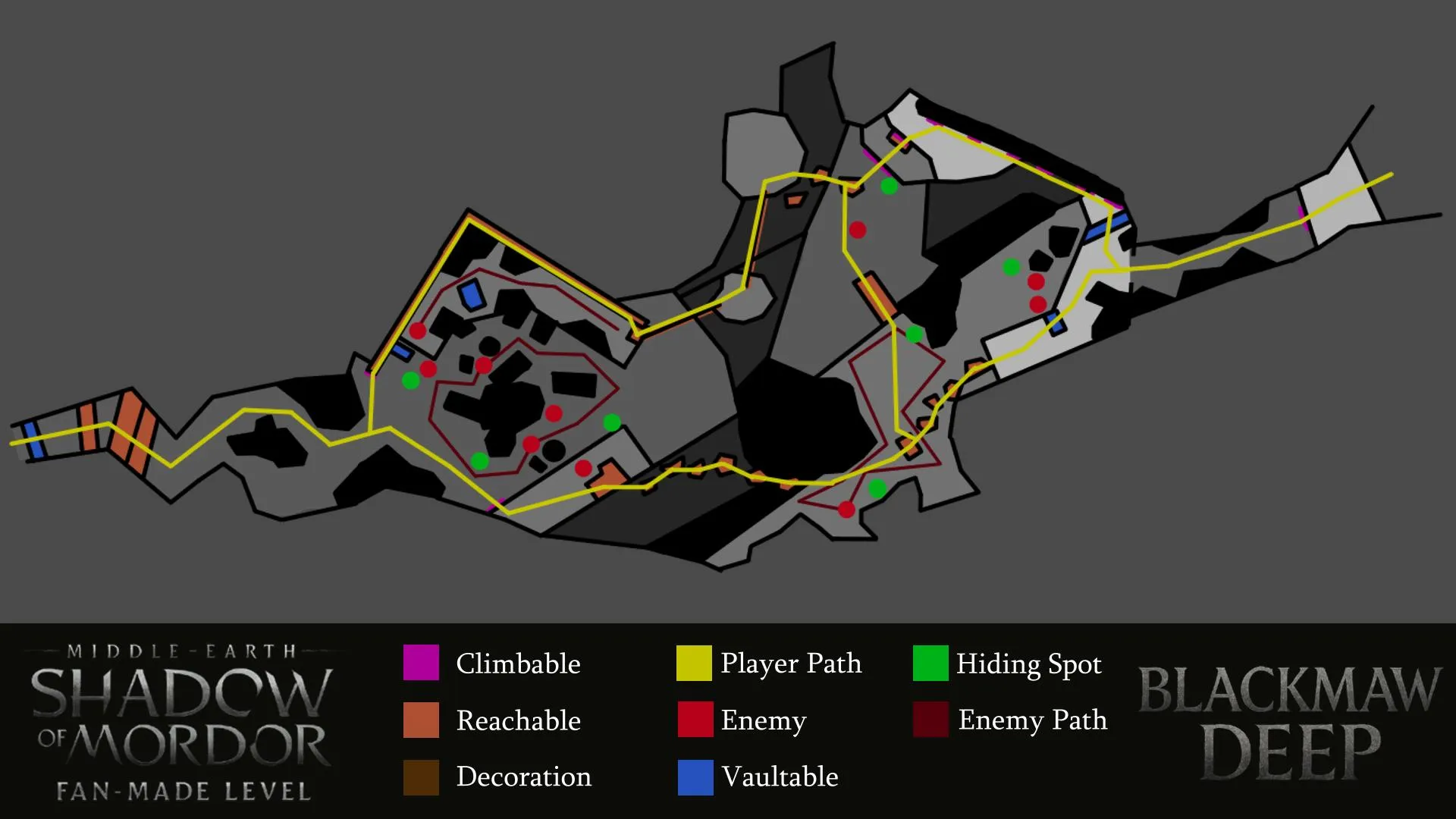
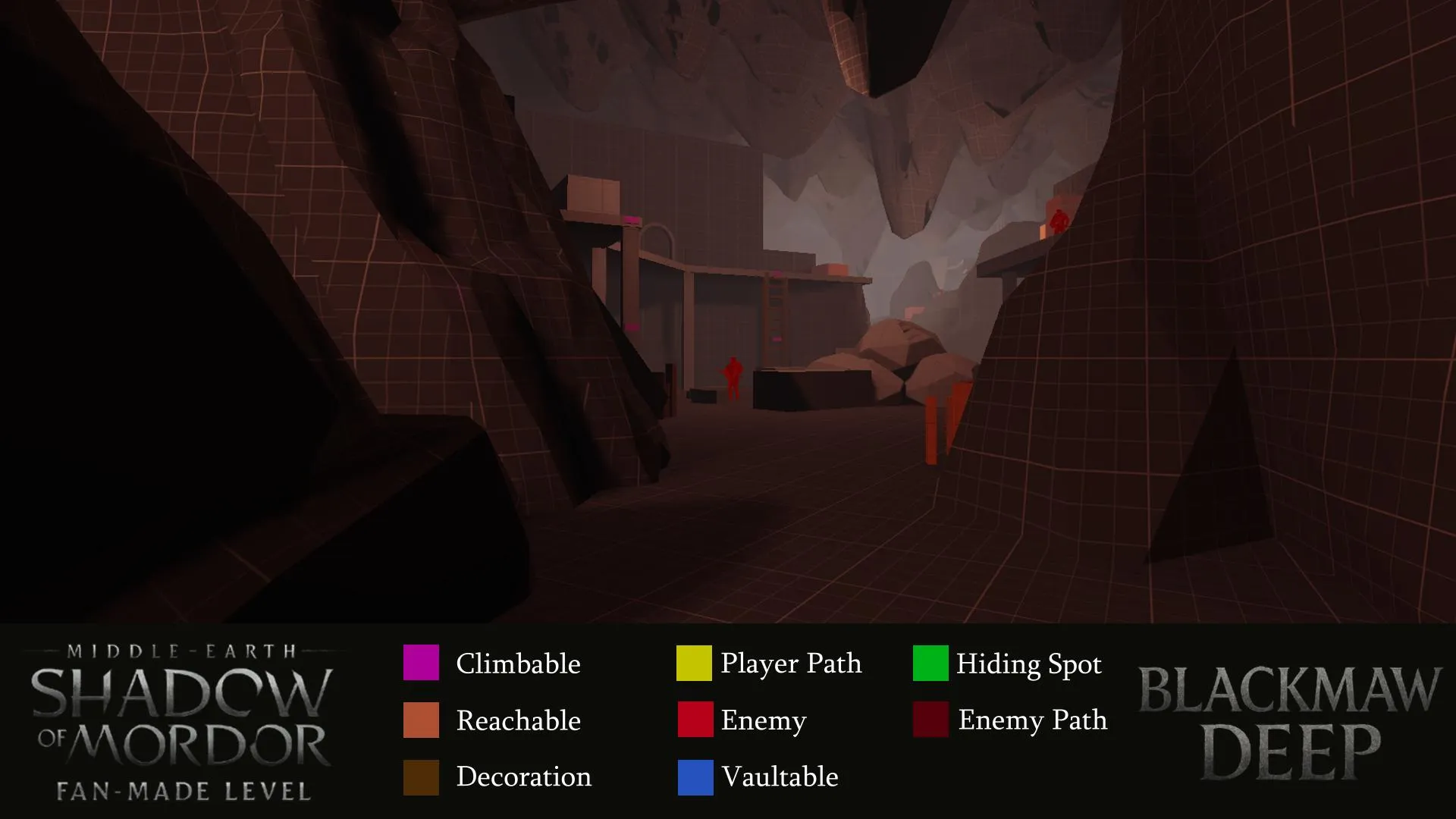
Overview
Inspired by Shadow of Mordor and Shadow of War, this linear stealth-action level emphasizes player agency, verticality, and modular traversal.
Set in a volcanic mining complex, it blends multi-path encounters with parkour and climbing, offering varied pacing and spatial progression suited for mid-game play.
Summary
Name: Blackmaw Deep
Game Type: 3rd-person stealth-action
Setting: Volcanic mining complex
Game Engine: Unity
Style: Linear with layered traversal, stealth & combat
Focus: Player agency, environmental storytelling, traversal variety
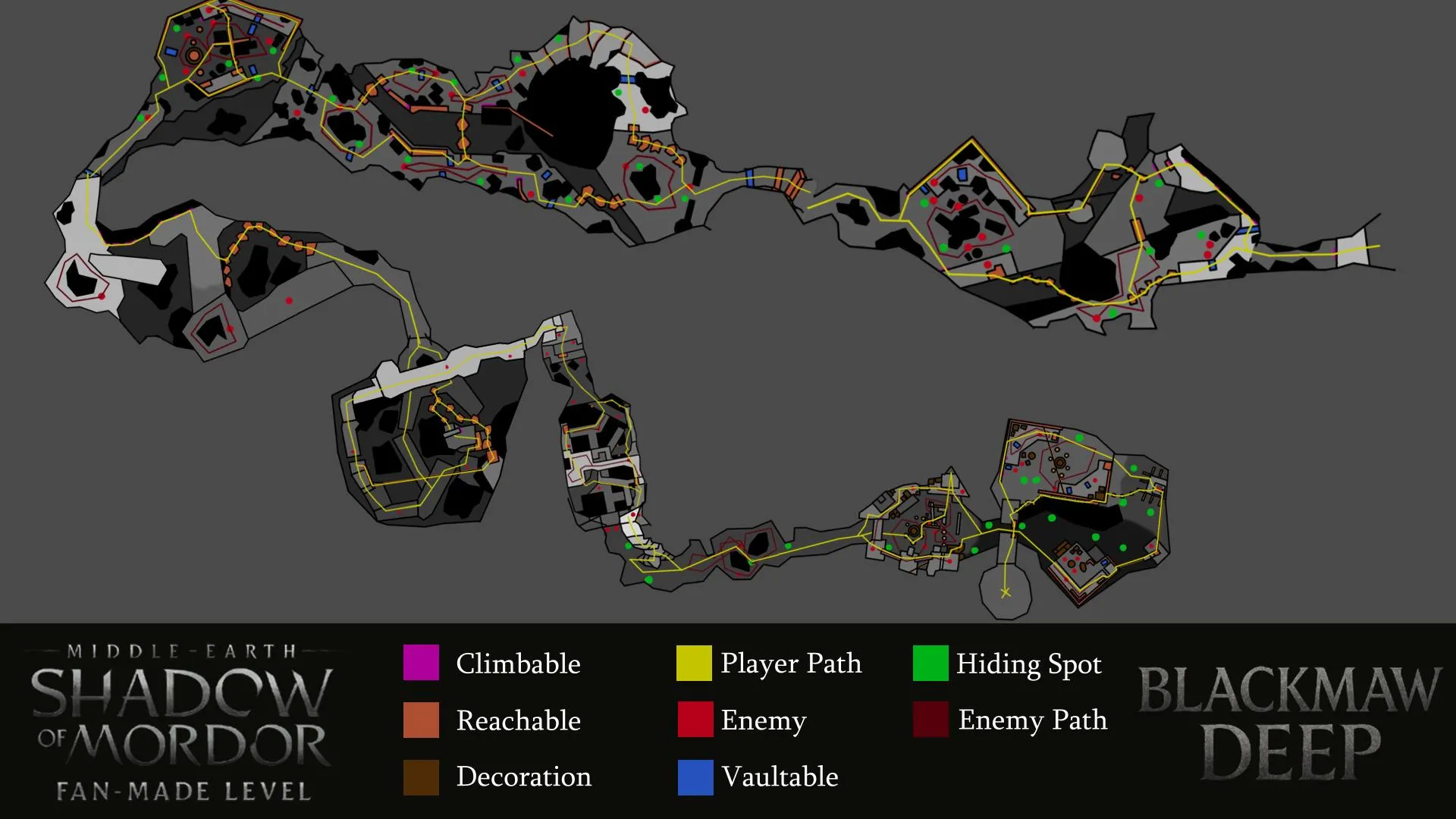
Level Structure
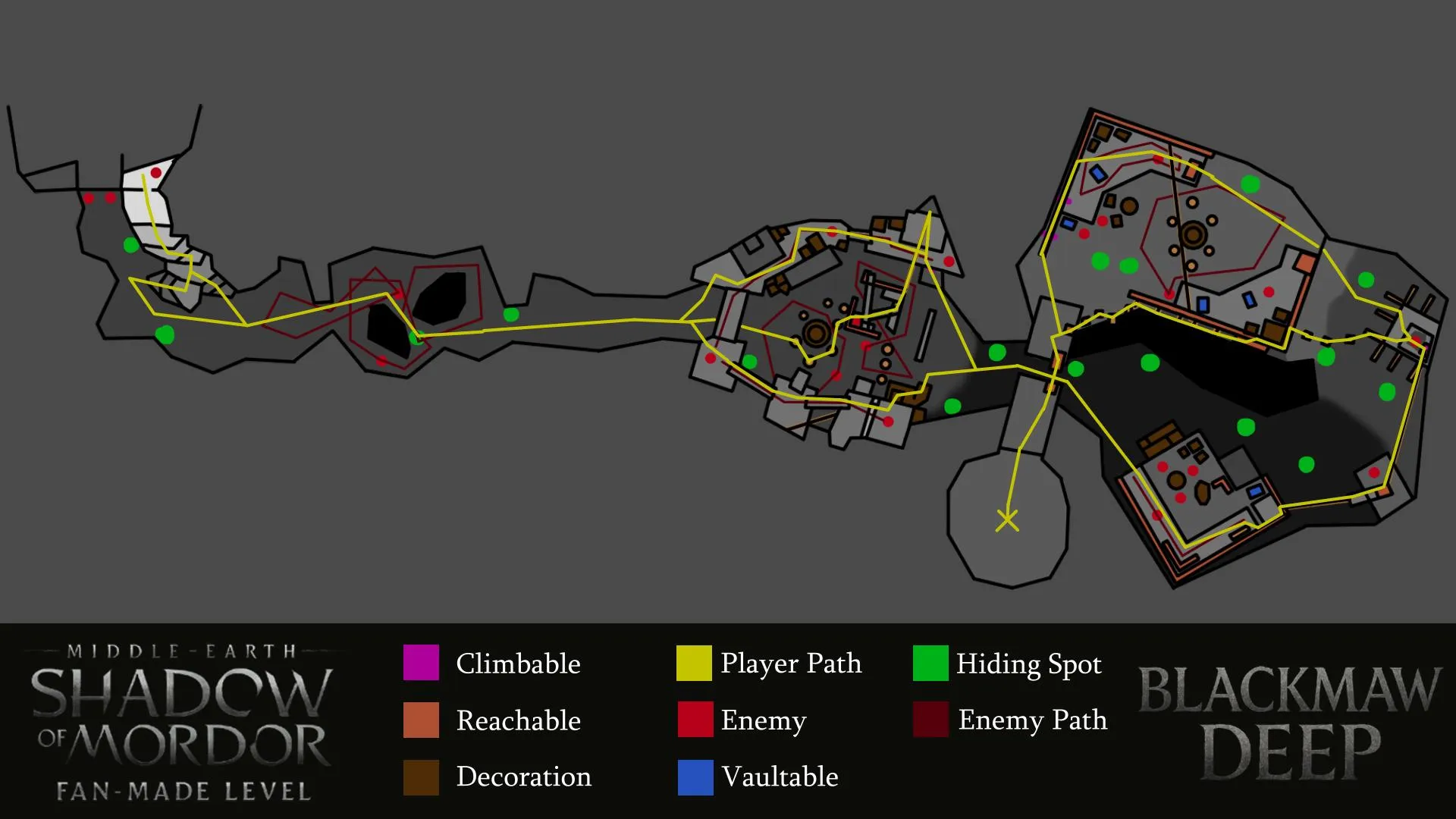
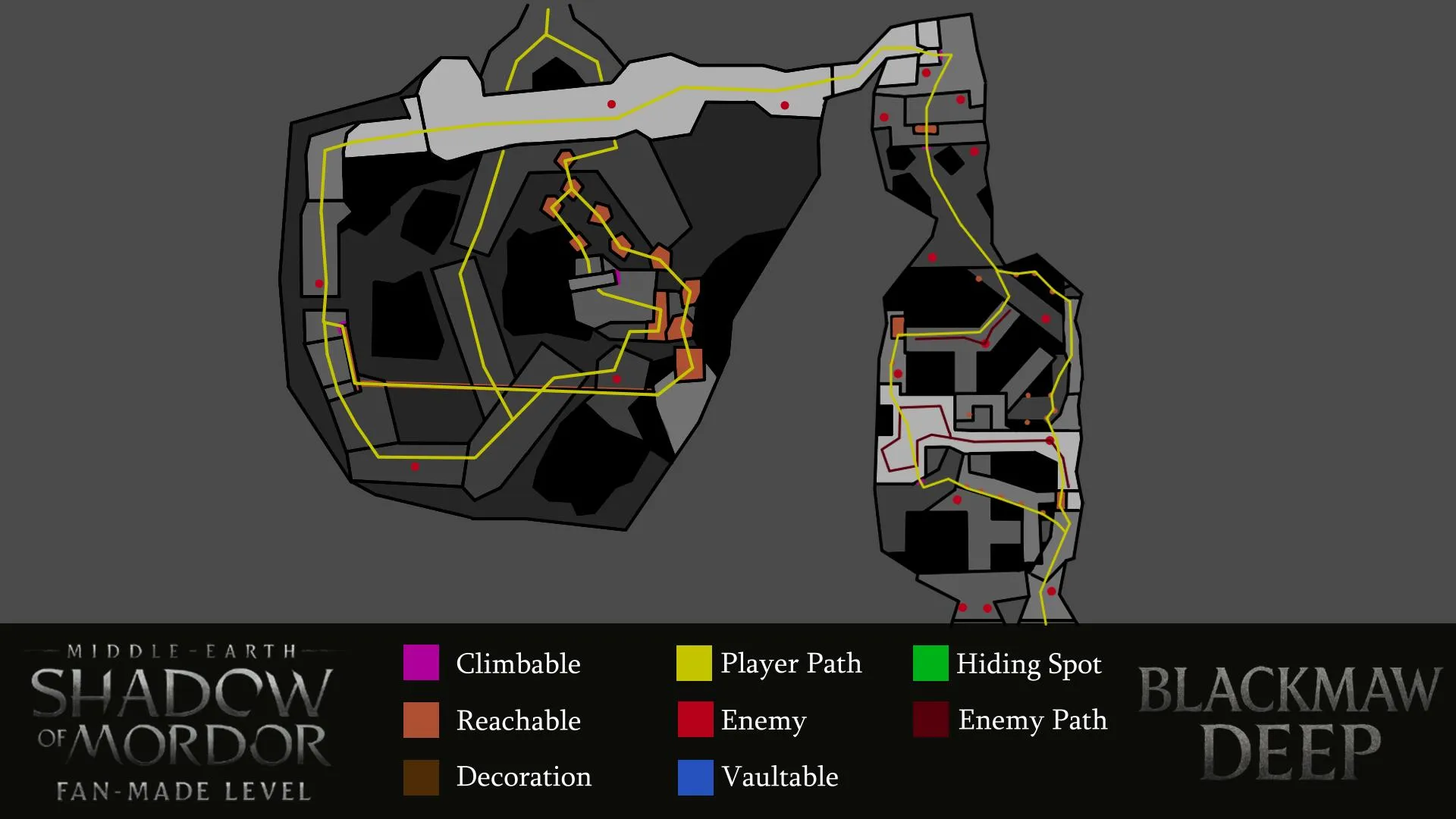
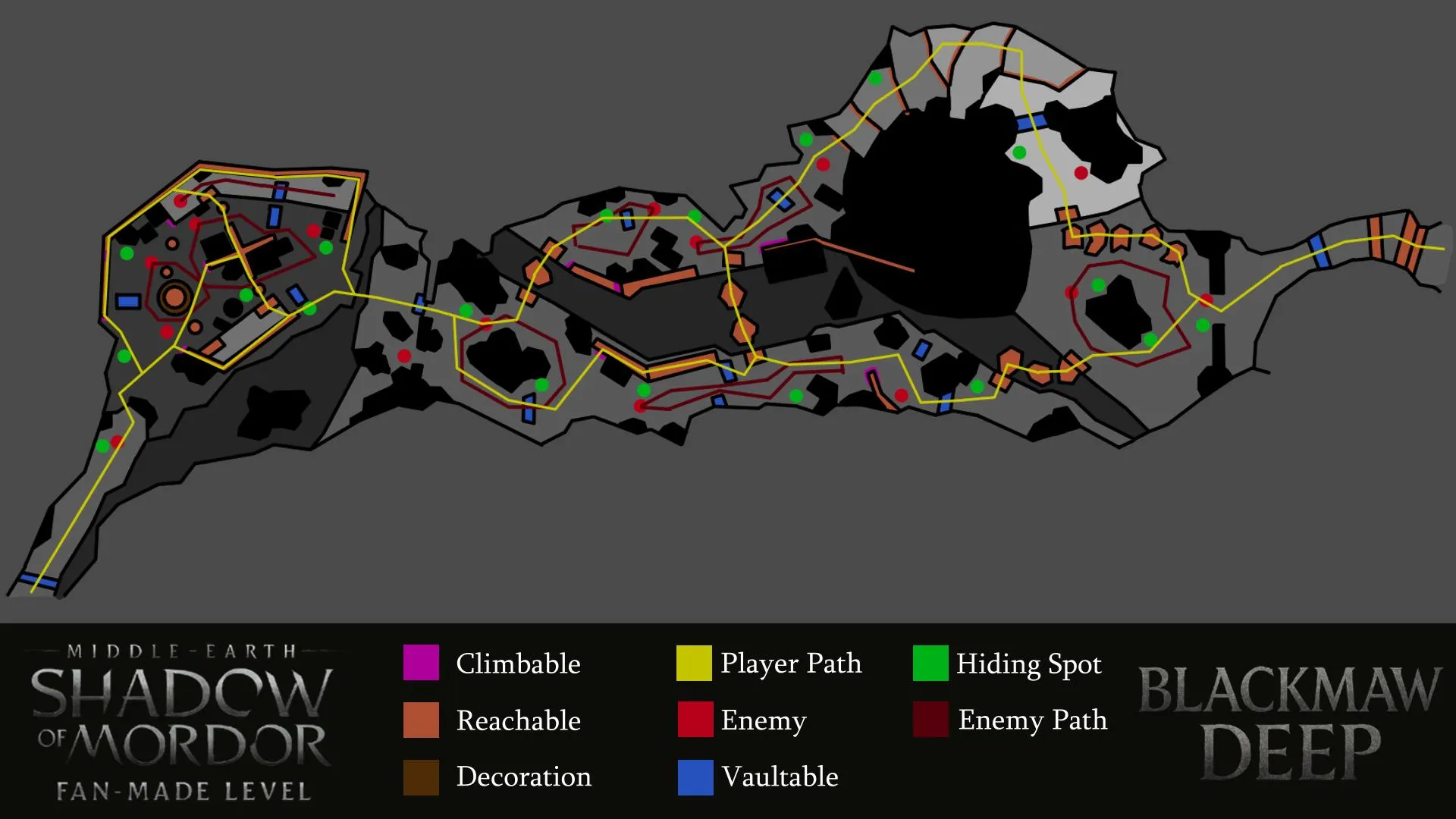
The level is composed of six major segments, each designed around a different pacing beats, environmental theme, and player challenge:
- Camp Entrance
- Inner Compound
- Hill-to-Mine Transition
- Mines
- Cavern & Lava Falls
- Fortress & Exit Cave
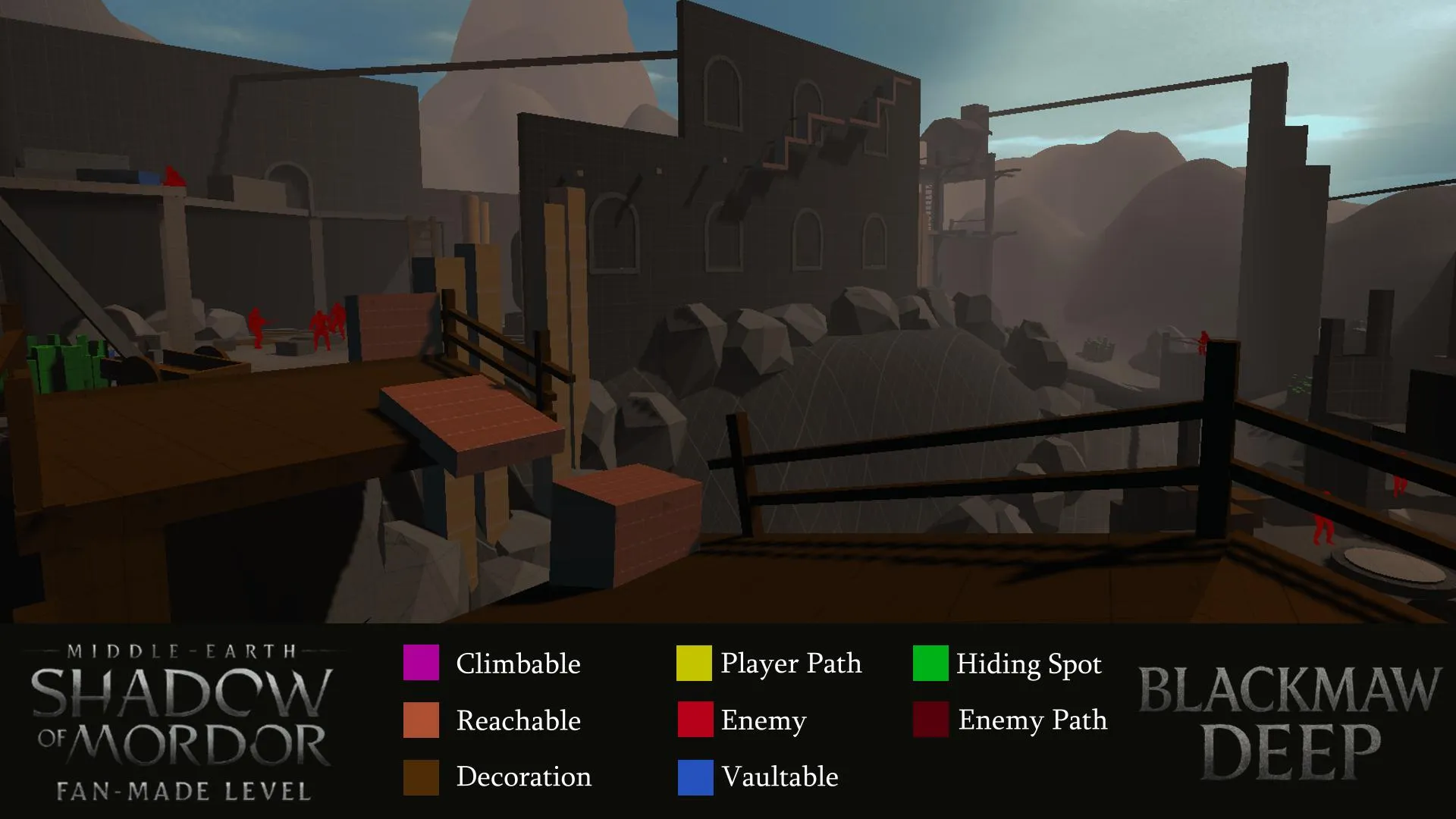
Core Design Pillars
1. Multi-Route Design / Player Agency
The level supports multi-path progression throughout:
- High-risk/high-reward routes with fewer enemies but more platforming hazards
- Low-risk/low-reward stealth paths that rely on timing, cover, and patrol evasion
- Neutral routes that combine direct combat with vertical traversal or soft stealth
2.Traversal Variety
Inspired by dynamic movement systems, traversal in this level includes:
- Climbable surfaces (walls, vines, crates)
- Balancing mechanics (tightropes, poles, bars)
- Platforming elements (ledge jumps, pole hops)
- Vaultable objects (vault over objects for dynamic feel)
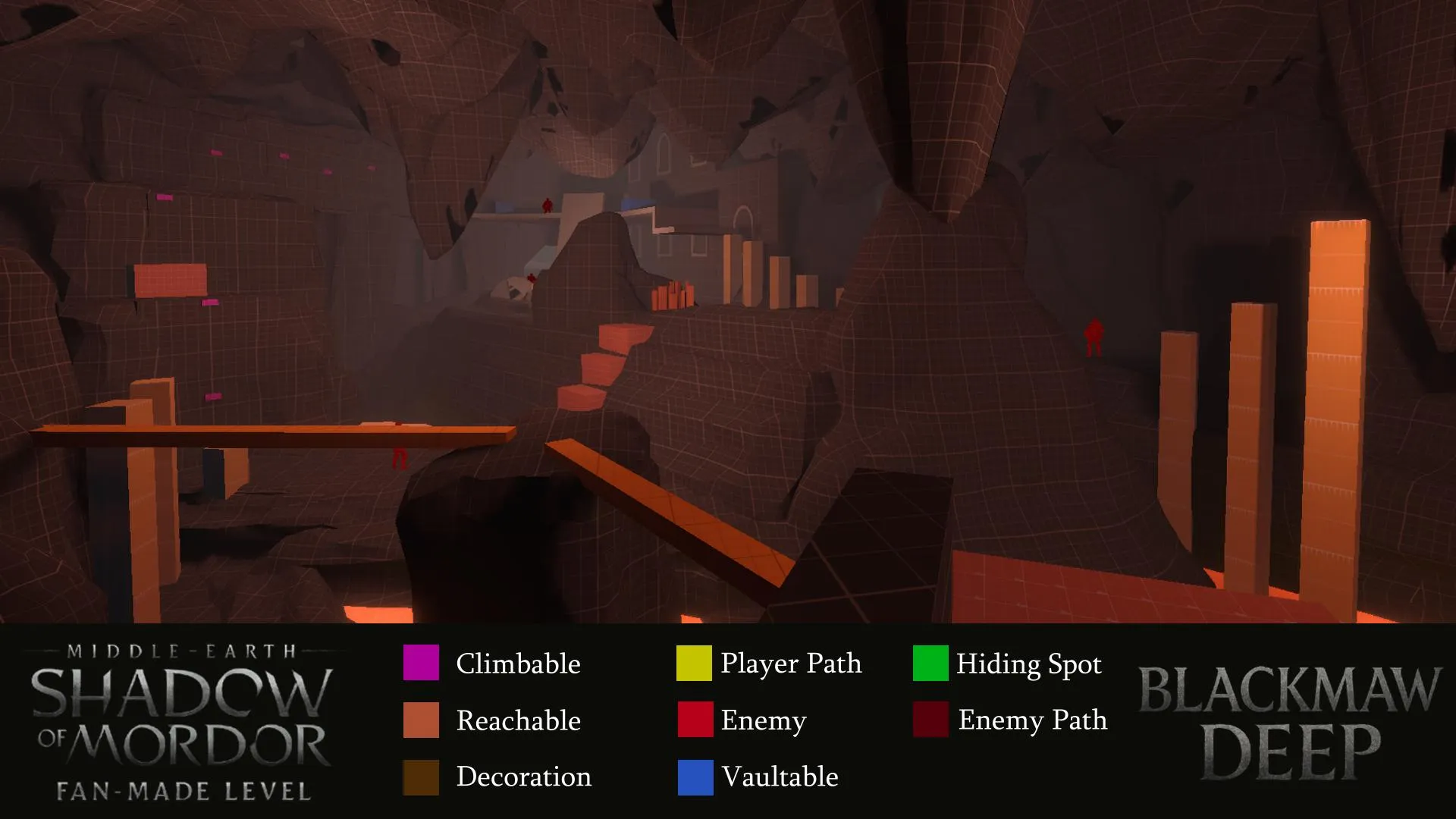
3.Pacing & Spatial Rhythm
The level intentionally alternates between tight, high-tension segments and open,low-intensity areas to create a rhythm of stress and relief. This maintains engagement and avoids sensory fatigue.
- High-Tension Zones: Dense layouts, enemy clusters, vertical challenges (e.g., Mines, Fortress)
- Cooldown Zones: Open caverns, scenic routes, traversal-focused sequences (e.g., Lava Falls, Cavern)
4.Environmental Storytelling & Landmarking
Each space communicates progress, narrative, and function visually:
- Volcano in the backdrop from the start, reappearing as a consistent macro landmark
- Visual transitions between natural and artificial spaces to suggest narrative progression (e.g., mine machinery, lava flow)
- Use of Vista Points to allow players to plan routes and reinforce spatial orientation
Camp Entrance
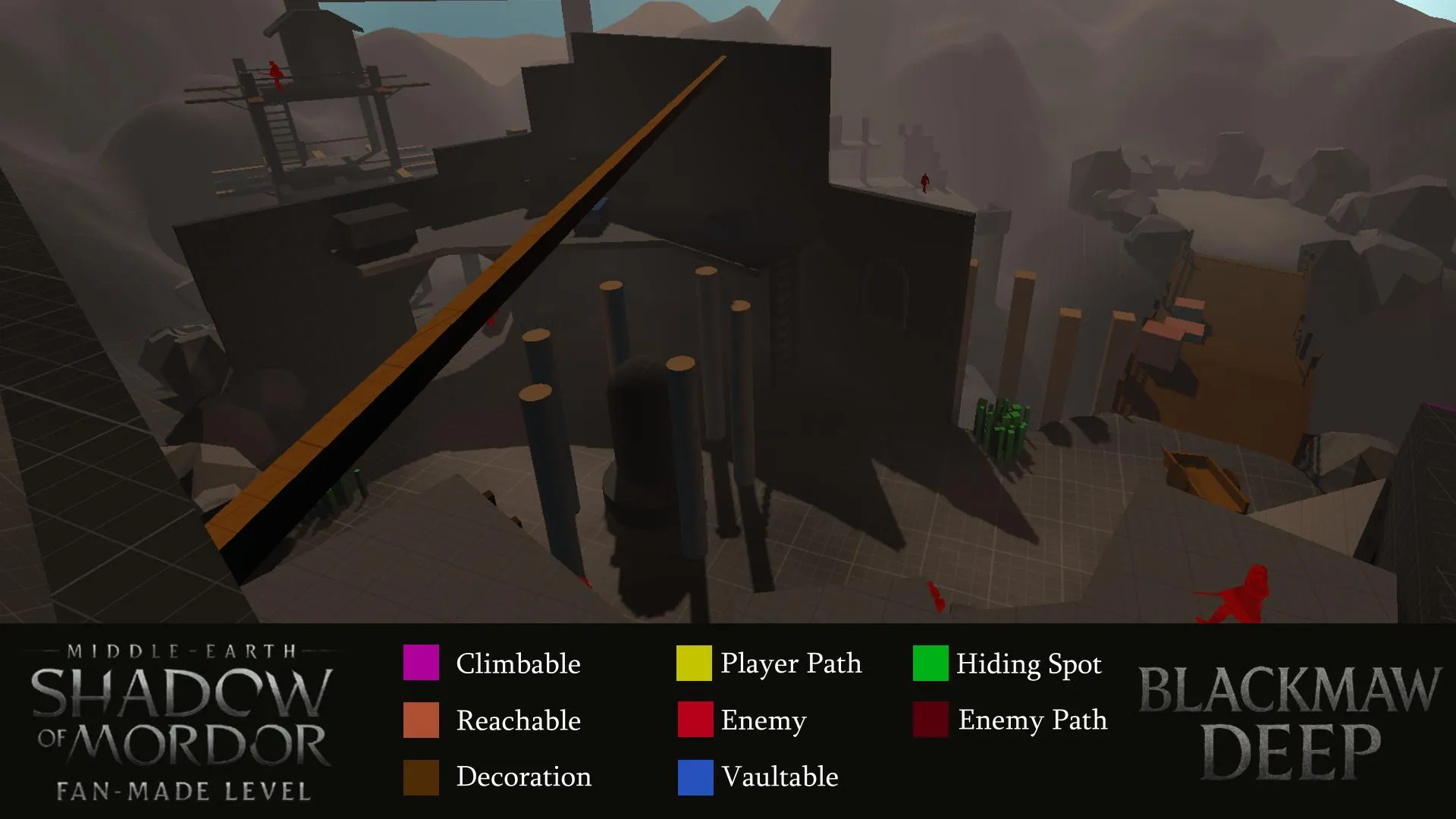
- Objective: Introduce player to the level’s systemic possibilities without hand-holding.
- Spatial Design: Semi-open area with layered verticality. The player begins on a raised vista, overlooking the enemy base and the mountain in the distance.
- Key Design Techniques:
- Line-of-sight (LOS) management: enemy watchtowers and patrols
- Choice-based traversal: Balancing on poles vs. wall climbing
- Landmarking: A visible ruined tower at the far end acts as a navigational anchor
- Narrative Beat: The player is infiltrating the outer edge of a hostile faction’s territory, emphasis on stealth.
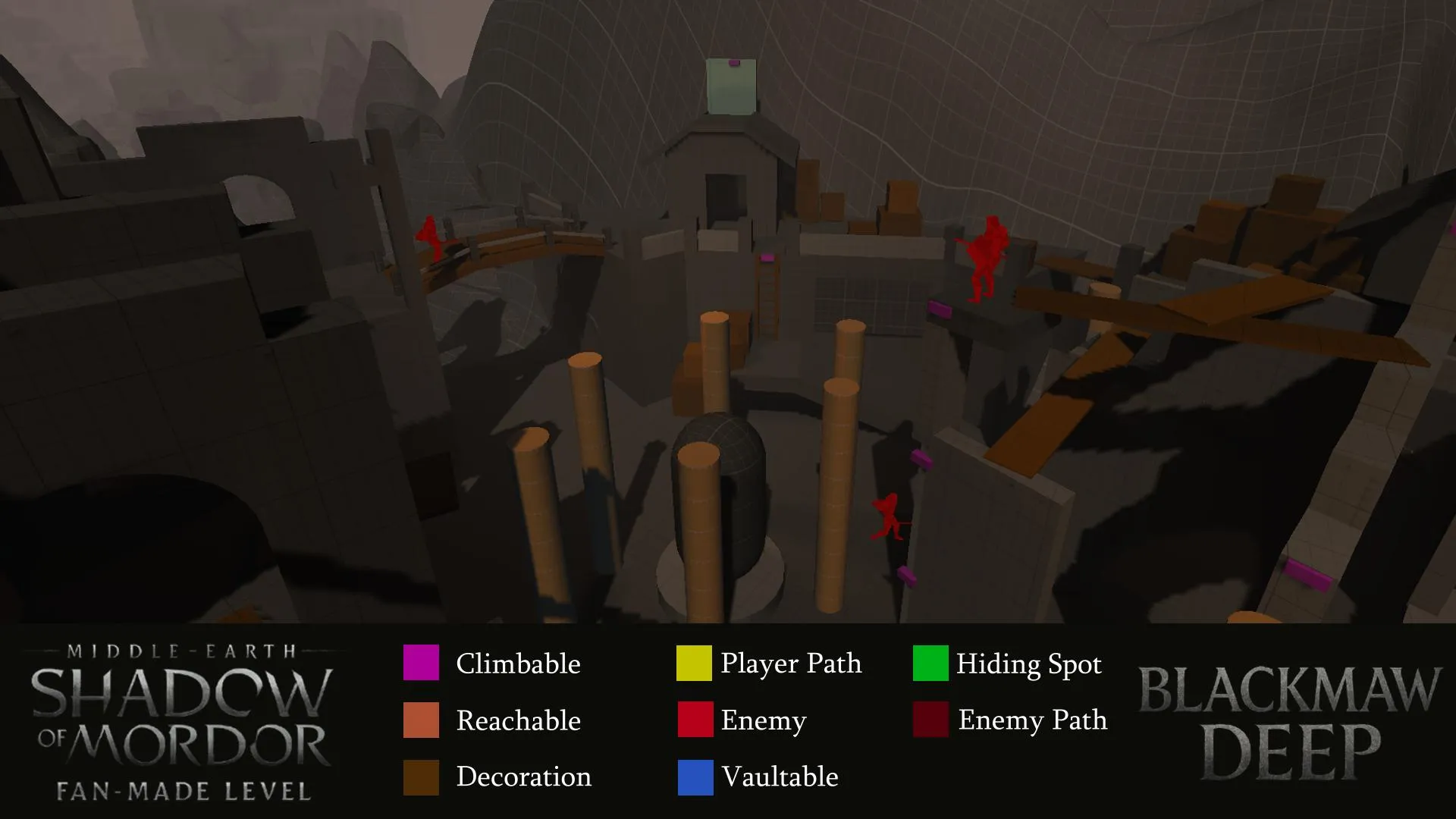
Inner Compound
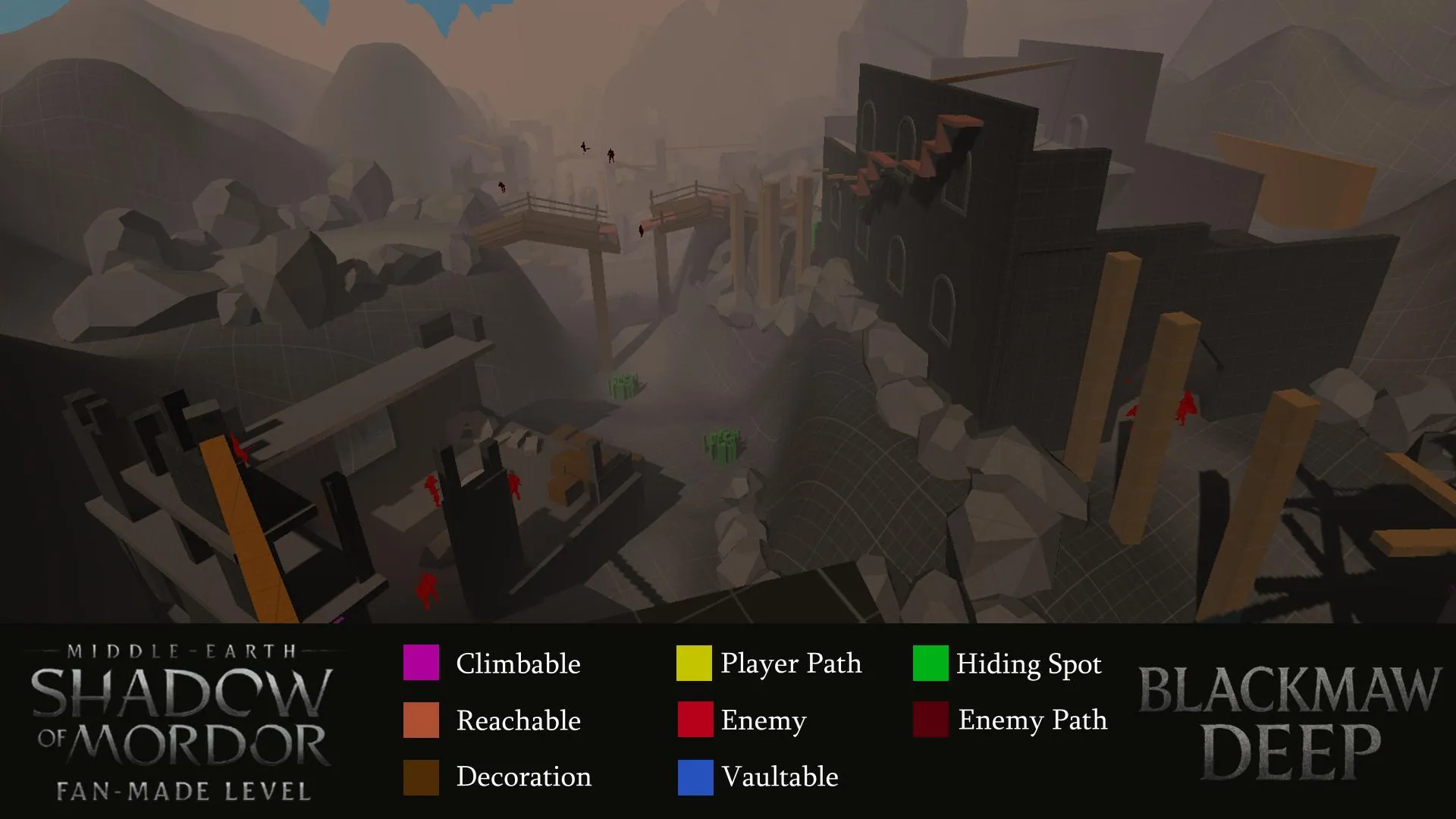
- Objective: Escalate complexity and test stealth mastery
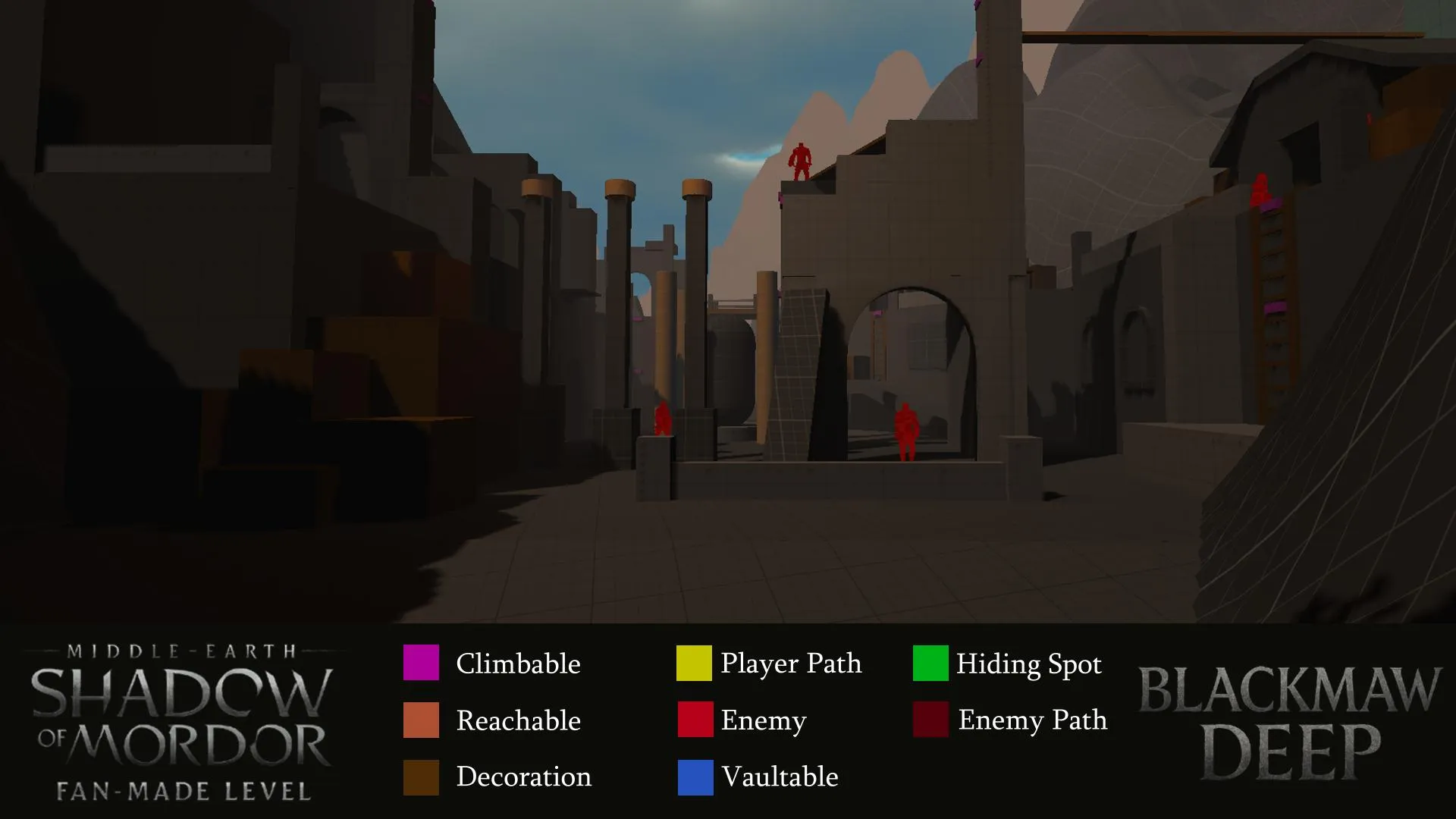
- Spatial Design: Clustered ruins, interlocking patrol routes, multiple vertical layers
- Key Features:
- Multiple traversal options (e.g., up through towers, under through crates)
- High spatial density to increase pressure
- Use of occlusion and cover objects (bushes, walls) to break sightlines
- Level Flow:
- Routes diverge and reconverge, allowing stealth or direct confrontation
- Includes hidden vertical entry points into the next area (e.g., rooftop climb, underground crawlspace)
- Narrative Beat: Player enters a deeper section of enemy-controlled space; a shift from reconnaissance to infiltration.
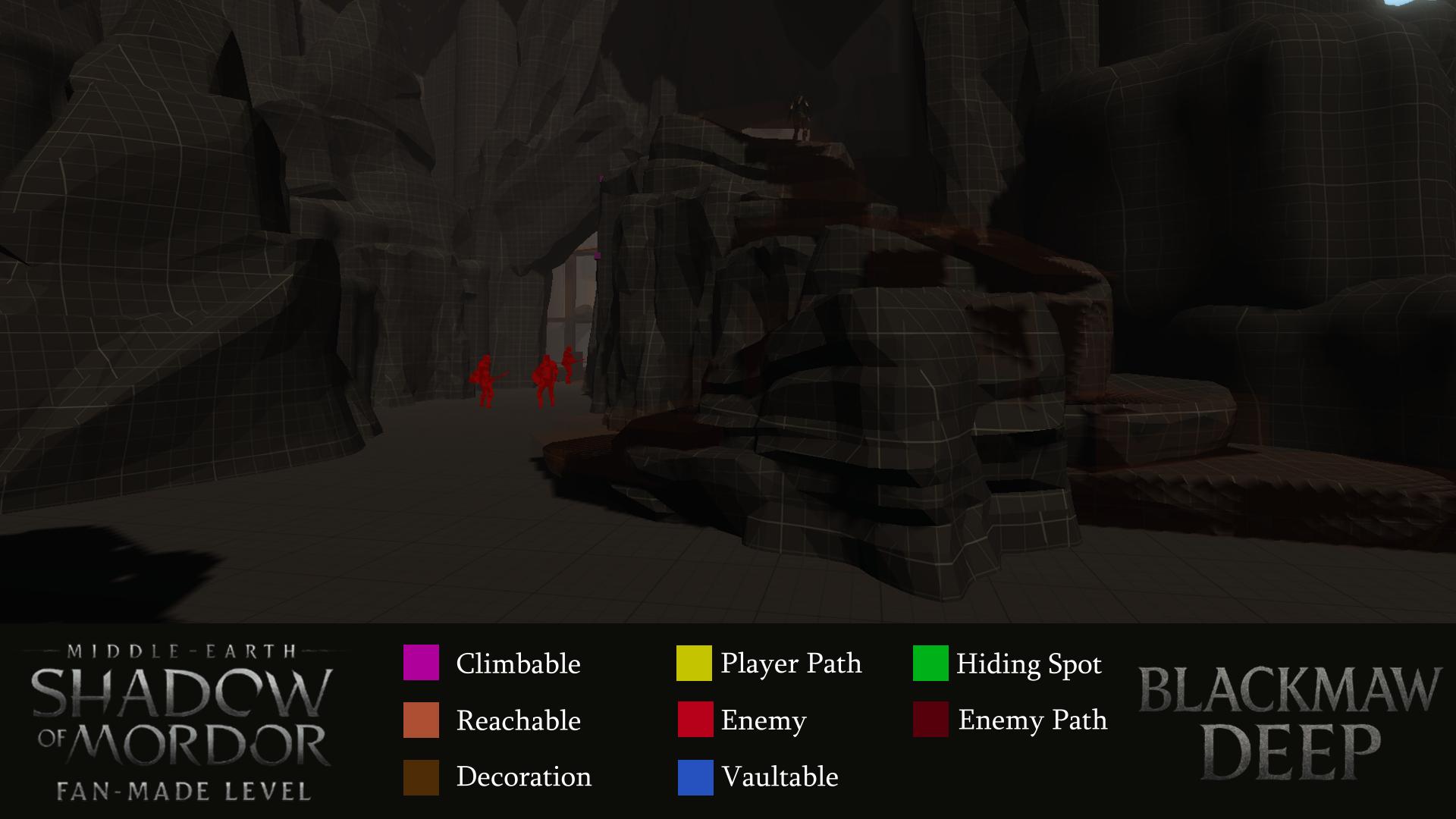
Hill-to-Mine Transition
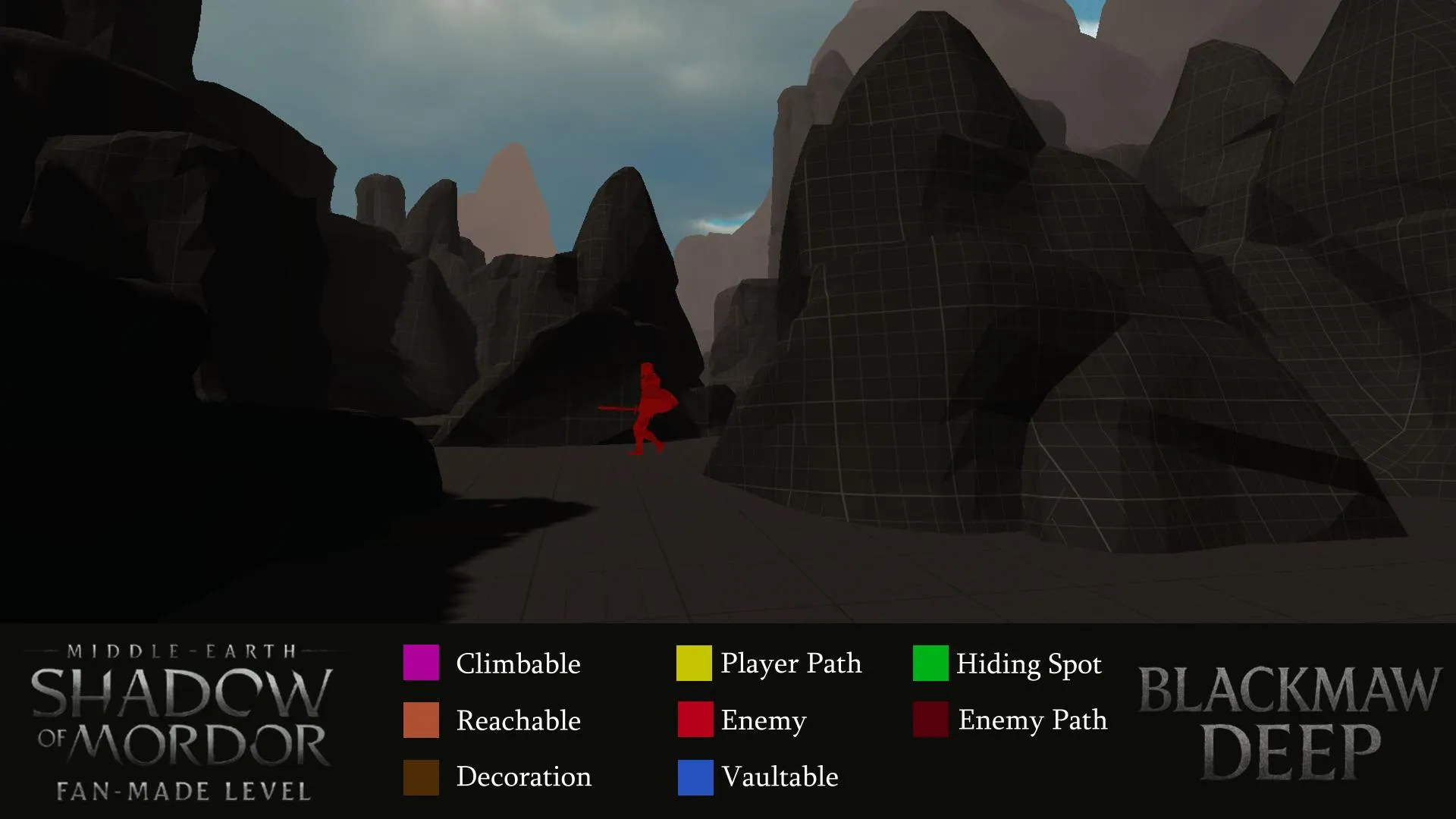
- Objective: Provide pacing cooldown while subtly shifting environmental tone
- Design Goals:
- Reduce combat encounters
- Transition from open rocky hills into dark subterranean space
- Key Design Techniques:
- Environmental cues (rock color, lighting) signal transition
- Enemies are more static and sparse
- A guarded mine gate encourages alternate flanking through climbable rocks or an unguarded maintenance hole
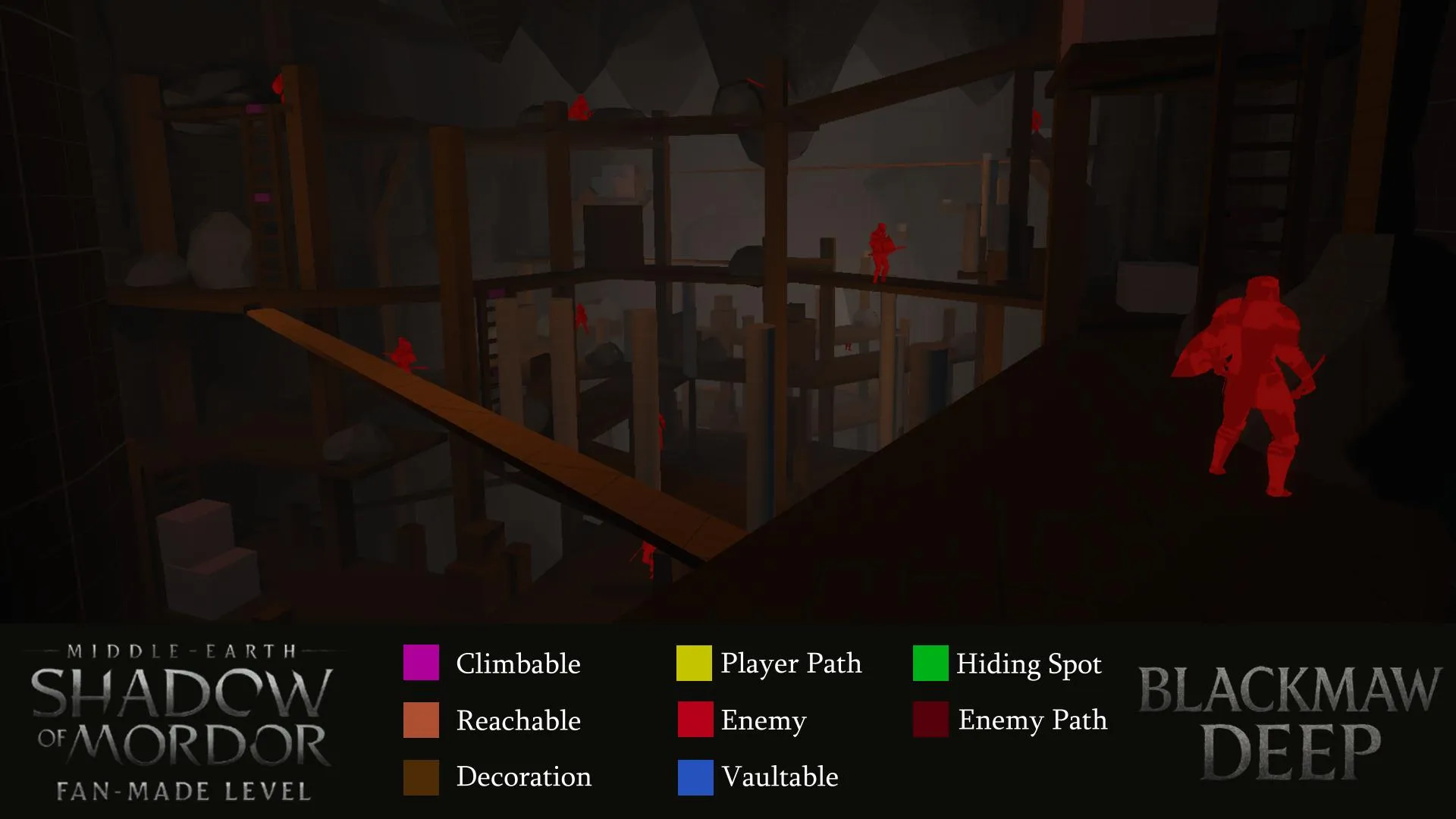
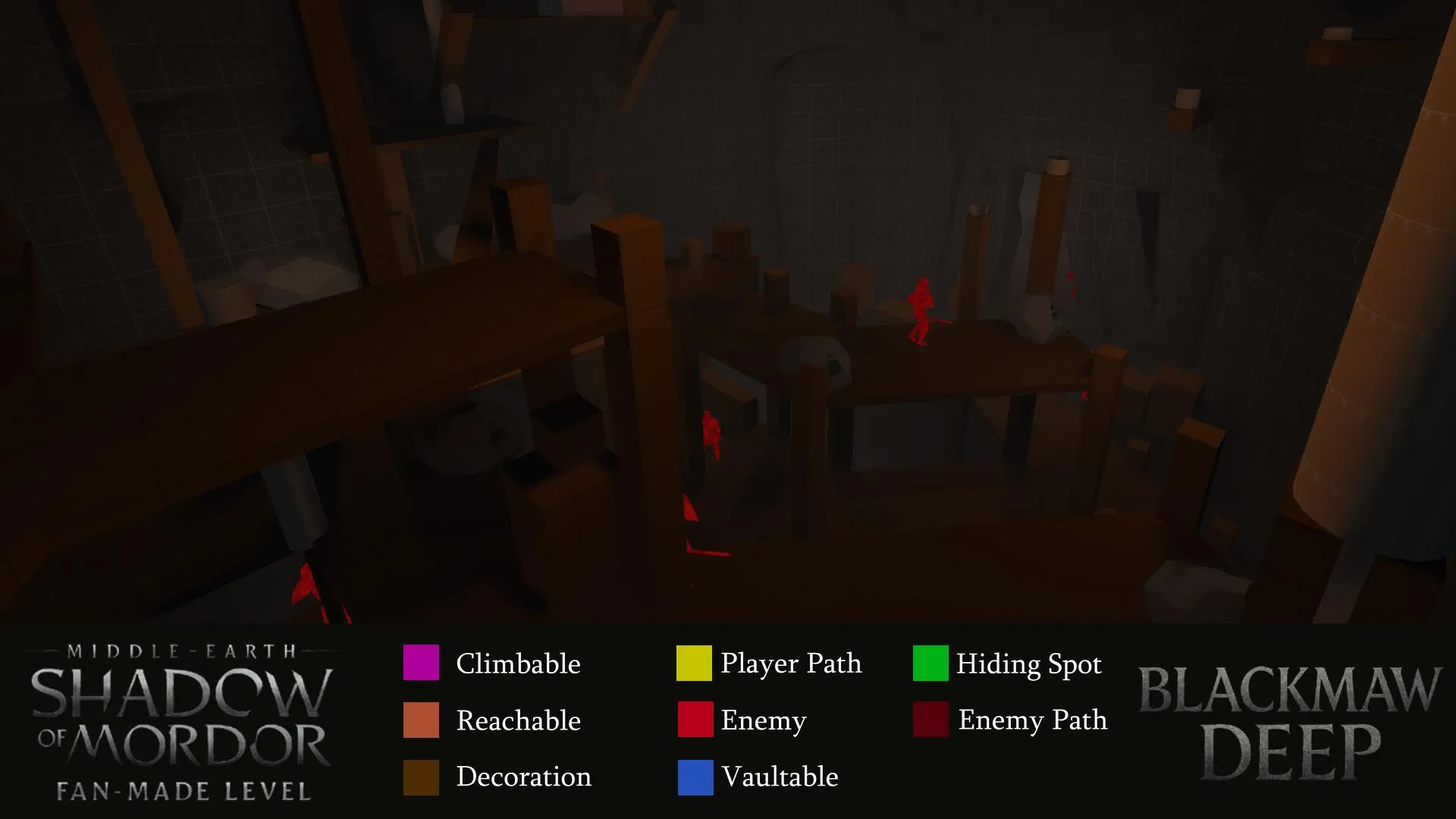
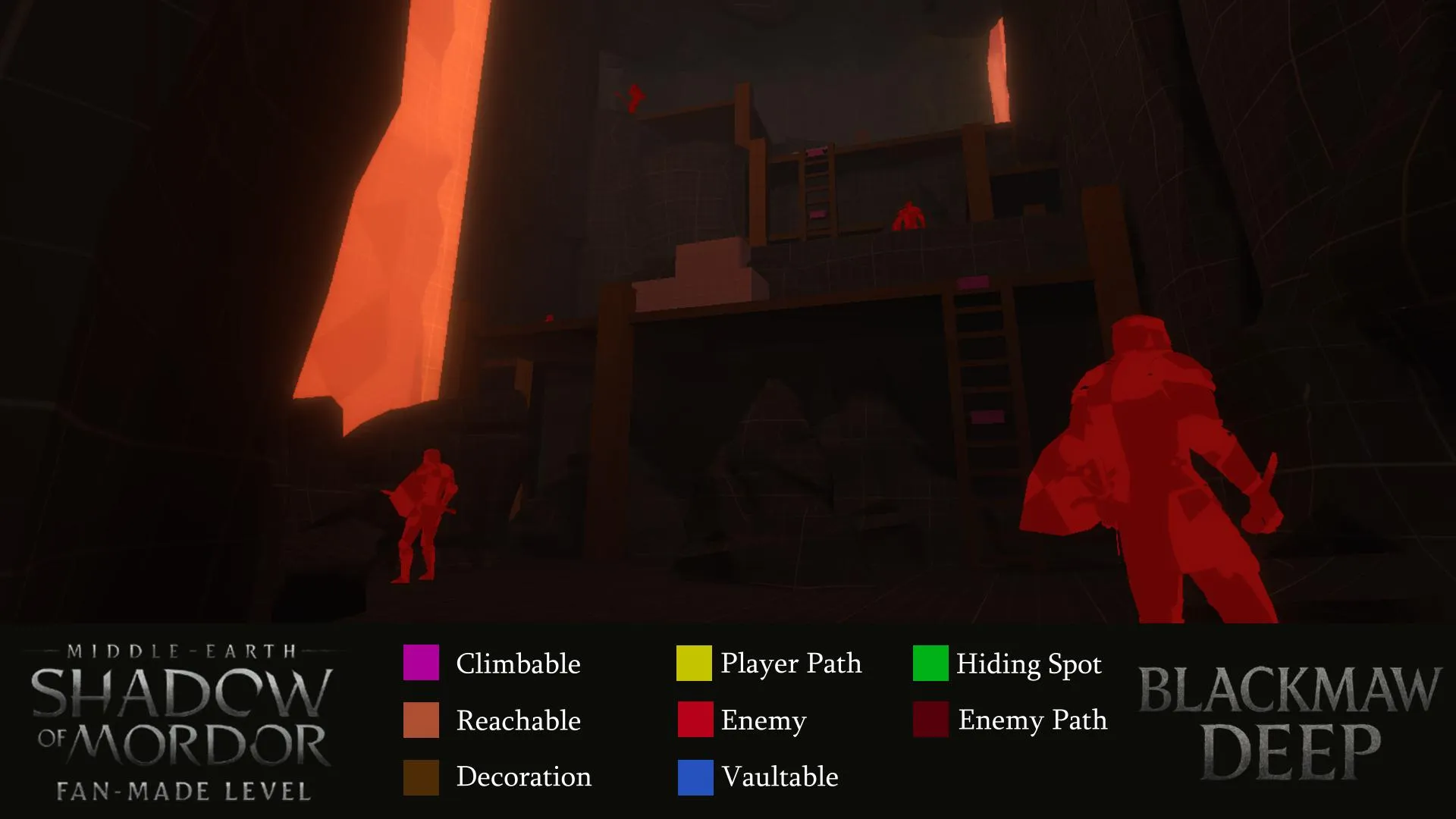
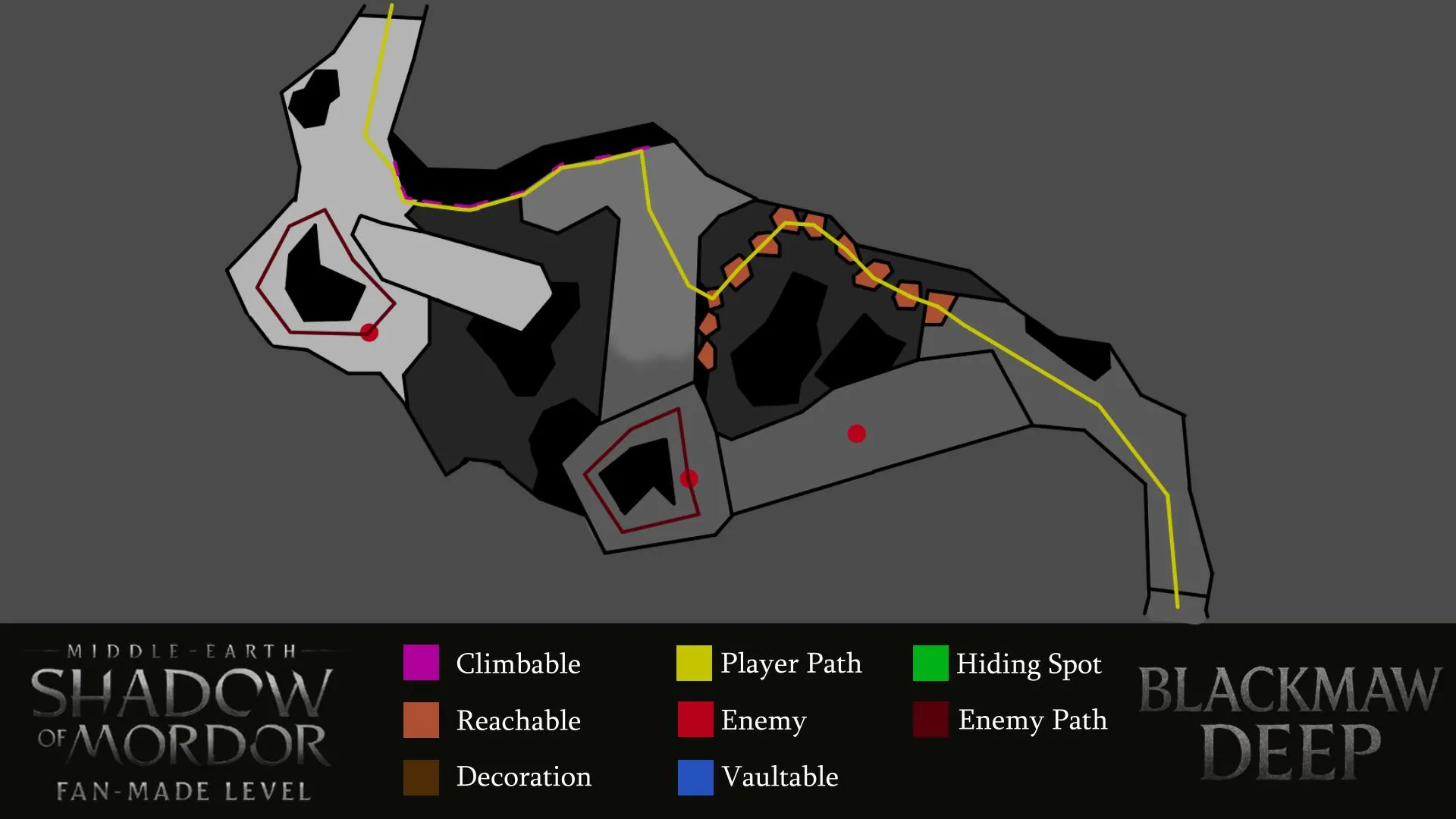
The Mines
- Objective: Challenge player spatial awareness and navigation skills
- Spatial Design:
- Highly vertical layout with six distinct height levels
- Looped paths, multi-directional traversal, and multiple entry/exit points
- Traversal Tools:
- Ladders, poles, vaults, jumps, ramps
- Platforming segments for shortcutting or avoiding patrols
- Visual Goal Setting:
- Final area always visible via diegetic visual language (e.g., colored banners, glow)
- Narrative Beat: Deep within the enemy operation, the mechanical heart of the mine
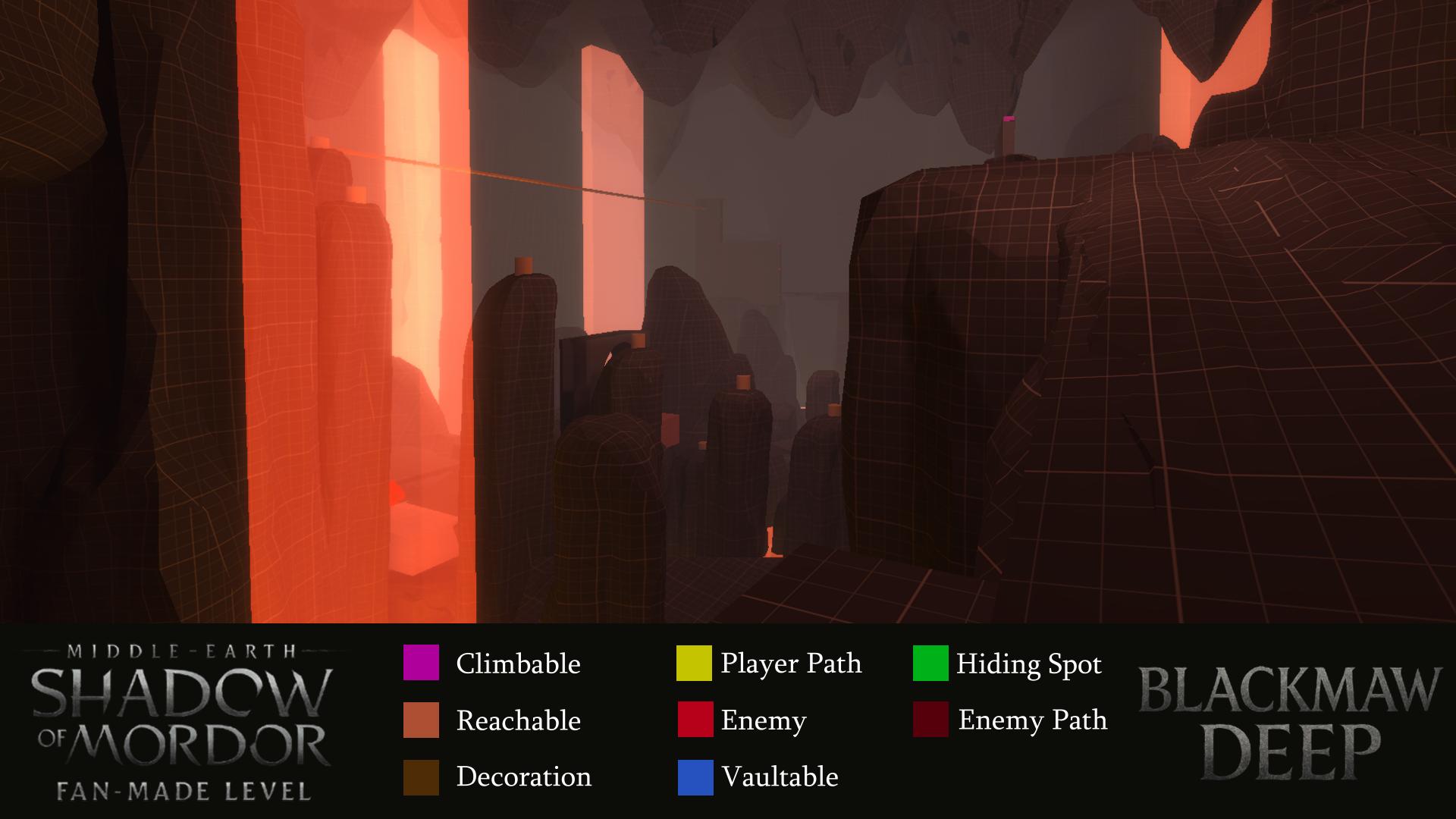
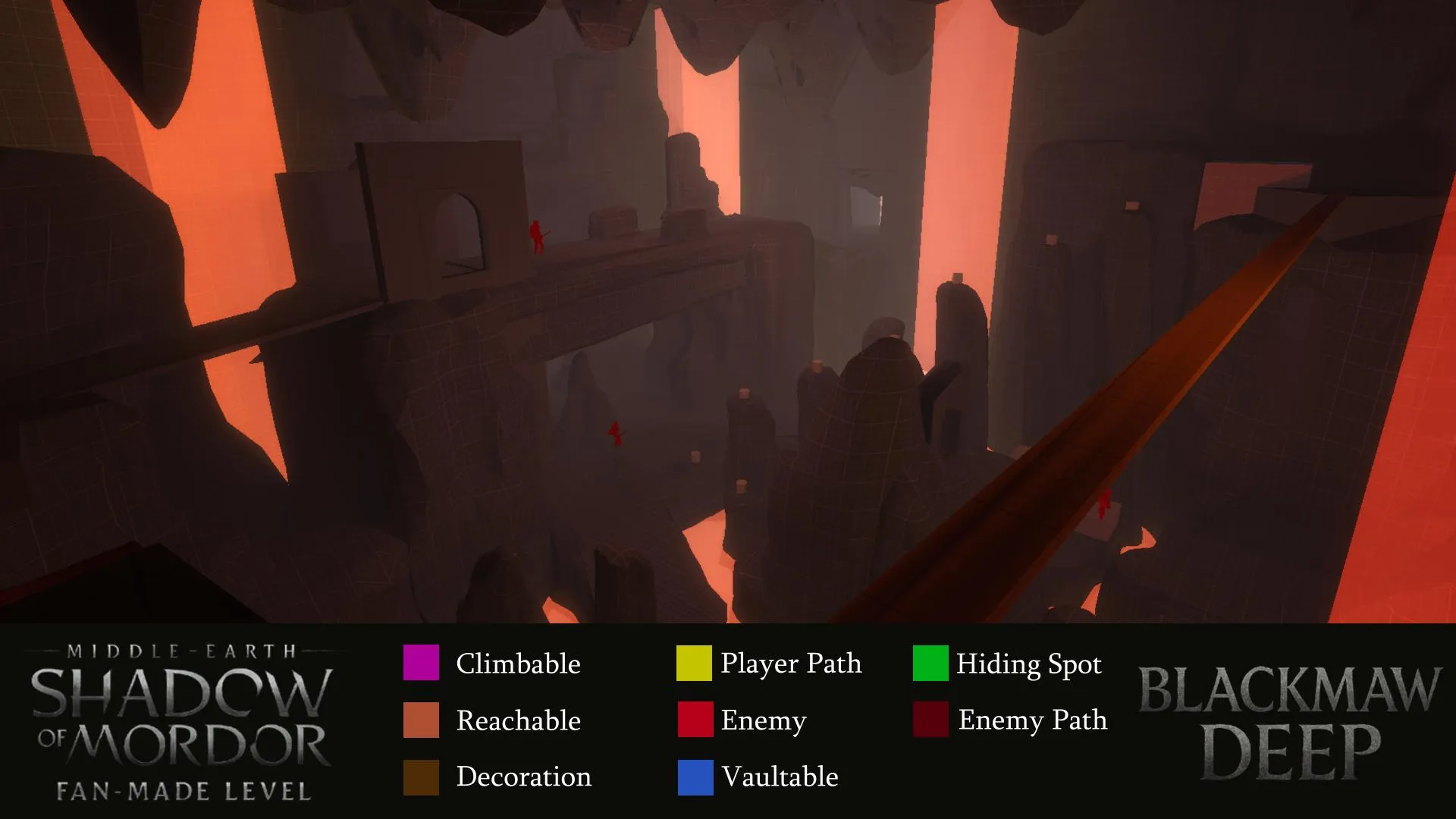
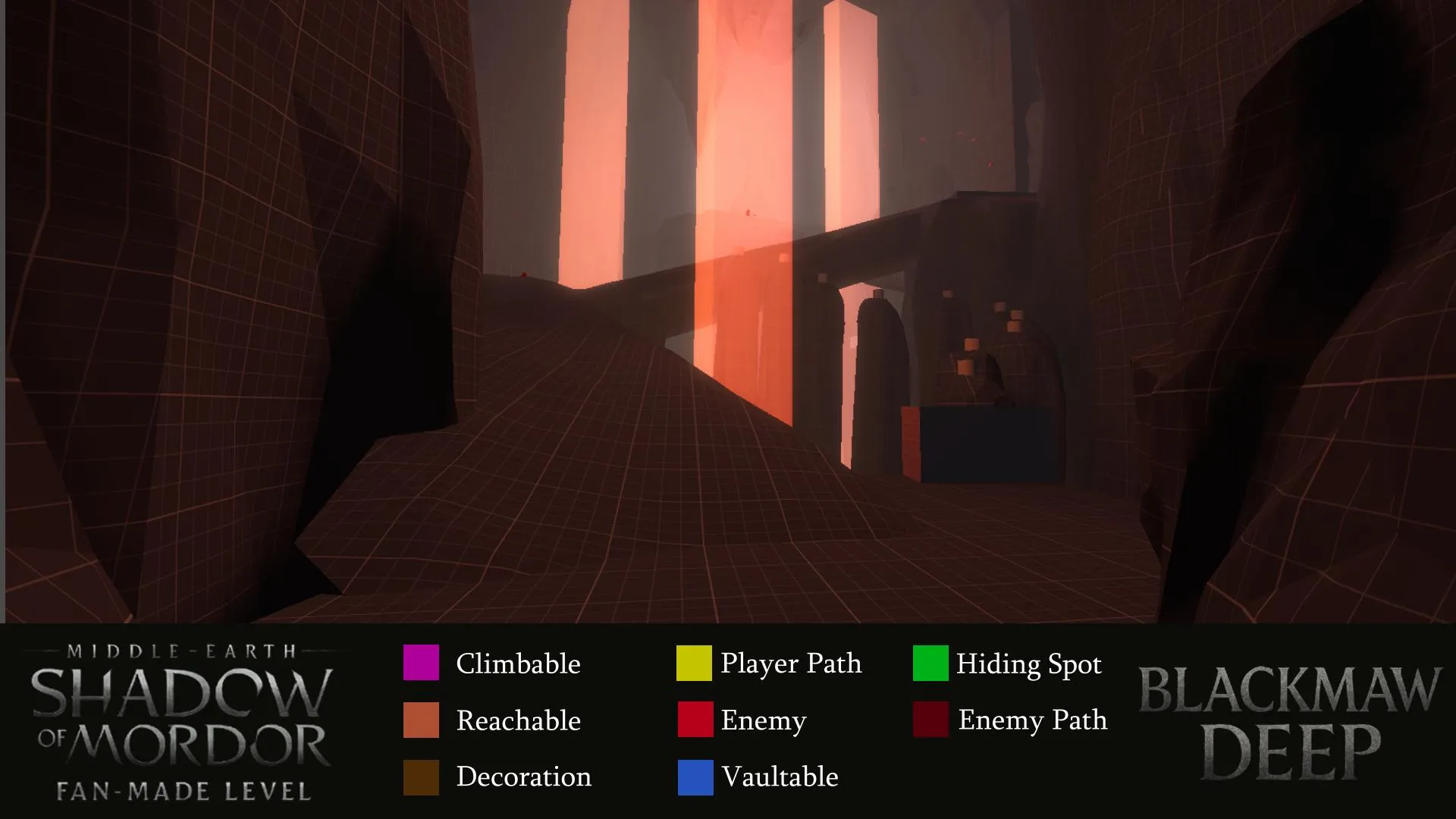
Cavern & Lava Falls
- Objective: Provide visual and mechanical breathing room
- Spatial Design: Wide-open volcanic cavern with lava lighting
- Level Goals:
- Let players explore without pressure
- Showcase aesthetic contrast and scale
- Mechanics:
- Linear guided path disguised with visual exploration
- False obvious paths blocked or guarded, reinforcing that "safe ≠ optimal"
- Use of hanging ledges and pole traversal to bypass guarded areas
- Narrative Beat: The player has descended into the heart of the volcano
Fortress & Exit Cave
- Objective: Deliver final test of learned skills, close thematic loop
- Design Approach:
- Fortress layout mirrors the level’s opening area (camp), now more complex
- Reuses familiar traversal challenges (e.g., ledges, poles, stealth chokepoints)
- Enemy density high, but with clear flanking and elevated routes
- Key Elements:
- Two split paths across a lava river, left is higher and obstructed; right is tactical and stealth-oriented
- Frequent path switching encourages observation and improvisation
- Final Climb:
- Ends with a vertical ascent through a tight corridor
- Culminates in a Vista Reveal of lush green terrain, signaling narrative and mechanical transition