Noibla Offline – A Level Design Exploration Inspired by Albion Online
This project is a non-commercial fan-made prototype inspired by Albion Online. All rights to the original IP belong to Sandbox Interactive.
Most assets are from Mixamo, TurboSquid and Sketchfab.
Overview
Albion Online left a lasting impression on me, not just as a player, but as a designer. After participating in a user test, I found myself unable to stop thinking about the experience. The session sparked a creative urge: what would it look like to rethink dungeon design within Albion’s world?
The result: Noibla Offline, a solo prototype and design study that reimagines dungeon gameplay, visual flow, and player engagement, built in just 12 days.
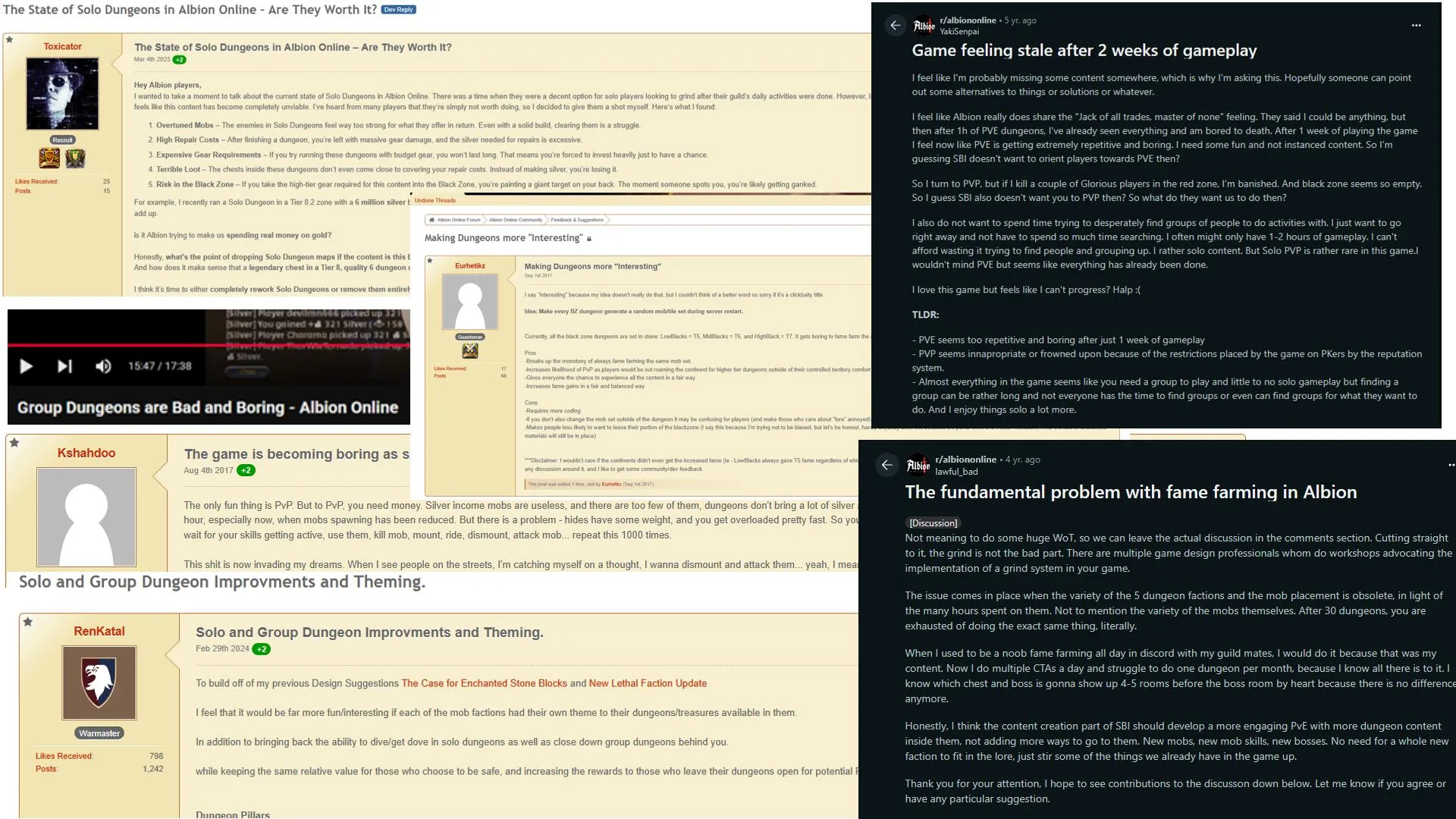
Research in Albion Forums and Reddit
Solo dungeons in Albion Online are widely seen as boring and repetitive by the community. Players often mention the lack of variety, same enemies, and poor rewards as reasons they avoid them.
Forum discussions highlight how these dungeons offer low replayability, weak environmental storytelling, and little in terms of player agency or meaningful choices.
Based on this feedback, I created my own dungeon prototype to explore stronger pacing, narrative structure, and more dynamic level design that keeps players engaged and encourages exploration.
Key Features
Full Combat System
- Archer, melee, and spell mechanics (inspired by Albion’s classless system)
– Custom AI for many enemy archetypes (ranged, melee, winged units, elementals, minibosses, bosses, ..)
Quest & NPC System
- Dialogue trees and quest triggers
– Objective tracking with dungeon progression
Dungeon Mechanics
- Traversal features: floating platforms, gravity shifts, branching paths
– Dungeon-specific twists (e.g., tornado lifts, energy barriers)
From-Scratch Programming
- Movement, dodging, and combat animations
– VFX placeholders and interaction systems
– Rapid iteration and clean, modular code structure
Project Scope
Prototype Name: Noibla Offline
Tools Used: Unity, Blender, Krita, DaVinci, Excel
Development Time: 12 Days
Number of Members: Solo (1)
Key Features:
- Custom dungeon layouts (2 fully playable levels)
- Archer-based combat system
- Enemy AI and boss behaviors
- Modular NPC + quest systems
- Full locomotion suite: movement, dodge roll, stamina
- Light interaction system and combat feedback loop
Minimal UI to keep focus on layout and flow.
Levels Created
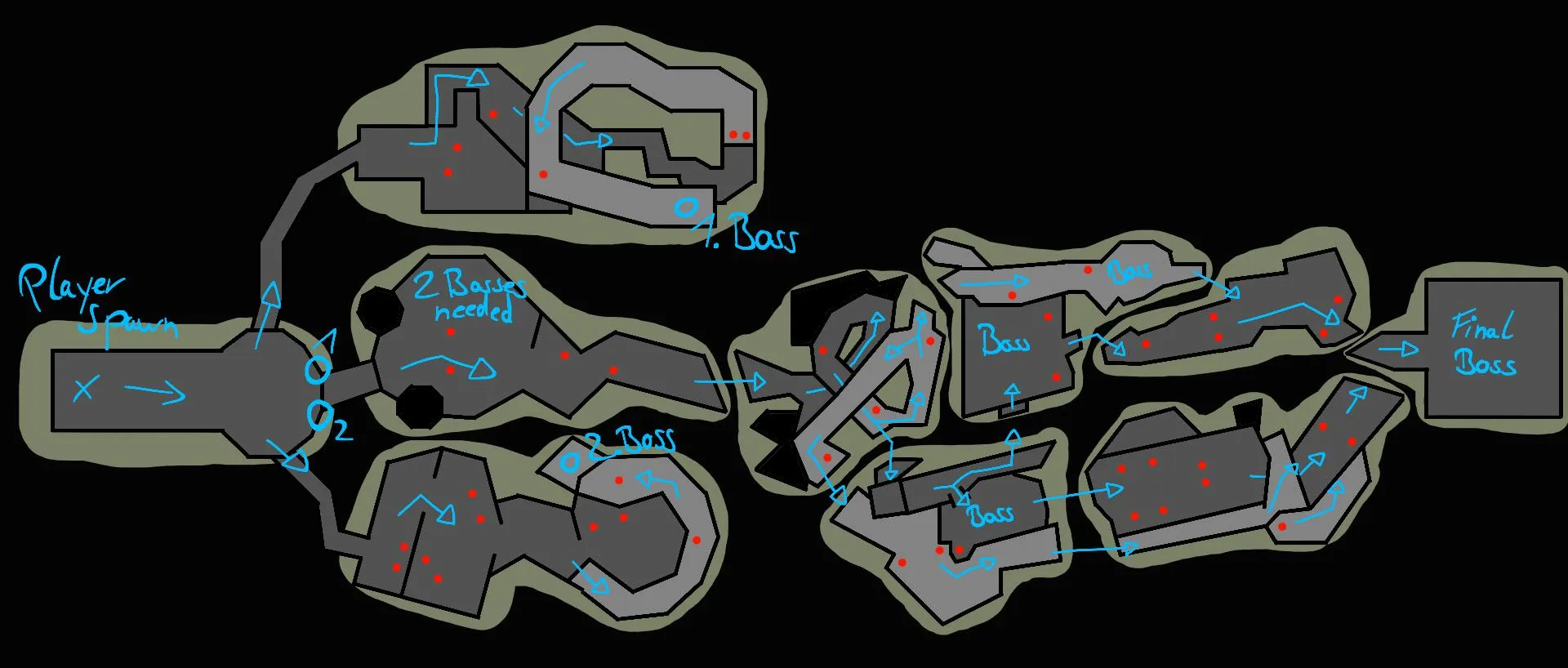
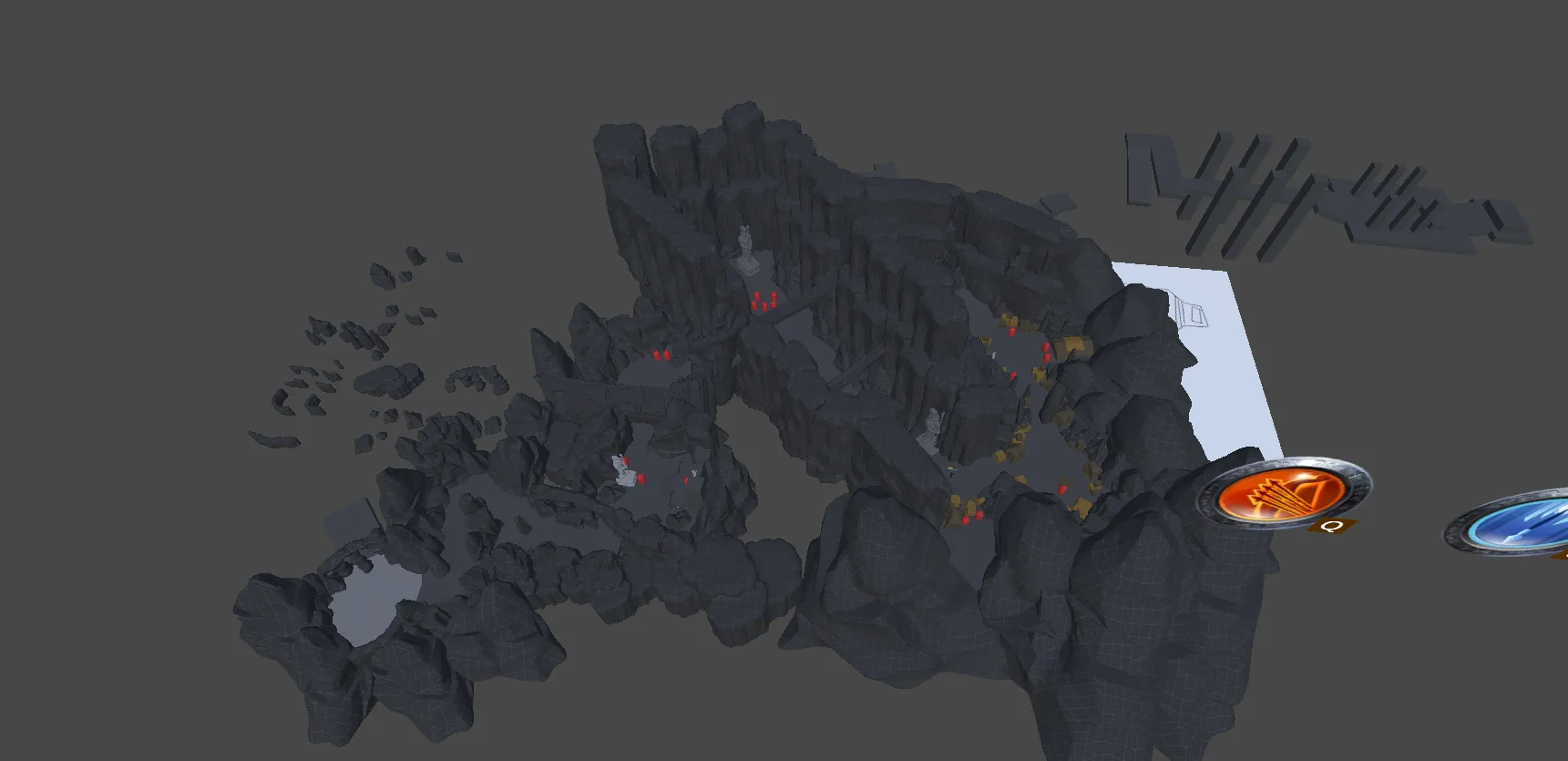
1. Echoes of the Deep (Dark, Fungal Caverns)
A submerged temple where corrupted researchers disturbed a sleeping abyssal entity.
Focus: Tight corridors, vertical traversal, environmental storytelling.
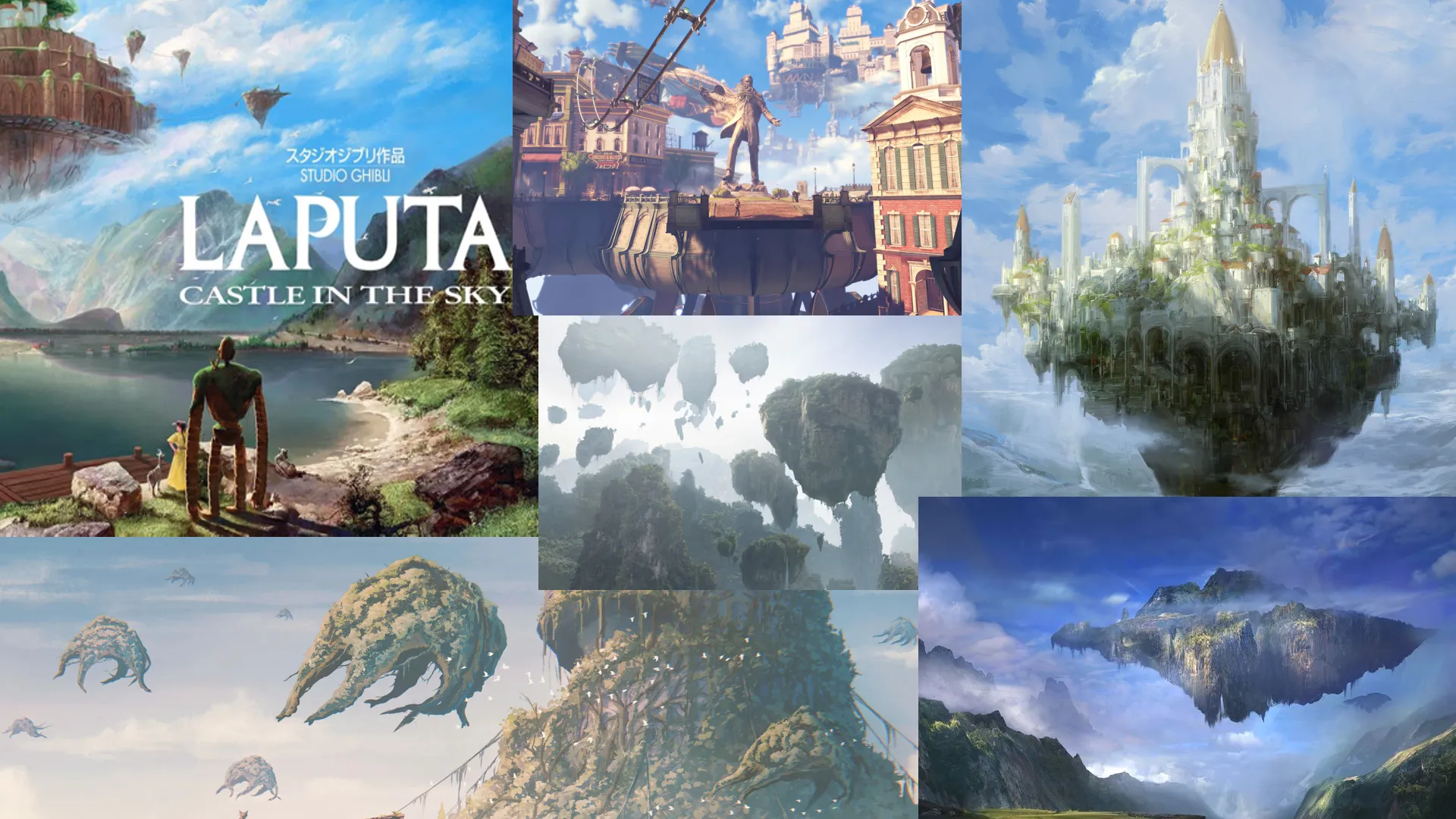
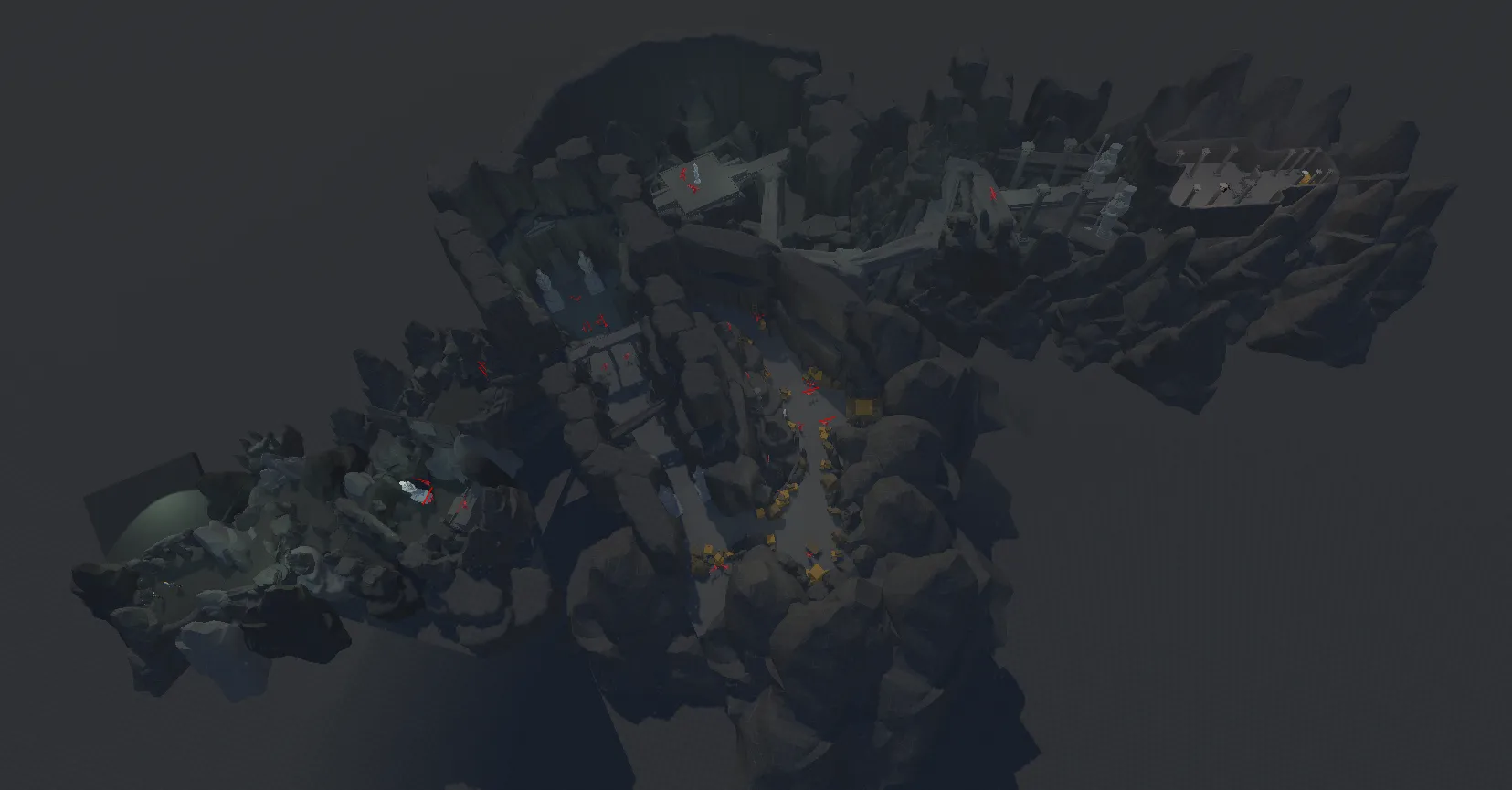
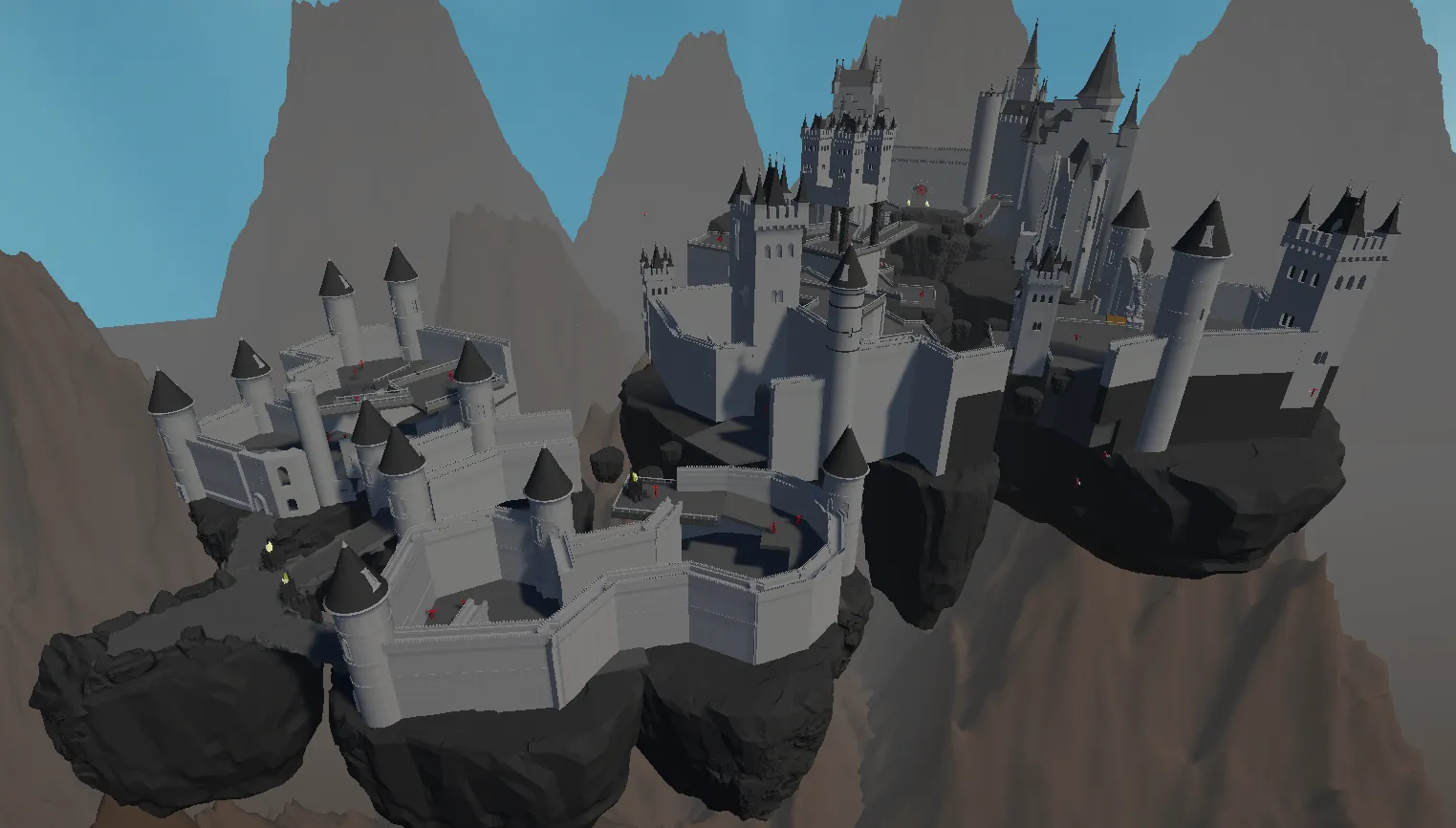
2. Isles of The Azure Wing (Bright ,Castle in the Sky)
A castle in the sky where remnants of an old order experiment with storm crystals and elementals.
Focus: Multiple Pathways, Vistas, Immersion in Environment
Design Motivation
Albion’s gameplay loop intrigued me, but I saw space for deeper level-based storytelling, mechanical variety, and environmental discovery. This prototype explores how dungeon structure could evolve while staying true to the game’s core systems.
My goal wasn’t to critique the original design, but to build upon it, demonstrating how new dungeon archetypes might be layered into the game to improve replayability,narrative clarity, and player mastery.
Design Pillars
1. Narrative Dungeons
Introduce self-contained stories within dungeons that deepen lore and build emotional weight without requiring cutscenes or traditional dialogue. These dungeons are structured to guide the player through a narrative arc, using worldbuilding and environmental cues.
2.Dungeon-Specific Mechanics
Inspired by concepts like the Azure Wings’ tornado traversal, each dungeon contains a unique mechanic or modifier that alters how players move, fight, or solve spatial puzzles, ensuring every experience feels distinct.
3.Camera and Framing
Explored dynamic camera moments, zoom-ins, wide establishing shots, and angle shifts, to create visual variety and emotional beats during gameplay. These small cinematic touches enhance mood and elevate key set pieces.
4.Multiple Path Design
Dungeons offer more than one viable route. Some paths are faster, others more dangerous but rewarding. This design supports both replayability and player agency, while allowing for routing optimization in repeat playthroughs.
Design Process
Research & Reverse Engineering
I started by diving into Albion’s community feedback and forum discussions, identifying shared player pain points, such as dungeon repetitiveness and lack of interaction. From there, I reverse-engineered existing dungeon layouts and systems.
Ideation & Moodboarding
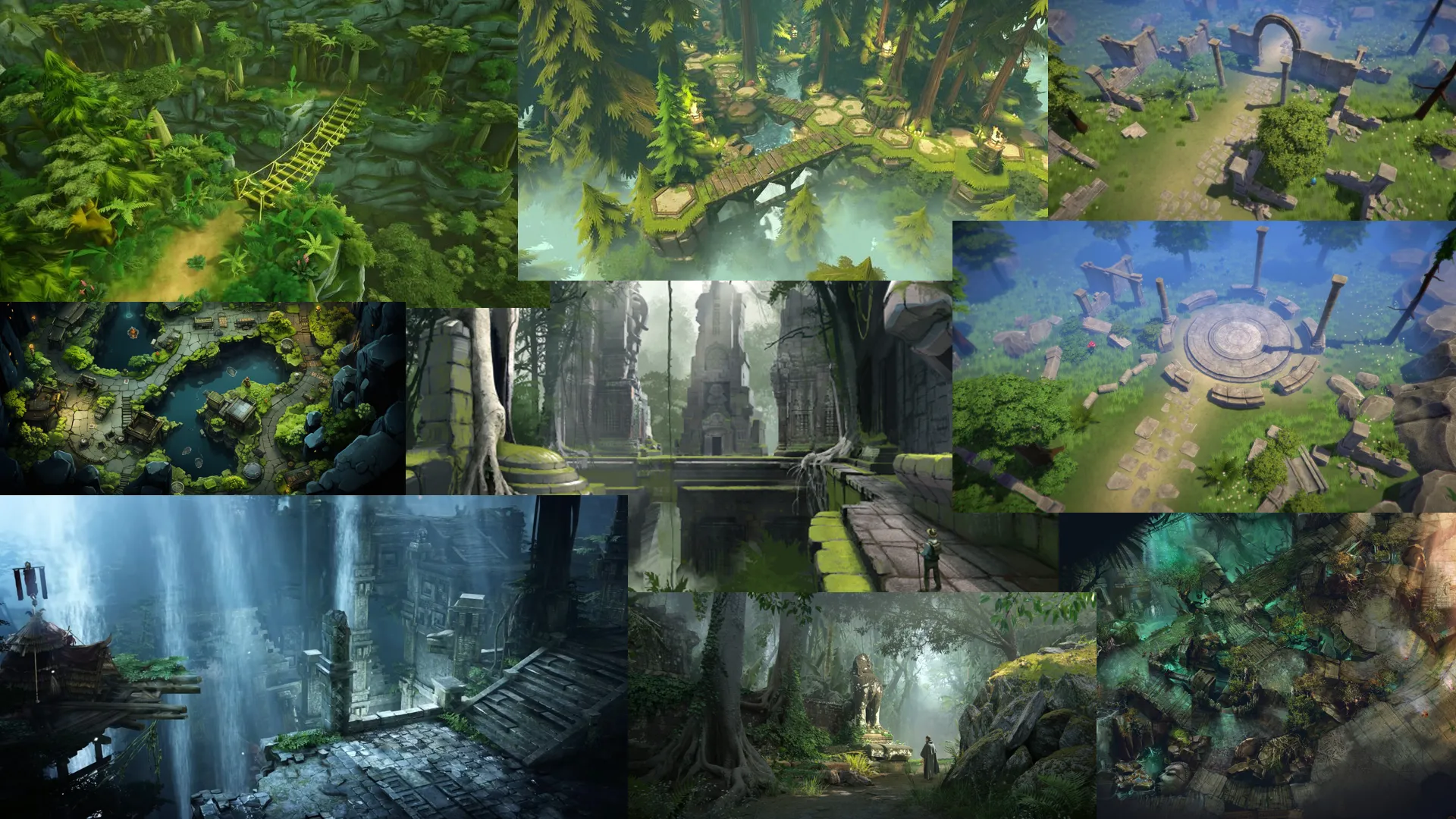
I created thematic moodboards to visualize tone and pacing. My levels leaned into the mystic and ethereal, inspired by themes of corruption, forgotten rituals, and the elemental wilds.
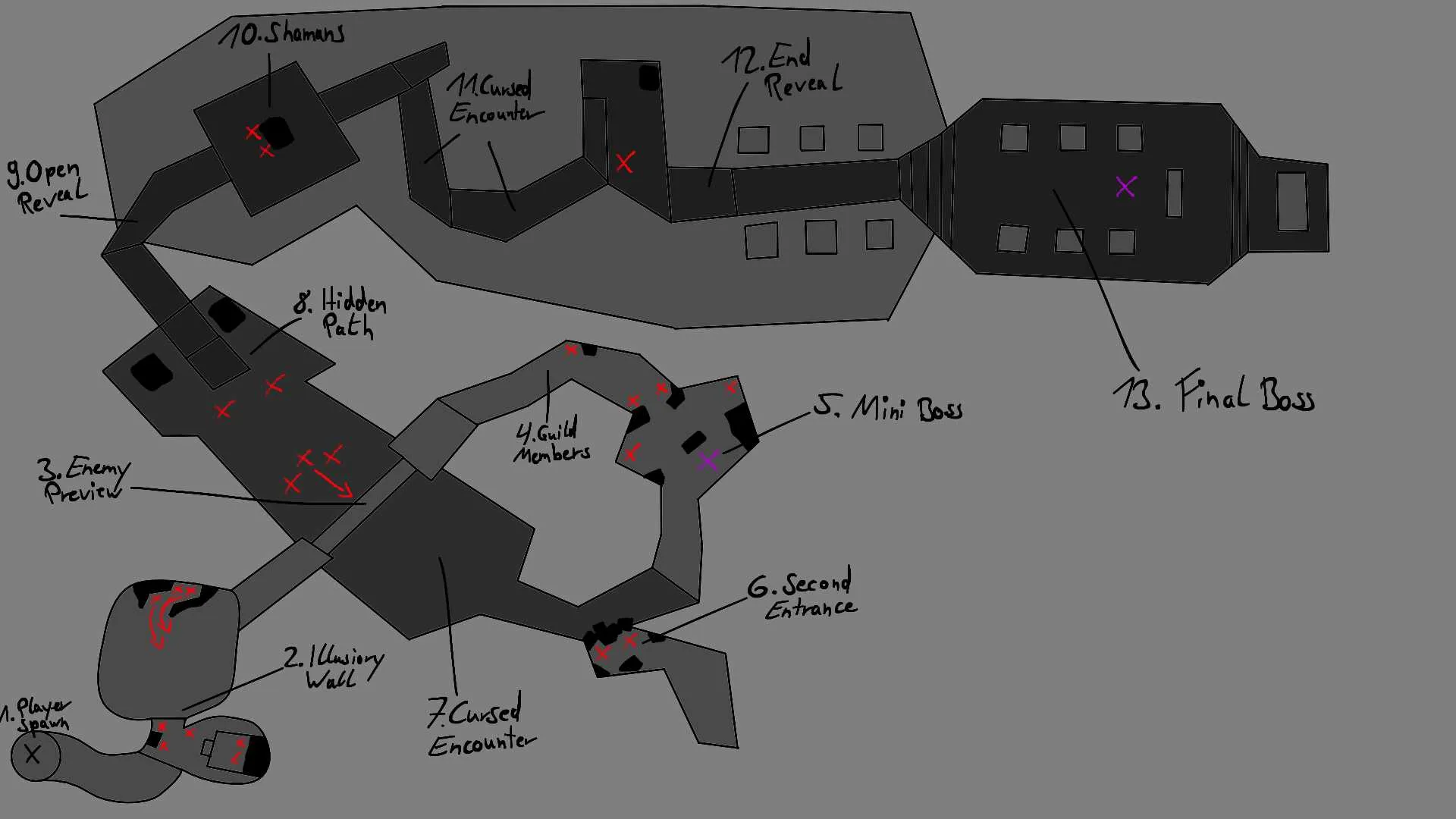
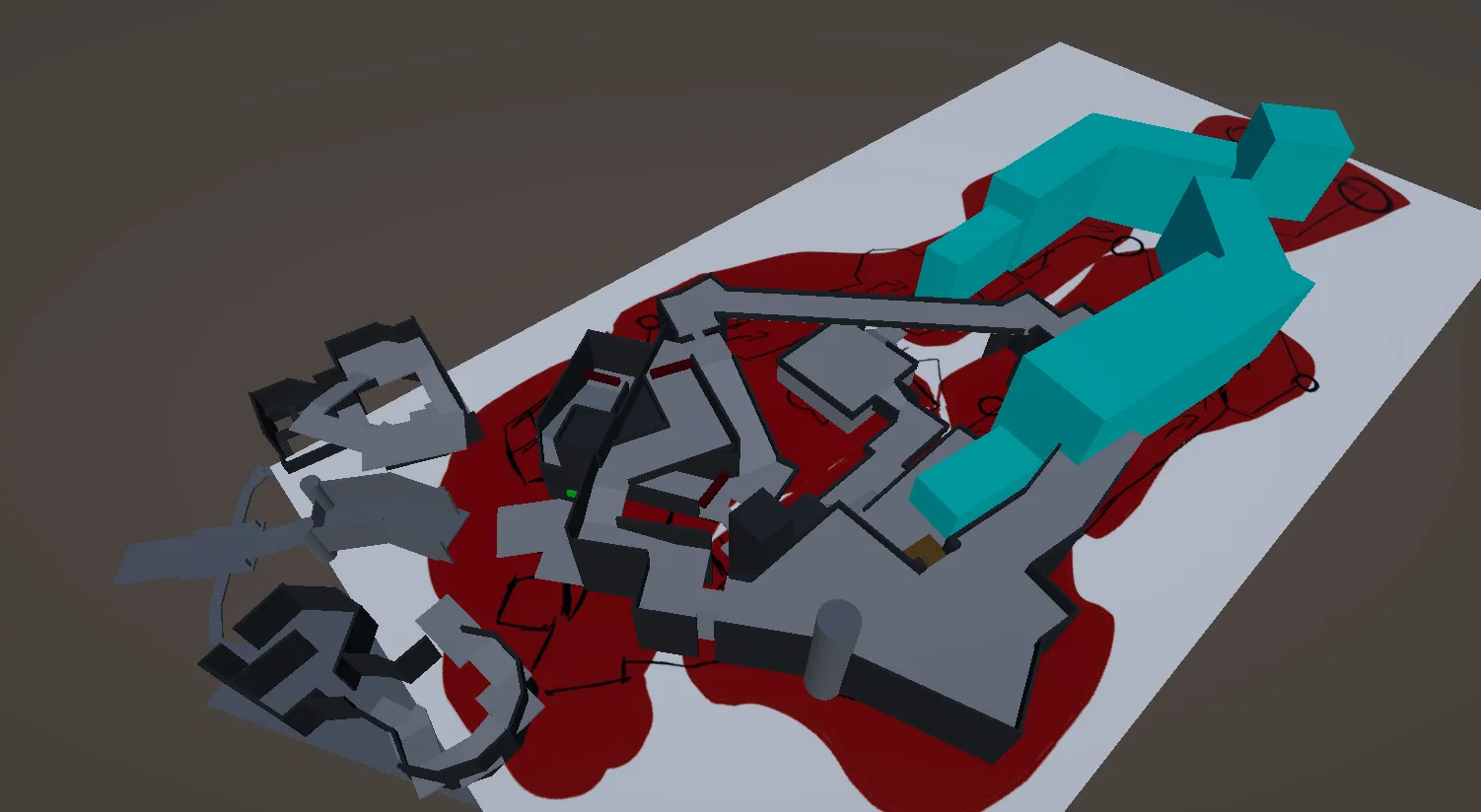
Blockout & Greyboxing
I focused on readable traversal and encounter density, prioritizing how players would move through and react to each environment. Even with a stripped-down artstyle, the levels communicate flow and function clearly.
Combat & Progression Integration
I developed a full loop involving resource gathering, enemy encounters, and optional side objectives to test how story and challenge can coexist in small modular environments.
Gameplay Highlights
- Two complete dungeons, each built around a unique theme and traversal mechanic
- Functional questlines with branching triggers and NPC states
- Two enemy archetypes with distinct combat behavior
- Playable archer class with stamina-driven dodge and timing-based attacks
- Functional minimap and encounter indicators (blockout-level fidelity)
Visual Design: Functional Minimalism
Instead of spending development time on VFX, polish, or shaders, I focused on blockout visuals that communicated core functionality. Every element, from walls to floor decals, served the prototype’s goals: clarity, testability, and iteration.
Outcomes & Reflection
This project was driven entirely by passion, for level design, system interplay, and the world Albion presents. While developed independently and purely as anon-commercial prototype, Noibla Offline gave me the space to:
- Apply adaptive design thinking in a live combat loop
- Test how narrative beats can live within procedural-like layouts
- Explore pacing, encounter flow, and player-driven exploration
- Push my skills in prototyping under real-time constraints
The layouts aren’t final, nor are the systems polished, but the experiment provided incredible insight into what makes dungeon design sticky, emotional,and memorable.